By Staff Writer | Smart News Liberia
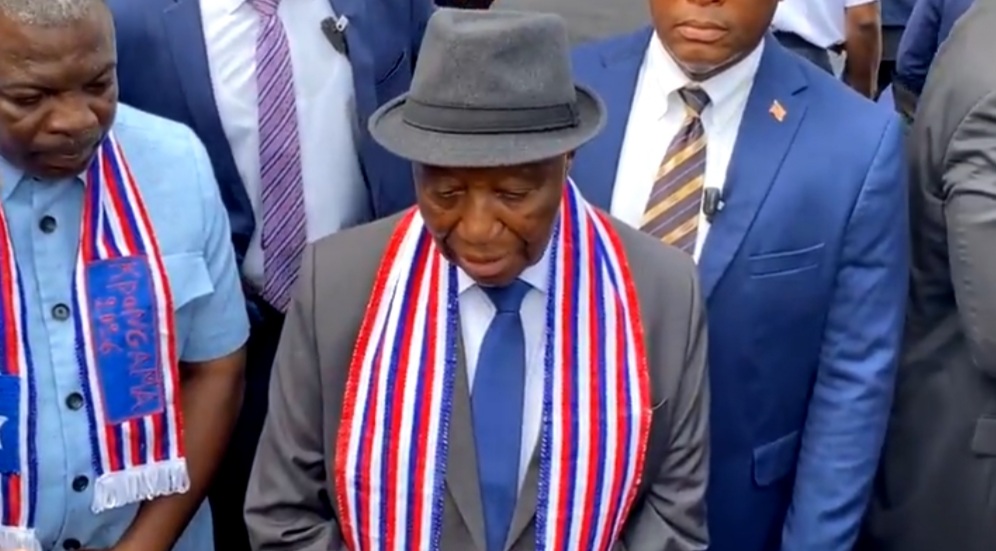
MARGIBI COUNTY, LIBERIA – President Joseph Nyuma Boakai has declared Liberia’s fisheries sector ready for transformation, as he officially opened the 2026 National Fisheries Investment Conference, known as “Kpongama,” with a bold call for investment, regional cooperation, and sustainable development.
Speaking Monday, March 30, 2026, at the Farmington Hotel, Margibi County, the Liberian leader framed the conference as more than a ceremonial gathering, emphasizing that it represents a national awakening. “We are not merely holding a conference,” Boakai declared. “We are answering a call to awaken what international partners have rightly called our ‘sleeping giant.’”
The President welcomed a high-level delegation of regional ministers, development partners, and private investors, noting that their presence reflects growing global confidence in Liberia’s potential. According to him, the gathering signals a shared belief “that the wealth of our oceans must no longer bypass the people of Liberia.”
Boakai stressed that Liberia’s fisheries future depends heavily on regional collaboration. He pointed to the participation of countries such as Ghana, Nigeria, Morocco, and Sierra Leone as evidence that “the future of fisheries in West Africa will be shaped not only by national action, but by regional cooperation, shared knowledge, and collective investment.”
Despite its vast marine resources, the President acknowledged the sector’s long-standing underperformance. Liberia boasts 579 kilometers of coastline and a rich Exclusive Economic Zone, yet imports over 33,000 metric tons of fish annually. “Our own catch of very high value species is landed in foreign ports because we lack a dedicated fishing harbor,” he admitted.
He further highlighted the struggles of artisanal fishers, who produce nearly 80 percent of the country’s fish supply but operate under difficult conditions. “They work without adequate cold storage, without digital payment systems, and too often, without the dignity their labor deserves,” Boakai said, adding, “This is not a situation we accept. It is a challenge we embrace.”
Outlining his administration’s reform agenda, the President disclosed that his government is shifting away from reliance on industrial vessel licensing fees toward a private-sector-driven model. “We are pivoting toward private-sector-driven growth through public-private partnerships, and value-chain development that keeps jobs and revenue here in Liberia,” he emphasized.
Boakai pointed to concrete steps already taken, including securing a €25 million European Union grant to strengthen the artisanal fisheries value chain. He also highlighted a partnership with Orange Liberia to introduce mobile-based solutions and solar-powered cold storage systems aimed at reducing post-harvest losses.
The President revealed that key infrastructure projects are underway, including the activation of the “Sea King,” Liberia’s first semi-industrial fiberglass vessel, and the long-dormant Robertsport fishing cluster.These initiatives, he said, are designed to directly impact local livelihoods. “These are not abstract policies, they are tangible steps to ensure a fisherwoman in West Point or a canoe captain in Harper can earn more from their catch.”
Further investments are being made under international partnerships, including projects supported by the World Bank and the OPEC Fund. These include the construction of a national fisheries harbor, a processing factory, a modern laboratory for export standards, and Liberia’s first integrated commercial aquaculture farm.
Boakai stressed that these efforts are laying the groundwork for a competitive blue economy but cautioned that government alone cannot achieve the transformation. “Liberia is not only talking about the future of fisheries, we are building it,” he said. “The foundations are being laid. The opportunities are expanding. And the time to invest is now.”
During the conference, the government is expected to launch three major policy documents: a Ten-Year National Fisheries Strategic Plan, an Investment Plan, and a Public-Private Partnership Strategy. The President described them as “invitations to invest, to partner, and to grow with us.”
On regional cooperation, Boakai renewed Liberia’s commitment to combating illegal, unreported, and unregulated fishing, describing it as “theft from our children’s future.” He urged West African nations to strengthen collaboration, warning that “the fish do not recognize our borders, but our cooperation must.”
In a direct message to investors, the President struck a firm but welcoming tone. “We are open for business, but we are not open for exploitation,” he declared, adding that Liberia seeks partners who will respect environmental standards and contribute to local capacity building.
Looking ahead, Boakai painted a vision of a transformed fisheries sector within five years, with modern ports, thriving fish processing industries, and expanded aquaculture across inland counties. He concluded with a symbolic reflection: “When the nets come up heavy, the entire village celebrates. Today, we cast our net wide. May this gathering yield a harvest that feeds our nation, employs our youth, and secures our prosperity.”