
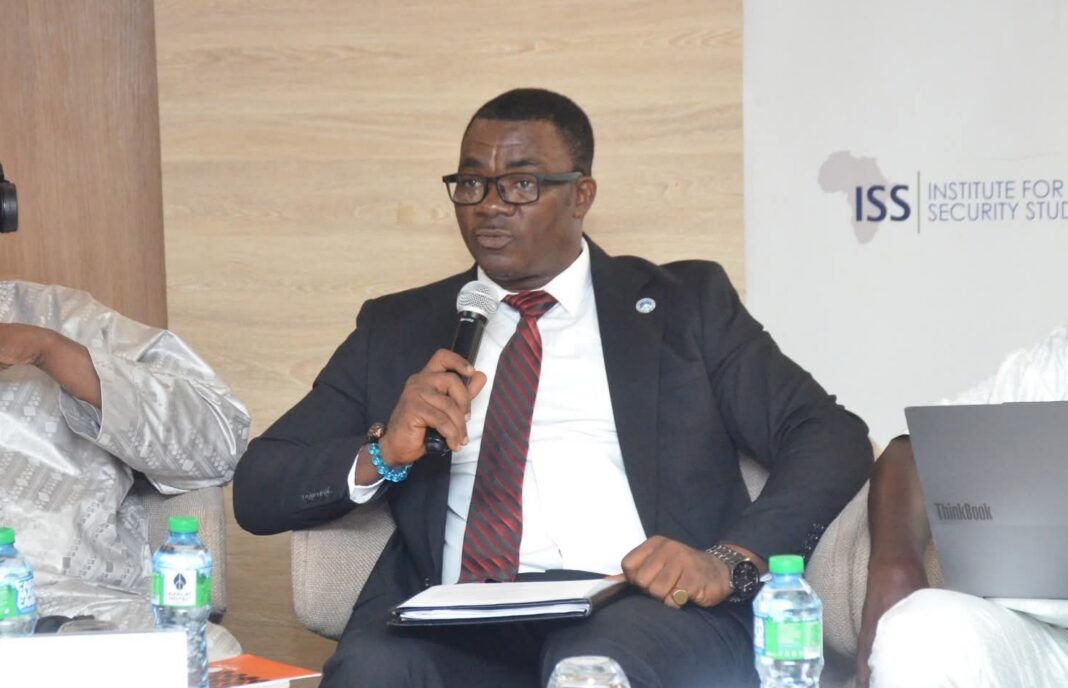
DAKAR, SENEGAL – Liberian human rights activist Adama Kiatamba Dempster has joined regional and international efforts to advance justice, accountability and institutional reform in The Gambia, using Liberia’s experience with transitional justice to highlight practical strategies for implementing recommendations arising from past human rights violations.
Dempster, National Secretary General of the Civil Society Human Rights Advocacy Platform of Liberia and lead campaigner for the Coalition for the Establishment of War and Economic Crimes Court in Liberia, participated in a two-day high-level transitional justice convening in Dakar, Senegal, from October 19 to 20, 2026.
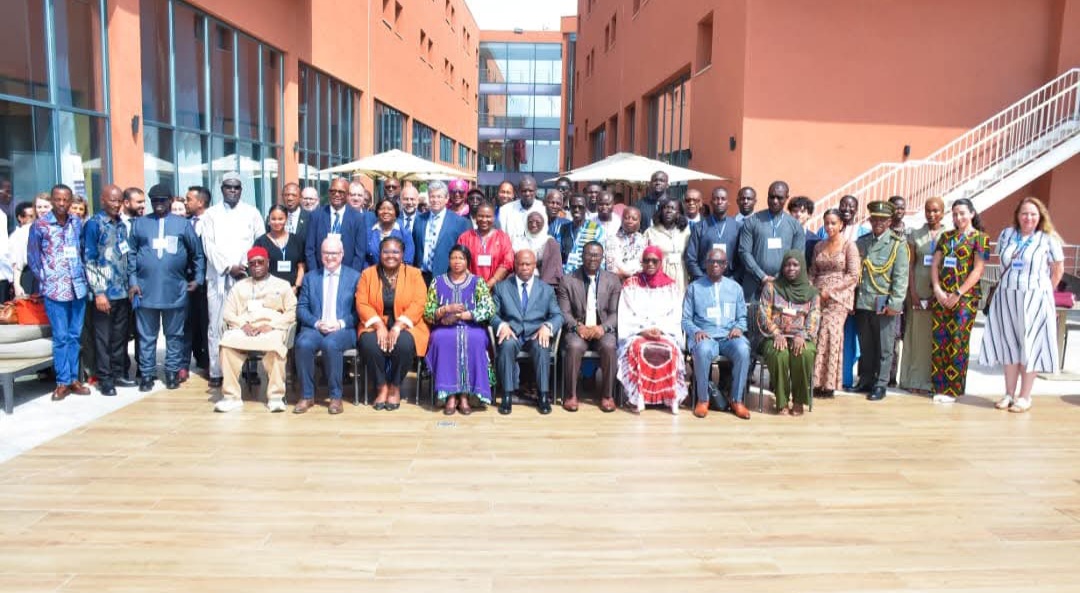
The meeting, held under the theme Advancing Justice, Accountability and Reform in The Gambia, brought together international, regional and subregional justice actors to examine how The Gambia can advance its transitional justice process through the implementation of recommendations issued by its Truth, Reconciliation and Reparations Commission (TRRC).
Dempster described his participation as part of a global responsibility to support justice and confront impunity.
His contribution centered on the topic Criminal Accountability Beyond Prosecution in Transitional Justice, through which he reflected on Liberia’s experience and presented strategies for sustaining public demand for accountability, overcoming political resistance, addressing financial constraints, and advancing institutional reforms.
Although his presentation drew heavily on Liberia’s unresolved transitional justice challenges, the strategies he outlined carry relevance for The Gambia as it confronts the task of translating TRRC recommendations into practical measures that respond to victims’ demands and strengthen public confidence in state institutions.
The central challenge confronting both countries is how to ensure that truth-seeking processes lead to tangible outcomes rather than leaving victims and affected communities waiting indefinitely for justice, reparations, and institutional change.
The Dakar convening focused on advancing The Gambia’s transitional justice process through the implementation of recommendations issued by its TRRC, placing accountability and institutional reform at the center of regional discussions.
Truth and reconciliation commissions are established to investigate past abuses, document victims’ experiences, identify patterns of violations, and recommend measures to address the consequences of conflict or authoritarian rule.
However, the establishment of a commission and the publication of its findings do not automatically guarantee justice for victims.
Implementation requires government commitment, functioning institutions, adequate resources, coordination among responsible agencies, and sustained public engagement to ensure that recommendations move from policy documents into practice.
For The Gambia, the challenge involves determining how criminal accountability, reparations, institutional reform, reconciliation, and public remembrance can advance together in response to the findings and recommendations of the TRRC.
Dempster’s presentation offered a perspective on this challenge by examining the obstacles that can emerge when political interests, legislative delays, limited resources, and institutional weaknesses interfere with transitional justice.
His argument was that criminal accountability should not be understood solely as the prosecution of individuals accused of serious violations. It must also be considered alongside the institutional and social reforms required to prevent future abuses.
This approach places equal importance on the pursuit of justice for past violations and the development of institutions capable of protecting human rights in the future.
While Dempster’s presentation focused on Liberia’s experience, its emphasis on complementary accountability measures provides a framework for examining the implementation challenges facing The Gambia.
Liberia’s civil wars, which lasted from 1989 to 2003, left more than 250,000 people dead and millions displaced, creating a legacy of trauma, institutional breakdown, and demands for accountability.
The country established its Truth and Reconciliation Commission in 2005 to investigate the conflict, document abuses, and recommend measures to address the causes and consequences of the violence.
According to Dempster’s presentation, the commission identified deep-rooted inequalities, corruption, and an identity crisis among the factors contributing to the conflict. Its final report documented serious abuses by the various factions and recommended prosecutions, reparations, institutional reforms, community reconciliation, and national memorialization initiatives.
Among its recommendations was the establishment of a special tribunal to prosecute serious crimes. It also proposed reparations for individuals and communities, stronger rule-of-law institutions, anti-corruption measures, and the use of traditional Palava Hut forums to facilitate dialogue and reconciliation.
The commission further recommended measures concerning public office eligibility, including restrictions intended to prevent certain individuals from holding public office for 30 years.
However, the implementation of key recommendations has encountered political resistance, leaving Liberia’s civil society organizations continuing to advocate for accountability and institutional reform.
Dempster used this experience to illustrate the difficulties that can arise when governments fail to translate transitional justice recommendations into practical measures.
For The Gambia, the lesson is that the credibility of its TRRC process will depend not only on the commission’s findings but also on the extent to which recommendations are implemented through credible, transparent, and lawful procedures.
Liberia’s experience also demonstrates why transitional justice requires sustained engagement beyond the period in which a commission conducts investigations or publishes its report.
Without continued public pressure, technical preparation, and institutional commitment, recommendations risk remaining unimplemented despite the expectations created among victims and survivors.
A key element of Dempster’s presentation was a proposed two-track advocacy strategy designed to help civil society organizations overcome political resistance while developing practical solutions for implementing transitional justice recommendations.
Under the first track, civil society groups would mobilize public support through community meetings, radio discussions, social media campaigns, and partnerships with regional and international human rights organizations.
The second track would involve direct engagement with institutions, legal practitioners, policy specialists, and technical experts to develop legislation and identify workable administrative and legal mechanisms.
The approach recognizes that public pressure alone may not produce the necessary legal reforms, while technical proposals may remain ineffective without sufficient public support and political commitment.
Applied to The Gambia, the strategy suggests that civil society organizations could combine public education and advocacy with practical engagement involving the institutions responsible for implementing TRRC recommendations.
Such engagement could help clarify implementation responsibilities, identify legislative gaps, develop proposals for institutional reform, and establish mechanisms for monitoring progress.
At the same time, public campaigns could keep victims’ concerns visible and encourage government institutions to explain what steps they are taking to fulfil their obligations.
Dempster’s approach also highlights the importance of building alliances beyond established human rights organizations.
Trade unions, faith-based organizations, business associations, universities, youth groups, and diaspora communities could contribute to a wider public discussion about justice, accountability, and the protection of human rights.
For The Gambia, such cooperation could help ensure that transitional justice remains a national concern rather than an issue confined to legal experts, government officials, or advocacy organizations.
The effectiveness of the strategy, however, would depend on the willingness of institutions to engage constructively and the ability of civil society groups to maintain credible, coordinated, and sustained advocacy.
Dempster also addressed one of the most politically sensitive aspects of Liberia’s transitional justice process, the implementation of recommendations concerning the eligibility of individuals implicated in serious wartime abuses to hold public office.
His presentation identified the non-implementation of the TRC’s recommended 30-year restrictions as an example of the gap between transitional justice recommendations and political realities.
The issue has implications for countries seeking to rebuild public institutions after periods of serious human rights violations.
Vetting mechanisms are intended to help determine whether individuals meet established standards for occupying particular public positions. Depending on the applicable legal framework, such procedures may form part of wider institutional reforms aimed at strengthening integrity, public confidence, and respect for human rights.
For The Gambia, discussions about institutional reform raise questions about how recommendations concerning accountability and public office eligibility can be implemented fairly, transparently, and consistently with constitutional protections.
Any restrictions on public office must have a clear legal basis and respect due process. A credible system must distinguish between allegations, findings made by a truth commission, and criminal convictions, while providing affected individuals with a fair opportunity to challenge adverse decisions.
These safeguards are essential to ensure that accountability measures strengthen the rule of law rather than become instruments of political retaliation.
Dempster’s presentation suggests that civil society organizations can contribute by examining proposed reforms, consulting legal experts, mobilizing public support, and advocating for transparent procedures.
The objective is to ensure that institutional reform is not limited to changing administrative structures but also addresses the standards, safeguards, and accountability mechanisms governing public institutions.
Dempster’s presentation emphasized that transitional justice should not depend exclusively on criminal trials, particularly when prosecutions face delays or when governments lack the political commitment or financial resources required to establish effective accountability mechanisms.
He identified several complementary approaches that civil society organizations could pursue to maintain momentum while continuing to advocate for criminal accountability.
These include reparations, community reconciliation, memorialization, evidence preservation, public education, strategic litigation, and international cooperation.
For The Gambia, such approaches could support the implementation of TRRC recommendations by addressing different needs arising from past violations.
Reparations can provide recognition and redress for victims and affected communities. Memorialization initiatives can preserve historical records and honor those who suffered. Community-based dialogue can create opportunities for truth-telling and reconciliation, while institutional reforms can help prevent future violations.
However, these mechanisms should complement rather than replace criminal proceedings where prosecution is warranted.
Dempster also emphasized the importance of preserving evidence and maintaining accurate records while accountability processes remain incomplete.
Civil society organizations can help document testimonies, preserve relevant records, and support secure systems for organizing information that may assist future investigations.
Digital documentation platforms could allow victims and citizens to submit relevant information, while trained volunteers, students, and diaspora networks could assist with organizing records and conducting preliminary analysis.
Such initiatives would require safeguards to protect confidential information, verify submissions, prevent the misuse of evidence, and ensure the safety of victims and witnesses.
The preservation of reliable evidence is particularly important when official processes take years to advance, as delays can increase the risk that records will be lost and witnesses will become unavailable.
Dempster further highlighted the importance of regional and international cooperation in sustaining accountability efforts when domestic processes encounter political or institutional obstacles.
His presentation identified partnerships with international nongovernmental organizations, the Economic Community of West African States, the African Union, and the United Nations as potential avenues for strengthening advocacy, accessing technical expertise, and maintaining attention on implementation failures.
He also discussed universal jurisdiction as a potential pathway for pursuing certain international crimes in foreign jurisdictions, subject to the applicable laws and legal requirements.
As an example of cross-border accountability efforts, the presentation cited the civil litigation brought in the United States in 2021 by survivors of the St. Peter’s Lutheran Church massacre against former Armed Forces of Liberia commander Colonel Moses Thomas.
Supported by the Global Justice Research Project and the Center for Justice and Accountability, the case illustrated how victims and advocacy organizations can pursue legal action beyond the country where alleged abuses occurred.
Dempster also referred to immigration-related prosecutions in Europe involving allegations that individuals concealed wartime atrocities to obtain residency or citizenship.
These examples demonstrate that domestic political resistance does not necessarily eliminate every possible avenue for accountability, although the legal basis and available remedies differ from one jurisdiction to another.
For The Gambia, international partnerships could also provide opportunities to exchange experiences, strengthen technical capacity, and identify practical approaches to implementing TRRC recommendations.
Such cooperation would be most effective when it complements domestic institutions and responds to the needs and priorities of victims and affected communities.
The cost of implementing transitional justice recommendations can present another challenge for governments and civil society organizations.
Investigations, prosecutions, witness protection, reparations programmes, and institutional reforms may require substantial financial and technical resources.
Dempster proposed several approaches to help address these constraints, including community-based mechanisms, strategic litigation, international partnerships, and efforts to recover assets connected to illicit wealth where the law permits.
Traditional Palava Hut forums and local reconciliation circles were identified as possible mechanisms for facilitating dialogue, acknowledgment, and restorative justice without relying exclusively on expensive judicial infrastructure.
Although these initiatives may be less costly than formal court proceedings, they must be designed to protect victims’ rights and should not be used to pressure survivors into forgiveness or prevent legitimate criminal prosecutions.
The presentation also recommended focusing limited legal resources on selected cases capable of clarifying important legal questions or establishing precedents concerning human rights, reparations, and institutional responsibility.
International partnerships with universities, research institutions, nongovernmental organizations, and donor agencies could provide additional technical expertise and support.
Dempster further highlighted asset recovery as a possible source of funding for reparations, where assets can be lawfully recovered through appropriate proceedings and made available for that purpose.
For The Gambia, these proposals raise the importance of assessing the financial requirements of TRRC implementation and identifying sustainable funding arrangements that do not leave victims’ needs dependent on uncertain resources.
Adequate funding alone will not guarantee successful implementation, but without reliable financing, even well-designed accountability and reparations programmes may struggle to deliver results.
Another central argument in Dempster’s presentation was that accountability should be connected to contemporary governance concerns, including corruption, police brutality, poor public services, and weaknesses in the rule of law.
He argued that linking criminal accountability to institutional integrity and public administration can help demonstrate why transitional justice matters beyond the prosecution of individuals accused of past crimes.
This perspective is relevant to The Gambia because the implementation of TRRC recommendations also presents an opportunity to examine the institutional weaknesses and practices that may have enabled abuses.
Reforms that strengthen oversight, improve transparency, protect human rights, and establish effective accountability procedures can help build public confidence in state institutions.
Dempster also emphasized memorialization and public education as ways to preserve the experiences of victims and survivors.
Community museums, oral history projects, remembrance activities, documentaries, theatre, and educational materials can help ensure that younger generations understand the consequences of past violations.
He further proposed shadow reporting to United Nations and regional human rights bodies as a mechanism through which civil society organizations can document implementation gaps and draw attention to failures to meet relevant human rights obligations.
These approaches can help maintain public awareness even when formal accountability processes progress slowly.
For The Gambia, they offer possible ways to keep the experiences and demands of victims central to the national conversation while implementation continues.
According to Dempster’s account, the Dakar convening brought together professionals with experience in international criminal justice, transitional justice policy, human rights, and judicial administration.
Among those he identified were Dr. Fatou Bensouda, former Chief Prosecutor of the International Criminal Court; Ida Persson, described as Special Adviser to The Gambia’s Minister of Justice on Transitional Justice and Head of the Post-TRRC Unit; and Martin Petrov, identified as a former accountability adviser to The Gambia’s Ministry of Justice.
Other participants named in his statement included Dr. Tadesse Simie Metekia, Senior Researcher in the Rule of Law programme at the Institute for Security Studies; Robert Kochani, Regional Representative of the Office of the United Nations High Commissioner for Human Rights; and Justice Veronic Wright of The Gambia’s Court of Appeal, whom Dempster identified as a Gambian candidate for an ICC judgeship.
The range of experience represented at the meeting reflected the need for cooperation among government institutions, justice professionals, researchers, civil society organizations, and international partners.
Dempster’s participation brought Liberia’s experience into this regional discussion at a time when the implementation of transitional justice recommendations remains an important challenge for countries confronting the legacies of serious human rights violations.
His presentation did not establish that the convening adopted specific reforms or binding commitments. Instead, it outlined approaches that civil society organizations could consider in helping governments overcome political resistance, strengthen institutional accountability, and sustain public demand for justice.
For The Gambia, the central test will be whether discussions and recommendations translate into practical progress for victims, credible accountability mechanisms, and reforms capable of preventing future abuses.
For Liberia, the engagement offers an opportunity to share lessons from its own unfinished transitional justice process while strengthening regional cooperation on justice and human rights.
The message emerging from Dempster’s presentation is that transitional justice cannot depend on criminal prosecution alone, nor can it succeed through recommendations that remain on paper. It requires sustained public engagement, institutional commitment, adequate resources, and lawful mechanisms that address the needs of victims while strengthening the rule of law.
As The Gambia pursues the implementation of its TRRC recommendations, the challenge is to ensure that accountability, reparations, reconciliation, and institutional reform advance in a coordinated manner.
The ultimate measure of progress will be whether victims receive meaningful recognition and redress, institutions become more accountable, and safeguards are strengthened to protect human rights in the future.