Analysis: Major General Davidson Forleh’s decision sends a strong message on military discipline, but questions remain about due process, proportionality and the treatment of the soldiers’ families.
MONROVIA, LIBERIA — The decision by Armed Forces of Liberia (AFL) Chief of Staff Major General Davidson Forleh to dismiss two soldiers accused of assaulting a civilian has reopened an important debate about military discipline, the exercise of command authority, and the right to fair treatment under the law.
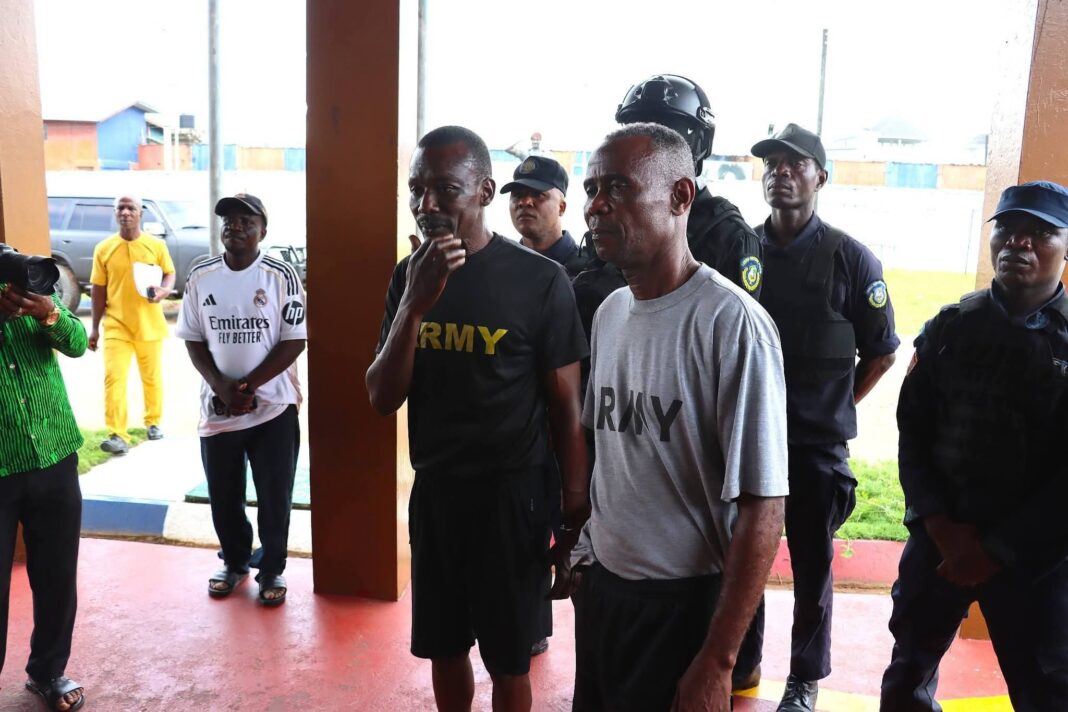
The dismissal of Sergeants Robert P. Menyon and Abu S.B. Sheriff on October 21, 2026, followed the circulation of a video showing an alleged assault on Blessings Kpalleh in the Thinkers Village community of Paynesville. The incident sparked public condemnation and placed the conduct of military personnel under renewed scrutiny.
However, beyond the public outrage and the military leadership’s declaration of zero tolerance for misconduct, a more fundamental question deserves attention: Was the punishment imposed through a fair and legally sound process, and was immediate dismissal the appropriate disciplinary response?
The question is not whether military personnel should be held accountable for abusing civilians. They should. The question is whether accountability must be exercised within a framework that protects the rights of the accused while preserving the integrity of the Armed Forces.
Reports from the Liberia News Agency indicate that the dismissal order invoked Chapter 7, Section 7.7(j) of the National Defense Act of 2008 and discharged both sergeants immediately for the good of the service.
A DECISIVE RESPONSE, BUT WAS IT THE RIGHT PROCESS?
General Forleh’s action communicates a clear message: the AFL leadership will not tolerate conduct it considers incompatible with military service.
That message matters in a country where citizens expect security personnel to protect them rather than expose them to abuse.
Military personnel operate under a professional code of conduct and a chain of command. Their uniforms carry public authority, and their actions can affect confidence in the entire institution.
When soldiers are accused of mistreating civilians, military authorities have a responsibility to investigate the allegations, establish the facts and take appropriate action.
Nevertheless, the speed and severity of the punishment raise questions that deserve answers.
The Chief of Staff reportedly said the decision was based on information obtained through the military’s internal security and investigative processes rather than pressure from social media.
That statement is significant. If a proper investigation was completed, the AFL should be able to explain the nature of the findings and the legal basis for its decision without compromising legitimate confidentiality requirements.
But the public announcement alone does not establish whether every applicable procedural safeguard was observed.
A disciplinary decision can be firm without being arbitrary, and a military commander can demonstrate authority without making transparency a casualty of decisive leadership.
The AFL should therefore clarify what investigative and administrative procedures preceded the dismissals.
WHAT DOES THE NATIONAL DEFENSE ACT AUTHORIZE?
The AFL cited Section 7.7(j) of the National Defense Act of 2008 as the basis for the dismissals.
The provision is part of the law’s framework governing reasons for discharging members of the Armed Forces.
Importantly, the Ministry of National Defense previously reported that Section 7.7(j) was used in the administrative discharge of three military personnel in June 2024. The ministry’s announcement identified different discharge authorities for the individuals involved, including the President and the Chief of Staff.
This history demonstrates that the provision has been used for administrative separation from the military.
However, the existence of a discharge provision does not automatically answer every legal question surrounding its application.
Three issues must be distinguished.
First, statutory authority: Did the applicable law authorize General Forleh to discharge these two sergeants under the specific circumstances of this case?
Second, procedural compliance: Were the relevant investigative and administrative requirements satisfied before the order was issued?
Third, proportionality: Was immediate discharge a reasonable response to the established misconduct, taking into account the applicable military standards and the individual circumstances of each soldier?
The publicly reported information does not conclusively resolve all three questions.
It would therefore be premature to declare that the Chief of Staff violated the law. Equally, it would be premature to conclude that the entire process was legally unassailable simply because a statutory provision was cited.
The complete dismissal order, the relevant statutory text and the applicable military regulations should be examined before a definitive legal conclusion is reached.
THE VICTIM FORGAVE THEM. SHOULD THAT HAVE MATTERED?
One of the most striking aspects of the case is the position taken by the alleged victim.
According to the Liberia News Agency, Kpalleh said she had forgiven the soldiers and wanted them punished, but did not want them to lose their military careers.
Her appeal did not change the AFL’s decision.
This introduces a difficult question about the relationship between a victim’s wishes and an institution’s responsibility to enforce professional standards.
On one hand, the victim’s perspective deserves to be heard and treated with respect. She is the person directly affected by the incident, and her views about punishment and reconciliation are relevant to the broader discussion of justice.
On the other hand, the military cannot necessarily leave disciplinary decisions entirely to the preferences of an individual victim.
Military misconduct can raise institutional concerns extending beyond one incident. If personnel abuse their authority, the consequences may affect public confidence, operational discipline and the credibility of the entire service.
Consequently, forgiveness does not automatically eliminate the military’s responsibility to act.
But neither does the military’s responsibility mean that the victim’s appeal should be dismissed as irrelevant.
Her position raises a legitimate question: Could the AFL have imposed a serious disciplinary penalty that held the soldiers accountable without necessarily ending their military careers?
That question deserves examination, not because the soldiers should escape consequences, but because effective discipline requires authorities to consider the available lawful options and the circumstances of each case.
The AFL should explain why dismissal was considered appropriate and whether alternative sanctions were considered under the applicable rules.
THE PROBLEM WITH PUBLIC CONDEMNATION BEFORE THE FULL FACTS ARE KNOWN
General Forleh reportedly described the soldiers as “bad apples” and compared them to the Ebola virus while condemning their conduct.
His remarks reflected the seriousness with which he viewed the incident. They also communicated the leadership’s determination to distance the institution from alleged misconduct.
However, public condemnation by senior commanders raises an important institutional consideration.
Military authorities must be able to condemn conduct that violates professional standards while ensuring that disciplinary decisions rest on established facts and applicable law.
Public anger can be understandable, particularly when a video appears to show a person being mistreated. But a viral video, while potentially important evidence, does not necessarily establish every circumstance surrounding an incident or the individual responsibility of everyone involved.
The AFL says it relied on information gathered through internal investigative processes. That makes it important for the institution to clarify what those processes established.
The public needs to understand the basis for the decision, while the soldiers retain whatever procedural protections the applicable law affords them.
Justice should not depend on how loudly the public demands punishment. It should depend on evidence, law and a fair assessment of responsibility.
This principle does not diminish the seriousness of the alleged assault. Instead, it strengthens the legitimacy of the disciplinary response.
SHOULD BOTH SOLDIERS HAVE RECEIVED THE SAME PUNISHMENT?
Another question concerns the individual roles of the two sergeants.
Public reports identify both men as having been discharged in connection with the incident. However, the available reporting does not fully establish the respective actions attributed to each soldier or the findings made against them individually.
If the evidence established that both engaged in misconduct warranting the same sanction, the AFL should explain that conclusion.
If their roles differed materially, the military should be prepared to explain how those differences were considered.
The principle is straightforward: disciplinary decisions should reflect the evidence against each individual, rather than treating everyone associated with an incident as automatically bearing identical responsibility.
This is especially important where the punishment ends a military career.
The question is not whether the military should protect its personnel from accountability. It is whether accountability should be individualized, evidence-based and consistent with the applicable rules.
THE FAMILIES SHOULD NOT BECOME AN AFTERTHOUGHT
The dismissal order reportedly directed that the soldiers’ families be removed from the Edward Beyan Kesselly Military Barracks and relocated to the area of the Samuel Kanyon Doe Sports Complex.
That directive raises a separate question about the treatment of dependants who may have been living in military accommodation through the soldiers’ service.
The legality and implementation of the directive depend on the applicable accommodation rules, the families’ occupancy status and the authority under which the order was issued.
If the families’ right to occupy the barracks depended on the soldiers remaining in active service, their departure might follow established regulations. But the AFL should clarify those rules and explain the arrangements made for the affected households.
The families were not accused of the alleged misconduct. Their circumstances should therefore be considered separately from the disciplinary action against the soldiers.
An administrative decision affecting a service member should not become an excuse to disregard the lawful interests or basic dignity of that person’s dependants.
The AFL should clarify the legal basis for the relocation directive, the notice provided and whether reasonable arrangements were made for the families.
DISCIPLINE MUST ALSO INCLUDE ACCOUNTABILITY TO CIVILIANS
The case presents an opportunity for the AFL to demonstrate what its commitment to professionalism means in practice.
The military’s responsibility extends beyond punishing individual personnel after misconduct occurs. It also includes ensuring that members understand the limits of their authority, the rights of civilians and the standards expected of them during confrontations.
Training, supervision, clear rules of engagement in civilian settings and credible complaints procedures are all important elements of institutional accountability.
If the investigation confirms that the soldiers abused their authority, the AFL should communicate the findings and explain the measures intended to prevent similar incidents.
The institution should also clarify whether the incident has been referred to civilian law enforcement and what further proceedings, if any, may follow.
An administrative discharge and a criminal prosecution are different matters. Dismissal from the military does not, by itself, determine whether criminal liability has been established.
Similarly, if the evidence supports further proceedings under Liberian law, the appropriate authorities should determine the next steps through the applicable legal process.
THE BIGGER QUESTION: WILL MILITARY DISCIPLINE BE CONSISTENT?
Public confidence depends not only on whether authorities act decisively in a highly publicized case, but also on whether they apply standards consistently.
The AFL should be able to demonstrate that comparable misconduct is investigated fairly, that disciplinary measures are grounded in established rules and that command authority is exercised within legal limits.
This does not require the military to disclose every confidential detail of its internal proceedings. It does require enough transparency for the public to understand the legal basis for consequential decisions.
The questions raised by the dismissals should also encourage a broader discussion about the military’s disciplinary framework.
What procedures govern administrative discharge? What opportunities for review are available to affected personnel? How are differences in individual responsibility considered? And what mechanisms exist to ensure that complaints involving civilians are investigated impartially?
These are institutional questions, not merely questions about two soldiers.
A professional armed force must protect civilians, enforce discipline and preserve fairness within its own ranks. These responsibilities are complementary, not contradictory.
CONCLUSION: A TEST OF COMMAND AUTHORITY AND THE RULE OF LAW
General Davidson Forleh’s decision has placed military accountability at the centre of public discussion.
The AFL has communicated that alleged misconduct by its personnel will carry consequences. That message is important, particularly where civilian protection and confidence in the security services are concerned.
However, the lasting credibility of the decision will depend on more than the severity of the punishment or the forcefulness of the Chief of Staff’s remarks.
It will depend on whether the AFL can demonstrate that the decision was legally authorized, based on a proper assessment of the evidence and reached through the procedures required by law.
Kpalleh’s appeal for leniency does not automatically invalidate the dismissal. Equally, public outrage does not eliminate the need for due process.
The law must accommodate both the military’s duty to maintain discipline and the requirement that its authority be exercised lawfully and fairly.
The AFL should therefore provide a clear explanation of the statutory authority invoked, the investigative findings supporting the decision, the procedures followed and the basis for ordering the families to leave military accommodation.
Until those questions are answered, the public has grounds to seek clarification, but not sufficient verified information to pronounce a definitive legal verdict on the Chief of Staff’s conduct.
Ultimately, the test of military leadership is not simply how quickly a commander punishes misconduct. It is whether the commander can demonstrate that discipline, fairness and the rule of law have been upheld together.