By Staff Writer | Smart News Liberia
MONROVIA, LIBERIA – Executive Chairperson of the Liberia Anti-Corruption Commission, Alexandra K. Zoe, has acknowledged that many Liberians remain unconvinced by the country’s fight against corruption, admitting that the latest findings of the Center for Transparency and Accountability in Liberia (CENTAL) 2025 State of Corruption Report reveal a significant deficit in public confidence.
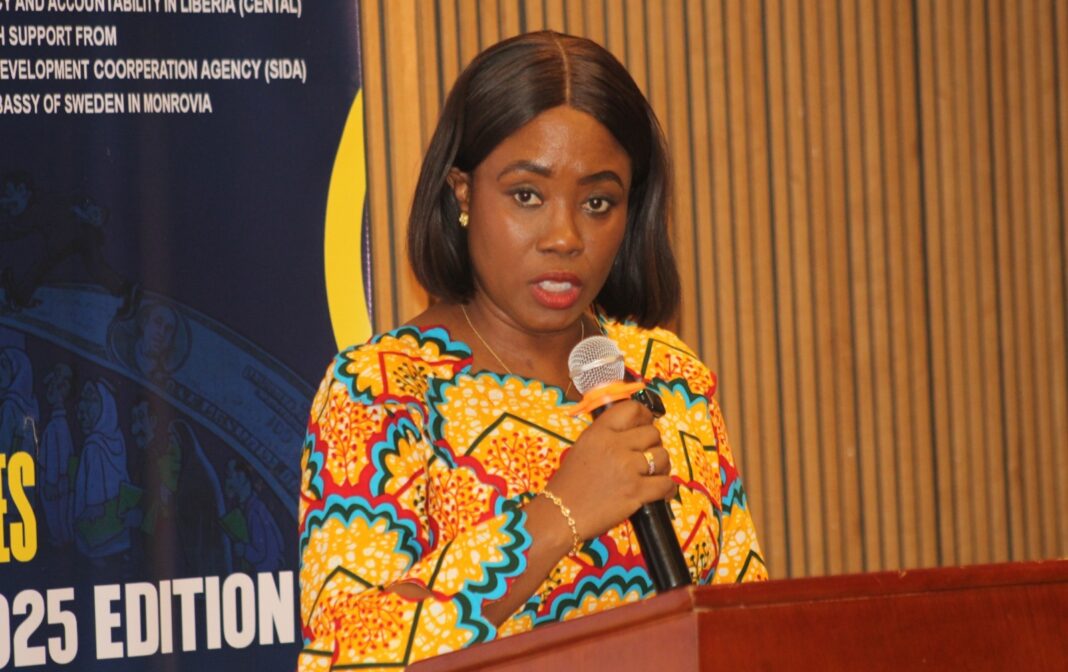
Speaking Wednesday, July 8, 2026, at the Royal Grand Hotel during the official launch of CENTAL’s fifth State of Corruption Report (SCORE 2025), Cllr. Zoe described the report as both an affirmation of the Commission’s work and a wake-up call demanding stronger action against corruption.
“If you see the 2025 figures, the public is not impressed with the work we are doing,” Zoe candidly admitted. “So it is illegal for us to continue to intensify the fight.”
Although her remarks appeared to contain a verbal slip by saying “illegal,” she made it clear that her intention was to emphasize the urgent need to intensify Liberia’s anti-corruption campaign rather than slow it down.
Her comments come as the newly released CENTAL report paints a mixed picture of Liberia’s anti-corruption landscape. While the report found that overall public perception of corruption has declined compared with previous years, it also revealed declining confidence in key public institutions responsible for promoting accountability and enforcing the rule of law.
The report further identified the police as Liberia’s most corruption-prone public service, followed by medical services, court services, education, and transportation, highlighting persistent governance challenges despite modest improvements in public perception of the government’s anti-corruption commitment.
Launching the report, Zoe praised CENTAL for producing evidence-based research that contributes to transparency, accountability, and informed public debate.
She said the report provides valuable data to assess progress, identify weaknesses, and guide future policy reforms aimed at strengthening integrity within public institutions.
“I commend CENTAL for its continued commitment to evidence-based research and constructive civic engagement in advancing transparency, integrity, and accountability,” she said.
The LACC Executive Chairperson maintained that the Commission remains committed to carrying out its statutory responsibilities through impartial investigations, corruption prevention initiatives, public education, asset declaration enforcement, and prosecution in collaboration with other integrity institutions.
However, she acknowledged that investigations alone will not restore public confidence.
“We can do all of the investigations we can, but if we can’t prosecute, the citizens will still not have confidence in the government,” Zoe declared.
She argued that rebuilding trust depends largely on ensuring that corruption cases result in meaningful accountability through successful prosecutions.
In that regard, Zoe welcomed the Boakai administration’s submission of the proposed National Anti-Corruption Court Bill to the Legislature, describing the proposed court as a critical reform that could strengthen Liberia’s capacity to prosecute corruption cases more effectively.
She urged lawmakers to expedite consideration and passage of the legislation.
“The government has taken steps through the submission of the bill. We welcome it, and we are looking to the Legislature to ensure that the bill is passed,” she said.
Throughout her address, Zoe emphasized that the CENTAL report should not be viewed as an attack on government institutions but rather as an opportunity for reflection and institutional improvement.
She called on policymakers, government institutions, civil society organizations, development partners, and ordinary Liberians to carefully study the report’s findings and recommendations as a roadmap for strengthening governance and rebuilding public confidence.
According to Zoe, defeating corruption will require collective action, unwavering political will, and active citizen participation.
The launch of the CENTAL report comes at a time when Liberia continues to face increasing public scrutiny over corruption allegations, governance concerns, and demands for stronger accountability across public institutions.
While acknowledging progress made in strengthening Liberia’s anti-corruption framework, Zoe stressed that much more remains to be done.
“The fight is yet to begin,” she declared, underscoring that the latest public perception findings should serve as motivation, not complacency, for institutions tasked with combating corruption.
Her remarks reinforce a central message emerging from the 2025 State of Corruption Report: despite incremental progress, public confidence in Liberia’s anti-corruption architecture will ultimately depend not on promises or investigations alone, but on visible prosecutions, consistent accountability, and measurable results.