By Staff Writer | Smart News Liberia
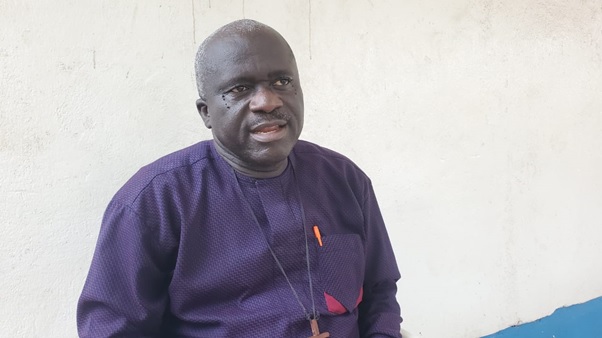
MONROVIA – Prominent Liberian clergyman, Bishop Kortu Brown, has raised serious concerns over Liberia’s reported support for recommendations related to sexual and reproductive health services, including access to abortion, at the United Nations Human Rights Council session.
Delivering a statement on Wednesday, March 18, 2026, on behalf of the Christian Council International Church Aid Inc. and other faith-based institutions, Bishop Brown said the position attributed to Liberia has sparked unease among religious and traditional communities across the country. He emphasized that the statement also reflected the views of the broader religious community and advocacy groups, including the Campaign to Stop Extreme Abortion in Liberia.
“Thank you for this opportunity. I deliver this statement on behalf of Christian Council International Church Aid Inc. and the general religious community in Liberia,” Bishop Brown stated, setting the tone for a firm but measured response to the ongoing international discussions.
The bishop underscored that abortion in Liberia remains strictly regulated under existing laws. He pointed specifically to Chapter 16 of the Penal Law of Liberia, which criminalizes abortion except under limited conditions, such as when the life or health of the mother is at risk. According to him, any attempt to expand these provisions would contradict long-standing legal and societal norms.
“We are concerned about Liberia’s support for five recommendations related to sexual and reproductive health services for all and access to abortion services,” Bishop Brown said, warning that such measures could conflict with the country’s legal framework and cultural identity.
He further noted that past efforts to introduce broader abortion provisions through amendments to the revised Public Health Law of 1976 had been strongly resisted by both religious leaders and ordinary citizens. That resistance, he argued, reflects deeply rooted societal values that policymakers must not ignore.
Addressing the broader concept of sexual and reproductive health services, Bishop Brown argued that the term lacks a universally agreed international definition. “Consequently, Liberia is under no binding international obligation to legalize abortion,” he asserted, urging authorities to interpret any recommendations within the bounds of national sovereignty.
The statement also touched on the contentious issue of comprehensive sexuality education. Bishop Brown maintained that such frameworks are not anchored in universally binding international instruments, leaving their adoption entirely at the discretion of individual states.
“Comprehensive sexuality education remains widely debated in many societies,” he said, suggesting that Liberia should instead prioritize culturally aligned alternatives. He highlighted abstinence-focused education as a viable approach that can equip young people with knowledge on relationships, health, and HIV prevention without undermining societal values.
Importantly, Bishop Brown emphasized the central role of parents in shaping the moral and educational development of children. He called for policies that protect and promote parental involvement in decisions related to education and health.
“We therefore call upon the Government of Liberia to ensure that the implementation of these recommendations remains consistent with national laws, respects parental rights and upholds the country’s cultural and moral values,” he urged.
While expressing concern, the religious leader also advocated for constructive engagement. He encouraged continued dialogue between Liberia and international partners, stressing the need to respect the diversity of cultural, social, and religious contexts in global policy discussions.