MONROVIA – On Sunday, February 22, 2026, the Freeport of Monrovia became the stage for what the governing Unity Party, headed by President Joseph Nyuma Boakai, has described as a significant moment in Liberia’s infrastructure drive. The arrival of the first batch of 137 yellow earth-moving machines aboard the HJ SINGAPORE was greeted with excitement, optimism, and political fanfare by supporters, followers, and stalwarts of the governing Unity Party. For a country long plagued by impassable roads and rural isolation, the equipment represents a long-awaited intervention in a sector critical to national development.
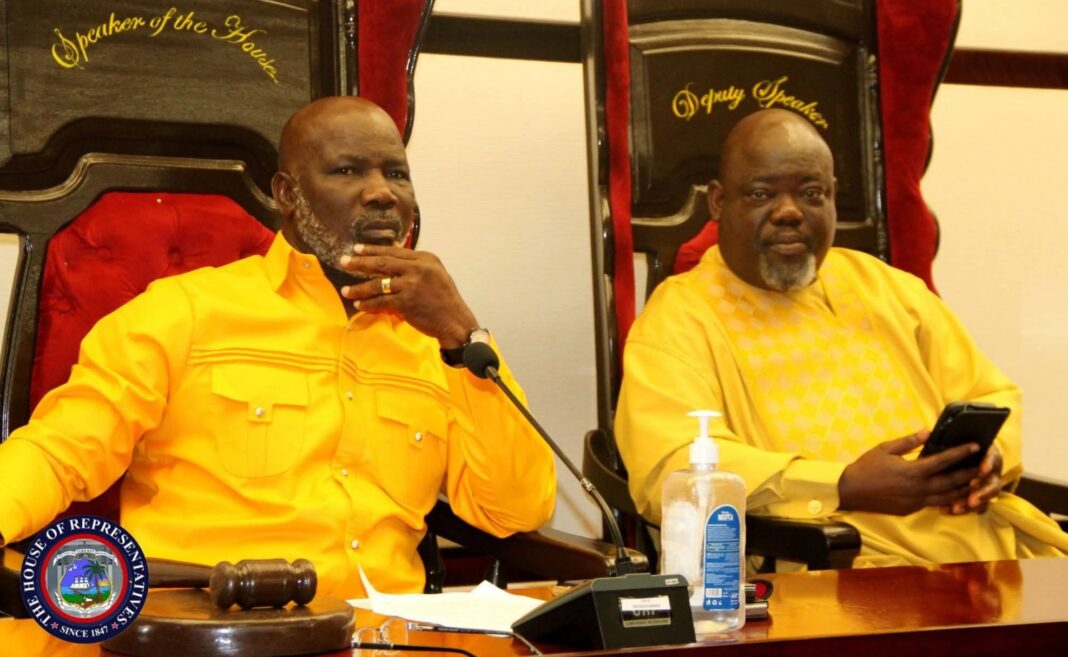
But beyond the machines themselves, another development has drawn public attention. Since their arrival, Majority lawmakers, Ministers, and directors have been visibly clad in dominant yellow outfits, an apparent show of solidarity and full endorsement of the road initiative. At today’s session of the House of Representatives, Speaker Richard Nagbe Koon and Deputy Speaker Thomas Fallah, along with other lawmakers, were seen wearing yellow. The color, matching the machines, has quickly evolved into a political statement, a public display of unity behind what is being projected as transformative progress.
Symbolism has always played a role in politics. Visual unity can energize supporters and communicate confidence in government policy. By wearing yellow, officials are likely signaling that they stand firmly behind the infrastructure agenda and are ready to defend it against critics. In a political environment where perception often shapes narrative, coordinated imagery can be powerful.
However, infrastructure is not built on symbolism alone. The real test of the 137 machines will not be measured by the brightness of yellow attire in Monrovia but by the durability of roads constructed in rural Liberia. Farmers in Lofa, traders in River Gee, Sinoe and commuters in Grand Kru are not interested in political colors; they are interested in reliable roads that reduce travel time, cut transportation costs, and connect communities to opportunity.
Maintenance must therefore become the centerpiece of this initiative. Liberia has previously acquired equipment that later deteriorated due to poor upkeep, lack of spare parts, and weak oversight. Without a structured maintenance program, protected funding, and strict accountability, these machines risk becoming idle monuments rather than engines of development. Sustainability must be deliberate, not assumed.
Equally important is manpower. Heavy-duty equipment requires skilled operators, trained mechanics, and capable engineers. If the government fails to invest in capacity-building for Liberians to manage and maintain these machines, the project may struggle in the long term. Development is not only about acquiring assets; it is about empowering people to sustain them.
While officials publicly celebrate infrastructure progress, many Liberians remain trapped in economic hardship. Poverty continues to weigh heavily on households across the country. Youth unemployment is high, and basic services remain inconsistent. The celebratory tone surrounding the machines must not drown out the daily struggles of ordinary citizens trying to survive.
Even more concerning are reports of demolitions that have rendered some Liberians homeless, often in the context of land disputes and ownership claims. Families displaced in the name of property enforcement face uncertainty and vulnerability. If solidarity can be expressed through coordinated yellow attire for machines, it should also be expressed through visible, decisive support for citizens displaced by such actions.
Lawmakers, Ministers, and directors must therefore broaden the meaning of solidarity. True national unity requires standing not only with projects but with people. Just as officials proudly wear yellow in support of infrastructure, they should stand just as visibly with struggling market women, unemployed youth, and families facing homelessness. Development that ignores human suffering is incomplete.
The 137 yellow machines have the potential to reshape Liberia’s road network and unlock rural economic growth. That promise is real and should be acknowledged. But leadership is ultimately measured not by coordinated colors, but by coordinated compassion and competent governance. If the same enthusiasm shown in wardrobe choices translates into sustained infrastructure management and genuine support for suffering Liberians, then yellow will symbolize progress. If not, it risks becoming just another political shade in a country still yearning for inclusive development.