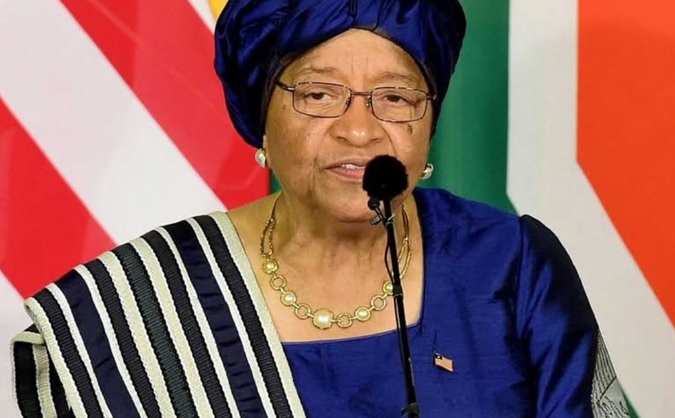

LISGIS Director General Richard F. Ngafuan champions institutional leadership, statistical independence, artificial intelligence, and regional collaboration as Liberia hosts a major ECOWAS statistical management training under a World Bank-funded regional project.
By Socrates Smythe Saywon
MONROVIA, LIBERIA — Liberia’s hosting of the ECOWAS Regional Training on Statistical Leadership and Management for managers of National Statistical Systems (NSS) has provided an important platform for strengthening regional statistical cooperation while highlighting the leadership of Richard Fatorma Ngafuan, Director General of the Liberia Institute of Statistics and Geo-Information Services (LISGIS).
The five-day training, held in Monrovia from October 5 to 9, 2026, brought together representatives of National Statistical Systems from ECOWAS member states and Mauritania to strengthen institutional leadership, improve the coordination of statistical activities, and advance the production and dissemination of reliable, high-quality, and timely data across the region.
Organized under the World Bank-funded Project for the Harmonization and Improvement of Statistics in West and Central Africa (HISWACA), the programme focused on an essential requirement for effective governance and development: ensuring that statistical institutions possess the leadership, management capacity, professional independence, and technological readiness needed to meet the growing demand for credible information.
For LISGIS, the hosting of the regional training marked a notable institutional achievement. Ngafuan disclosed during his closing remarks that Liberia had hosted the statistical leadership and management training for the first time in 16 years, expressing appreciation to the ECOWAS Commission for the opportunity and hope that similar programmes would return to Liberia in the future.
His message extended beyond the successful organization of the event. He challenged participating statistical managers to apply the knowledge gained during the training, share their experiences with colleagues, and strengthen their respective institutions so that the benefits of the programme would extend well beyond the delegates who attended.
The workshop also provided an opportunity for statistical professionals from different countries to exchange experiences and develop recommendations addressing leadership, statistical quality assurance, artificial intelligence, data communication, and regional representation in international statistical decision-making.
These priorities placed the Monrovia training within a wider regional effort to modernize statistical systems and ensure that official data remains relevant to the changing needs of governments, businesses, researchers, development partners, and citizens.
Hosting the ECOWAS training represented an important opportunity for LISGIS to strengthen its engagement with regional statistical institutions and contribute to the advancement of professional capacity-building across West Africa.
In his closing address, Ngafuan described the occasion as an honour and expressed gratitude to the ECOWAS Commission for collaborating with LISGIS to bring the programme to Liberia. He also thanked the facilitators, participating delegates, and personnel who contributed to the successful organization of the training.
His remarks conveyed an important message about the role of national statistical institutions in regional development. Although countries operate under different administrative arrangements and face different economic and social challenges, their statistical agencies share a common responsibility to produce reliable information that supports informed decision-making.
Ngafuan emphasized that statistical professionals must continue learning, adapting, and improving their capacities as the demands placed on their institutions evolve.
Drawing on the changing nature of knowledge and technology, he argued that professional development should extend beyond the technical disciplines traditionally associated with statistics. Statistical institutions also need managers who understand governance, institutional coordination, resource management, communication, and the responsibilities involved in directing complex organizations.
His emphasis on leadership development was particularly relevant to the workshop’s objectives because the effectiveness of a national statistical system depends not only on the technical abilities of its personnel but also on how its activities are planned, coordinated, supervised, and communicated.
By helping bring the regional programme to Monrovia, Ngafuan and LISGIS created an opportunity for participating institutions to examine these responsibilities collectively and consider practical ways to strengthen their management systems.
The achievement also reinforced the value of collaboration between national institutions and regional organizations in building professional capacity and encouraging the exchange of good practices.
For Liberia, the opportunity to host the training offered a platform to deepen professional relationships with statistical counterparts and demonstrate its willingness to contribute to regional initiatives aimed at improving official statistics.
The training was organized under the World Bank-funded Project for the Harmonization and Improvement of Statistics in West and Central Africa, commonly known as HISWACA.
The project’s regional focus reflects the importance of strengthening statistical systems so that countries can produce dependable information using appropriate standards and methods while improving coordination and comparability across national boundaries.
Reliable statistics are essential to effective public administration. Governments require accurate information about population trends, economic performance, employment, education, health, agriculture, and other development indicators to establish priorities and evaluate the results of public programmes.
When statistical institutions lack sufficient management capacity, coordination, or quality-assurance systems, the usefulness of the information they produce can be weakened. Delayed data, inconsistent methodologies, and limited communication can make it difficult for decision-makers to obtain the evidence needed to respond to national challenges.
The Monrovia training addressed these concerns by focusing on the leadership and management capabilities required to improve statistical production and dissemination.
Its objectives included strengthening the capacities of statistical managers, improving coordination among statistical producers, and supporting the availability of high-quality and timely information throughout the region.
The programme also highlighted the importance of ensuring that statistical institutions are prepared to respond to technological change and the growing demand for more accessible information.
For LISGIS, participation in a regional initiative of this nature offers an opportunity to engage with shared professional standards and management practices while strengthening relationships with institutions working toward similar objectives.
The long-term value of HISWACA and related capacity-building initiatives will depend on the extent to which participating countries can translate training and technical assistance into stronger institutions, better data quality, and more effective use of statistics in national development.
One of the principal recommendations emerging from the training was the need to strengthen strategic leadership and safeguard the professional independence of statistical institutions.
Statistical independence is fundamental to the credibility of official data. It helps ensure that statistical findings are produced according to established professional methods and standards rather than political preferences or institutional pressure.
When official statistics are credible, transparent, and professionally managed, they provide a more dependable foundation for public policy, economic planning, investment decisions, academic research, and public debate.
Statistical managers therefore have a responsibility to establish working environments that protect professional integrity, encourage technical competence, and promote accountability.
Effective leadership also requires the ability to coordinate statistical activities across institutions and ensure that resources are directed toward clearly defined priorities.
The training’s recommendations recognized that statistical production involves numerous interconnected activities, from data collection and processing to validation, analysis, publication, and public communication. Weaknesses in any of these areas can affect the usefulness of the final information.
Strengthening strategic leadership can help institutions identify operational challenges, improve internal coordination, and ensure that statistical programmes respond to the needs of their countries.
For LISGIS, these principles are important to the continued development of Liberia’s national statistical system and its capacity to provide dependable information for national planning.
Ngafuan’s emphasis on leadership and independence placed these responsibilities at the centre of the discussions surrounding the future of official statistics in West Africa.
Another major recommendation from the training was to improve managerial capacities and coordination among statistical producers while accelerating the implementation of national statistical quality-assurance frameworks.
Quality assurance is essential because the usefulness of statistics depends on their accuracy, consistency, relevance, timeliness, and methodological reliability.
Statistical information must pass through appropriate processes of verification and validation before it can be relied upon for important decisions. Clear standards and consistent procedures help institutions identify errors, improve data collection, and maintain confidence in published findings.
National statistical systems often involve multiple institutions responsible for producing different categories of official data. Effective coordination among these institutions can reduce duplication, improve the consistency of information, and encourage the use of compatible methods and standards.
The workshop’s recommendations therefore emphasized the importance of stronger management and coordination among statistical producers.
Implementing national quality-assurance frameworks can also help statistical agencies establish clearer procedures for monitoring performance, identifying weaknesses, and improving the reliability of their outputs.
For policymakers, better-quality statistics provide a stronger basis for assessing economic and social conditions, determining development priorities, and evaluating public programmes.
For citizens, reliable data can improve understanding of national challenges and provide a more informed basis for public discussion.
The challenge for participating institutions will be to turn the recommendations into practical improvements through sustained professional development, adequate resources, effective supervision, and consistent application of accepted statistical standards.
Among the most forward-looking issues discussed during the training was the responsible use of artificial intelligence and the diversification of data sources.
In his closing remarks, Ngafuan emphasized the speed of technological change and encouraged statisticians in West Africa to strengthen their capacities rather than allow innovation to outpace their professional preparedness.
He specifically highlighted the potential role of AI agents in improving statistical production and supporting the timely availability of data for policy formulation.
Artificial intelligence can assist statistical institutions in processing large volumes of information, identifying patterns, automating repetitive tasks, and supporting analytical work. When properly designed and supervised, these capabilities can help improve efficiency and allow statisticians to devote more attention to complex analytical and methodological responsibilities.
The training’s recommendation to promote the responsible use of artificial intelligence reflects the need to combine innovation with professional safeguards.
Statistical institutions must ensure that AI-supported processes preserve data quality, protect confidential information, address potential bias, and remain consistent with established statistical standards.
Technology must also be introduced in ways that strengthen institutional capacity rather than create new vulnerabilities or dependence on systems that staff cannot adequately evaluate.
The call to diversify data sources is equally important. As information needs grow, statistical institutions may benefit from appropriately integrating different data sources, provided that quality, comparability, privacy, and methodological soundness are maintained.
For LISGIS and its regional counterparts, these priorities point to the importance of investing in technological skills, infrastructure, responsible innovation, and continuing professional education.
Ngafuan’s message was that statistical institutions must prepare for the future by strengthening their ability to understand and responsibly apply emerging technologies.
The training also emphasized the need to strengthen communication strategies to encourage wider use of statistical data.
Producing reliable statistics is only part of the responsibility of a national statistical institution. The information must also reach the people who need it and be presented in a form they can understand.
Ngafuan addressed this issue in his closing remarks, asking how statistical institutions could communicate their findings to politicians, managers, and ordinary citizens who may not understand the technical concepts and methods involved in statistical production.
His point highlighted an important challenge for statistical agencies. Complex data can have limited practical value when its findings are difficult to interpret or are not communicated effectively to intended audiences.
Government officials need accessible information to understand national conditions and make policy decisions. Businesses may require clear economic indicators to guide investment and planning, while researchers and development partners depend on dependable datasets to conduct analysis and evaluate programmes.
Citizens also need understandable information about the conditions affecting their communities and the performance of public services.
Effective communication can involve clearer statistical reports, accessible summaries, appropriate visual presentations, improved digital dissemination, and public engagement designed for different audiences.
The objective is not to simplify statistics at the expense of accuracy. Rather, it is to make reliable information more accessible while preserving its meaning, methodological integrity, and limitations.
For LISGIS, stronger communication can help increase public understanding of official data and encourage its use in research, policy development, business decisions, and civic engagement.
The training’s recommendation therefore connected statistical production with the wider responsibility of ensuring that information becomes useful to society.
Beyond the principal recommendations on leadership, quality assurance, artificial intelligence, and communication, participants called on ECOWAS to support additional measures aimed at strengthening statistical capacity across the region.
These included specialized capacity-building in generative artificial intelligence, regular regional exchanges of good practices, translation of international statistical guidelines into Community languages, and technical assistance and peer reviews for quality assurance.
The recommendations recognize that statistical institutions operate in different linguistic, administrative, and technological environments. Capacity-building initiatives must therefore take these differences into account while encouraging the adoption of appropriate professional standards.
Training in generative AI could help statistical managers and technical personnel understand the potential applications and limitations of emerging tools, including their implications for data analysis, documentation, communication, and administrative processes.
Regular regional exchanges would provide opportunities for institutions to share experiences, learn from successful practices, and discuss solutions to recurring operational challenges.
The proposed translation of international statistical guidelines into Community languages could also improve accessibility and support a wider understanding of technical standards among professionals working in different linguistic environments.
Technical assistance and peer reviews could help national statistical institutions assess their procedures, identify weaknesses, and develop practical measures to improve data quality.
Together, these proposals demonstrate that participants viewed capacity-building as a continuing process requiring cooperation, professional exchange, and institutional support.
Their recommendations also offer ECOWAS an opportunity to consider how future regional initiatives can respond to the evolving needs of national statistical systems.
Another notable proposal from the participants was the establishment of a regional committee to ensure that the perspectives of the Community are adequately represented in international statistical decision-making.
The proposal reflects the importance of regional participation in discussions that shape statistical standards, methodologies, and professional practices.
International statistical decisions can influence how countries collect, classify, analyze, and report information. Ensuring that regional perspectives are considered can help national statistical institutions contribute practical experiences and identify issues that may require attention in different economic, social, or administrative settings.
A regional committee could potentially provide a platform for coordinating positions, sharing technical expertise, and facilitating engagement with international statistical bodies.
However, the structure, mandate, membership, and operating arrangements of such a committee would need to be developed and agreed upon through the appropriate regional processes.
The proposal nonetheless highlights participants’ interest in strengthening the collective voice of West African statistical institutions and improving their engagement with international statistical developments.
For LISGIS, this discussion reinforces the value of regional cooperation and the importance of maintaining professional relationships through which Liberia can contribute to shared statistical priorities.
The proposal also demonstrates that the workshop’s discussions extended beyond institutional management to consider the region’s role in shaping the future direction of official statistics internationally.
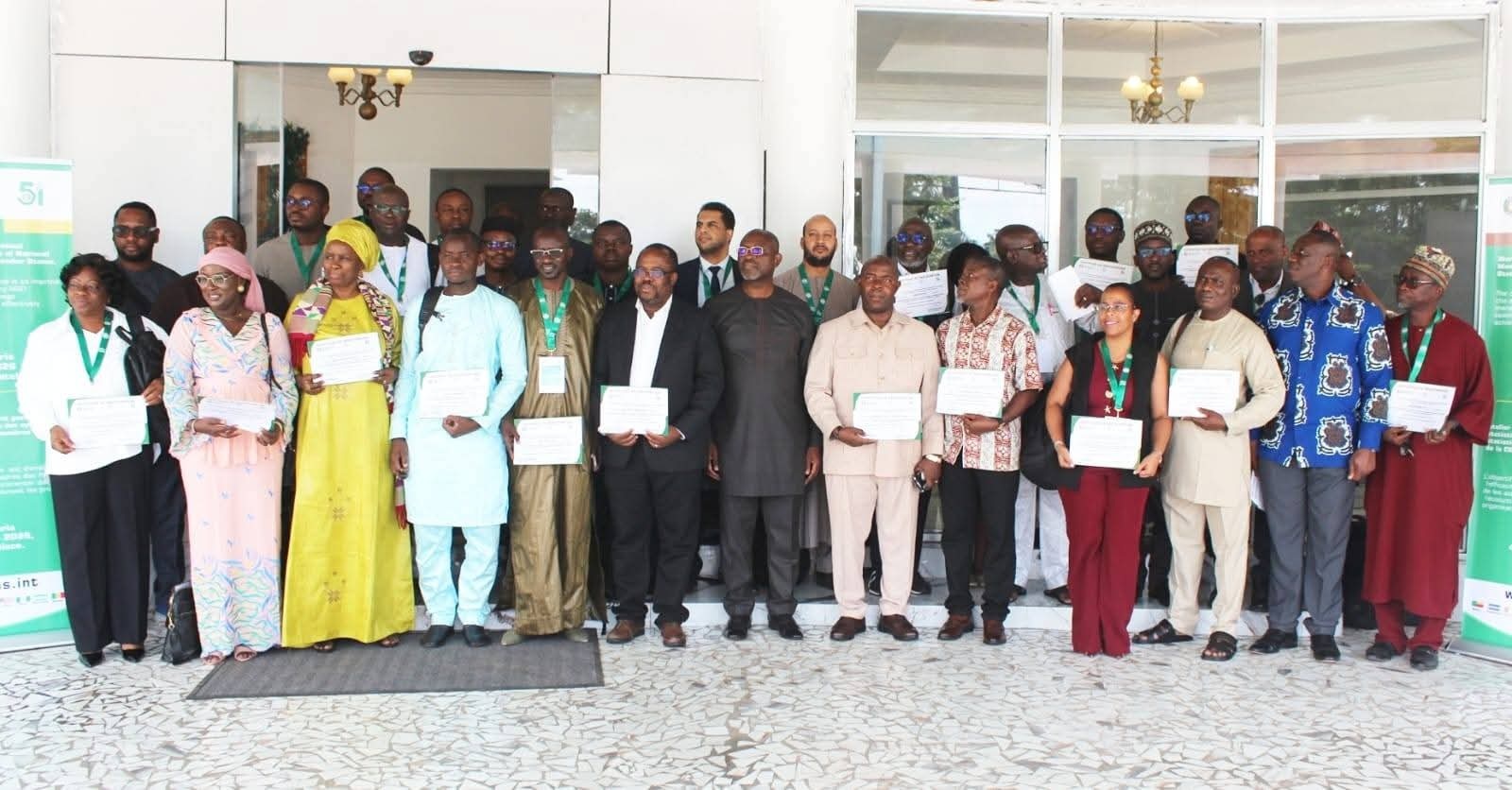
The workshop brought together representatives of National Statistical Systems from ECOWAS member states and Mauritania, alongside regional institutions including the West African Monetary Institute (WAMI), the West African Monetary Agency (WAMA), and AFRISTAT.
Participating countries included Ghana, Senegal, Liberia, Mauritania, Guinea-Bissau, Nigeria, Côte d’Ivoire, The Gambia, Guinea, Sierra Leone, Benin, Cabo Verde, and Togo.
The participation of these countries and regional institutions provided an opportunity for professionals with different experiences and responsibilities to exchange knowledge and examine common challenges.
Although the participating countries differ in geography, language, population, economic conditions, and administrative structures, their statistical institutions share the responsibility of producing credible information that supports public decision-making and national development.
Regional cooperation can help statistical agencies learn from one another, strengthen professional networks, and identify opportunities for joint capacity-building.
The involvement of institutions such as WAMI, WAMA, and AFRISTAT also reflected the importance of collaboration among organizations working in related areas of regional economic and statistical development.
For LISGIS, hosting the programme created an opportunity to deepen professional relationships and participate in discussions about the future of statistical systems across West Africa.
The regional dimension of the training was particularly relevant to the objective of improving the quality and availability of data while encouraging greater consistency and coordination among statistical producers.
The gathering demonstrated the value of bringing professionals together to address shared challenges and develop recommendations that can inform future institutional improvements.
Certificates were presented to participants at the close of the programme, marking the completion of the five-day training and recognizing their participation in the leadership and management sessions.
While the presentation of certificates marked the formal conclusion of the training, the more important test will be the extent to which participants apply the lessons learned within their respective institutions.
Ngafuan encouraged delegates to share the knowledge and skills gained with their teams so that their national statistical institutions could benefit beyond the individuals who attended the programme.
This expectation places responsibility on participants to communicate what they learned, identify practical applications, and encourage improvements in institutional management and statistical production.
It also reinforces the importance of professional development that produces benefits beyond the training environment.
For participating institutions, the opportunity lies in using the experience to strengthen management practices, improve coordination, support quality assurance, and prepare staff to respond to emerging technological and information needs.
For ECOWAS and its partners, the recommendations provide a basis for considering further capacity-building activities and mechanisms for exchanging good practices across the region.
The completion of the programme therefore represents both an achievement and a starting point for the next phase of institutional learning.
The ECOWAS Statistical Leadership and Management Training Workshop has provided LISGIS with an important opportunity to strengthen its regional engagement under the leadership of Director General Richard Fatorma Ngafuan.
By hosting the programme in Liberia, LISGIS helped create a platform for statistical managers to examine leadership challenges, exchange experiences, and consider practical approaches to improving the production and dissemination of official data.
The workshop’s recommendations established several priorities for future action, including stronger strategic leadership, protection of statistical independence, improved coordination, accelerated quality assurance, responsible artificial intelligence, diversified data sources, and more effective communication.
Participants also called for continued regional exchanges, specialized training in generative AI, wider access to international statistical guidelines, technical assistance, peer reviews, and stronger regional representation in international statistical decision-making.
Turning these recommendations into results will require sustained commitment from national statistical institutions, ECOWAS, and relevant development partners.
For LISGIS, the opportunity is to build on the experience gained through the programme and continue strengthening its professional relationships with regional counterparts.
For Liberia, stronger statistical capacity can contribute to better-informed national planning, more reliable assessments of economic and social conditions, and improved monitoring of development priorities.
For the wider region, sustained cooperation can help statistical institutions respond more effectively to common challenges while maintaining the professional standards necessary for credible official information.
Ngafuan’s emphasis on leadership development, institutional independence, technological innovation, and knowledge-sharing provides a useful framework for pursuing these objectives.
The enduring value of the Monrovia training will be measured not simply by its successful completion or the certificates presented, but by the practical improvements participating institutions achieve in the months and years ahead.
As Liberia builds on this milestone, LISGIS has an opportunity to strengthen its regional engagement through continued collaboration, professional development, and a commitment to reliable and timely statistics.
The workshop has concluded, but the work of applying its lessons continues. Its lasting contribution will depend on whether the knowledge exchanged in Monrovia translates into stronger institutions, improved statistical quality, more accessible information, and better-informed decisions that support development across West Africa.