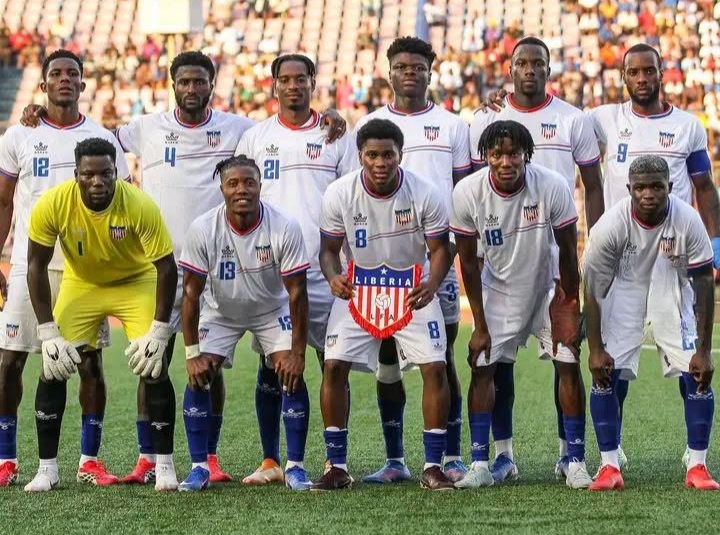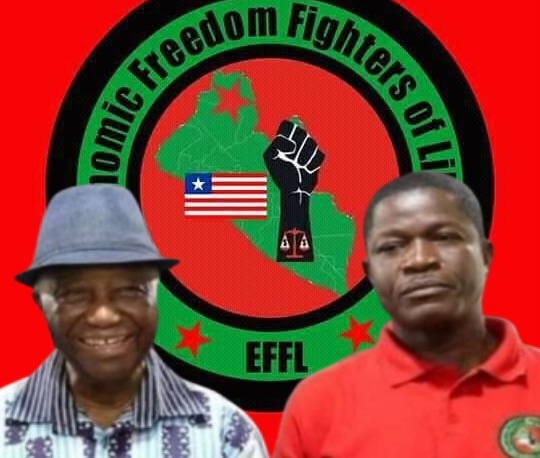
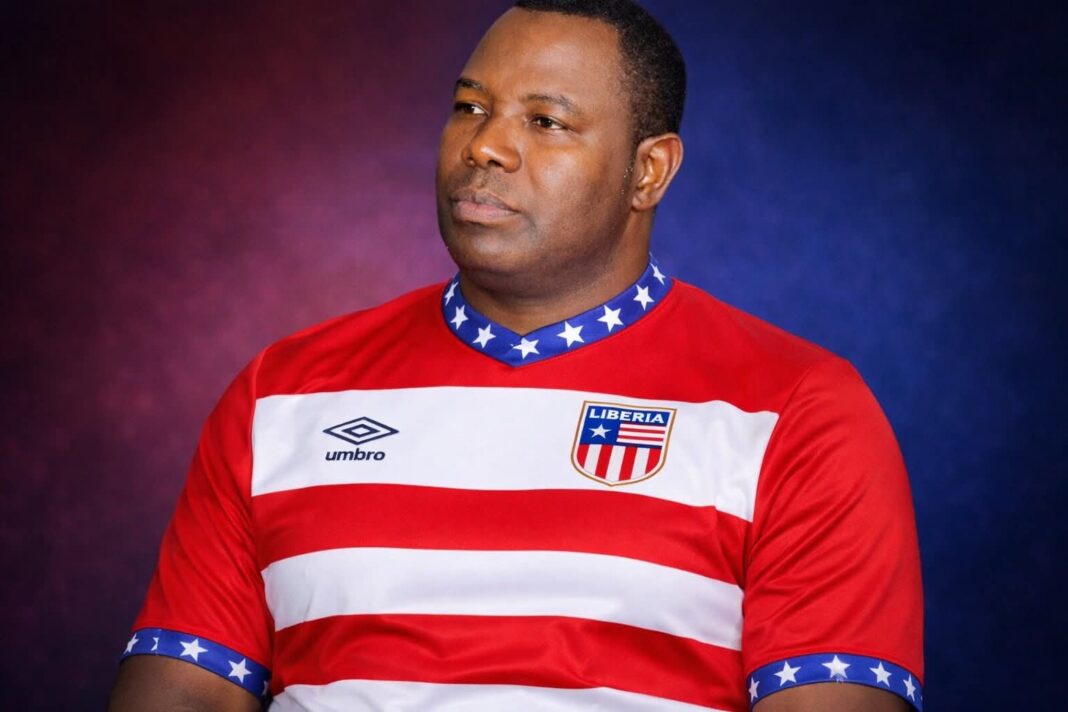
MONROVIA — What was supposed to be a national campaign to return Liberia’s Lone Star to the Africa Cup of Nations is increasingly becoming entangled in Liberia’s familiar political rivalry, with questions being raised over whether football is being used to settle old political scores.
At the center of the controversy is the decision by the Liberia Football Association (LFA) to appoint Rev. J. Luther Tarpeh, chairman of the ruling Unity Party (UP), as chairman of the Lone Star Mobilization and Fundraising Committee.
The LFA announced Tarpeh’s appointment in February 2026, giving him responsibility for mobilizing financial, logistical and other resources for the national team. The committee includes lawmakers, government officials, business executives, entertainers and football administrators.
the appointment has since generated questions among political and football observers about the wisdom of placing an active chairman of the governing political party at the head of a national football mobilization effort.
WHERE DOES GEORGE WEAH FIT IN?
The most politically sensitive part of the debate is not simply who is raising the money.
It is who Liberia chooses to recognize when celebrating its football history.
George Manneh Weah remains the only Liberian footballer to have won the FIFA World Player of the Year and Ballon d’Or, achievements that established him as one of Africa’s most internationally recognized footballers. Liberia’s own presidential biography records his 1995 FIFA World Player of the Year, Ballon d’Or and CAF Player of the Year achievements.
Weah also captained Liberia’s Lone Star and was part of the generations that reached the 1996 and 2002 Africa Cup of Nations tournaments.
For millions of Africans, his name is inseparable from Liberia’s football identity.
Yet critics of the current administration argue that the government’s efforts to rebuild the Lone Star have not adequately acknowledged Weah’s historic contribution to Liberian football.
That criticism, however, should be distinguished from established fact. There is no evidence in the sources reviewed that President Joseph Boakai or the UP has officially declared that George Weah should be excluded from Liberia’s football history.
What exists is a growing political argument over recognition, symbolism and legacy.
A FUNDRAISING CAMPAIGN WITH TWO CHAIRMEN
The controversy became even more complicated when the government created a separate Presidential National Team Resource Mobilization Fundraising Initiative, chaired by Minister of State Without Portfolio Hadja Mamaka Bility, with Youth and Sports Minister Cornelia Kruah serving as secretary. President Boakai subsequently endorsed the initiative.
Meanwhile, Tarpeh remained chairman of the LFA’s Lone Star Mobilization Committee.
The government says the objective is straightforward: raise the money necessary to give Liberia a competitive chance in the 2027 AFCON qualifiers.
The Presidential initiative targeted US$10 million, while Tarpeh’s earlier LFA mobilization committee had proposed a US$5 million fundraising target. At the September fundraising dinner, the government reported that slightly more than US$3 million was raised.
There is therefore a legitimate national question:
Why does a campaign intended to unite Liberians around football appear increasingly vulnerable to political interpretation?
THE TARPEH QUESTION
Tarpeh himself has publicly called on Liberians of different political, social and ethnic backgrounds to support the Lone Star and has said national pride should take precedence over political affiliation.
That statement is significant.
But the criticism does not necessarily concern Tarpeh’s personal commitment to football.
It concerns perception.
When the chairman of the ruling party becomes the face of a major national football fundraising operation, opponents can reasonably question whether the arrangement creates an unnecessary perception of partisan control over an institution that is supposed to belong to every Liberian.
That is different from claiming that the committee is actually a UP political operation.
The available evidence shows a committee containing people from government, the legislature, private business, civil society, entertainment and football.
But the political optics are difficult to ignore.
IS WEAH BEING ERASED — OR IS LIBERIA MOVING ON?
This is where Liberia’s political history enters the football debate.
Weah is not merely a former president.
Before politics, he was a global football icon whose achievements gave Liberia a level of international sporting visibility few Liberians have matched.
His football career included Monaco, Paris Saint-Germain, AC Milan, Chelsea, Manchester City and Marseille. His 1995 individual honors remain an extraordinary achievement in African football history.
Therefore, any national conversation about rebuilding Liberian football inevitably encounters the George Weah legacy.
But Liberia also needs to build beyond one generation.
President Boakai has argued that the country cannot build the future simply by remembering the past, emphasizing the need to develop systems capable of producing another generation of Liberian footballers. His administration has also increased player appearance fees and winning bonuses from US$1,000 to US$2,500.
That is a legitimate argument.
The problem arises when building a new chapter is perceived as requiring the country to minimize an old one.
THE DANGER OF POLITICAL FOOTBALL
Liberia has a long history of turning personalities into political symbols.
George Weah eventually became president.
His supporters remain politically influential.
His opponents remain equally determined to distinguish the current administration from the previous CDC government.
That political contest should not be allowed to consume the Lone Star.
Football is one of the few institutions capable of bringing Liberians from opposing political camps into the same stadium, wearing the same colors and supporting the same national flag.
The national team should therefore be larger than UP, CDC, George Weah, Joseph Boakai or any individual football administrator.
The real test is whether Liberia can create a national football structure in which Weah’s contribution is historically acknowledged while a new generation is given the opportunity to create its own legacy.
A POLITICAL BLUNDER OR A NATIONAL MOBILIZATION?
Critics describe Tarpeh’s appointment as a political blunder because, in their view, putting the chairman of the ruling party at the center of Lone Star fundraising unnecessarily injects partisan politics into a national institution.
Supporters can make the opposite argument: Tarpeh’s political and business networks may provide precisely the contacts and organizational capacity necessary to mobilize resources.
Both positions can be examined without pretending the evidence establishes partisan control.
The more important question may therefore be:
Can Liberia raise money for the Lone Star without turning the national team into another battlefield in the country’s political war?
Because the Lone Star does not belong to the UP.
It does not belong to the CDC.
It does not belong to George Weah.
And it does not belong to Joseph Boakai.
It belongs to Liberia.
And if the country’s political leaders truly want the Lone Star back on Africa’s biggest football stage, the history of Liberian football — including the extraordinary contribution of George Weah — should be treated as part of the national story, not as a political weapon.
The current AFCON campaign is already underway, with Liberia having opened its qualification campaign against Rwanda on September 25 and facing Mali on September 29, according to recent reporting.