MONROVIA, LIBERIA – The Commissioner General of the Liberia Revenue Authority (LRA) James Dorbor Jallah has pledged stronger information-sharing and inter-agency cooperation to combat illicit financial flows, trace suspicious financial transactions and support efforts to recover assets illegally taken from Liberia and the African continent.
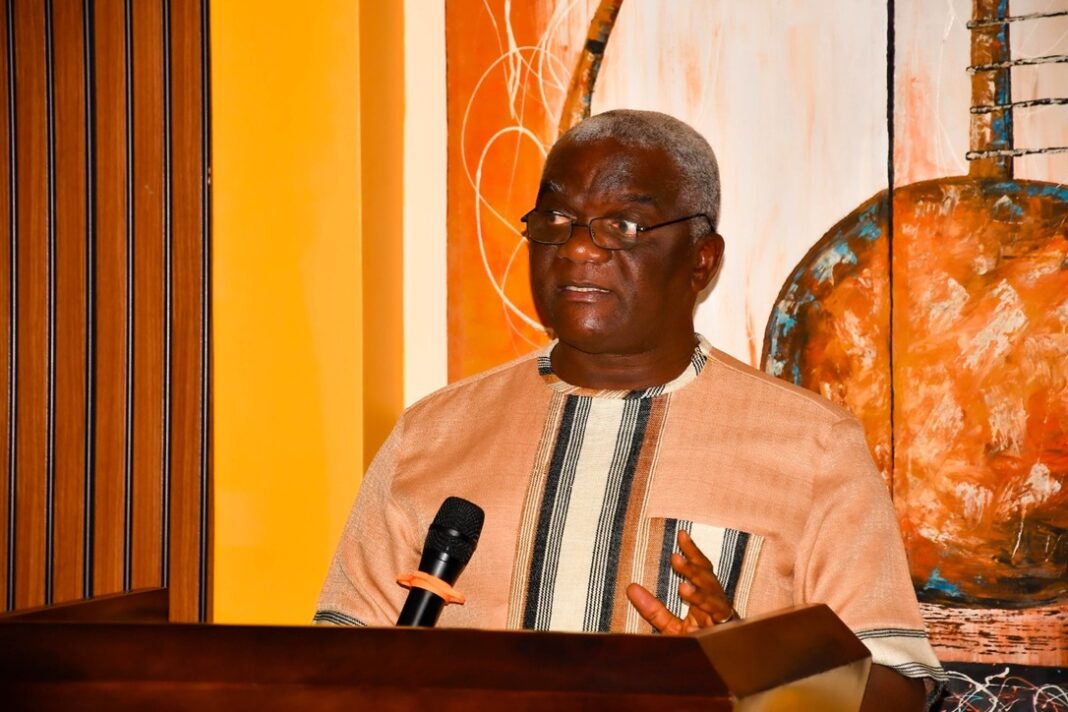
Commissioner General Jallah announced the commitment Tuesday at the opening of the LACC–African Union Advisory Board Against Corruption Regional Training on Asset Recovery and Illicit Financial Flows at the Cape Hotel in Monrovia.
The training is being held under the theme, “Implementing CAPAR and Curbing Illicit Financial Flows: Following the Money, Finding the Owner.”
CG highlighted stronger information-sharing, intelligence use and capacity building to detect complex financial transactions.
He said the LRA would deepen collaboration with the Liberia Anti-Corruption Commission (LACC), Financial Intelligence Agency (FIA), Ministry of Justice and other relevant institutions, where legally authorized and subject to taxpayer confidentiality safeguards.
“At the Liberia Revenue Authority, we see the money when it first shows its face: at the port, at the border, on the tax return,” Jallah said. “We see the invoice that does not match the cargo. We see the company that declares a loss every year and still keeps expanding.”
The LRA Commissioner General emphasized that revenue information and strong inter-agency collaboration are critical to combating illicit financial activities that deprive African countries of resources needed for development and essential public services. “Africa is not poor. Africa is being drained,” he declared.
Citing UNCTAD’s 2020 Economic Development in Africa Report, Jallah said Africa loses an estimated US$88.6 billion annually through illicit financial flows, underscoring the scale of resources leaving the continent.
He said illicit financial flows go beyond lost revenue, undermining fairness and economic justice as ordinary taxpayers contribute while complex corporate structures conceal ownership and shift profits abroad.
Jallah stressed that identifying the ultimate beneficial owners behind complex corporate and financial arrangements remains essential to tackling illicit financial flows and strengthening domestic resource mobilization.
He also called for faster and deeper cross-border cooperation among African countries, noting that illicit money can move rapidly across jurisdictions while investigators often face lengthy procedures when seeking information necessary to trace assets.
He described the Common African Position on Asset Recovery (CAPAR) as a key continental framework for tracing, freezing, recovering and returning illicit assets, while calling for stronger collaboration among Liberia’s integrity, security, law enforcement and revenue institutions, including the LACC, FIA, Ministry of Justice, LNP, LDEA, NSA, National Lottery Authority and LRA.
CG Jallah further linked the fight against illicit financial flows and asset recovery to Liberia and Africa’s broader drive for economic self-reliance, arguing that protecting domestic resources and recovering stolen assets can strengthen governments’ fiscal capacity and reduce dependence on borrowing.
“Every dollar recovered strengthens our fiscal space and reduces the pressure to finance development through borrowing. It is a nurse in Kakata. It is a classroom in Zwedru. It is a road to a market.” he said.
Jallah said the country’s longstanding advocacy for African unity and self-reliance remains relevant to the continent’s present-day efforts to combat illicit financial flows.
“In 2026, self-reliance means one thing above all: keeping Africa’s money in Africa and bringing home what was stolen,” he said.
The LRA Commissioner General challenged participants to strengthen their skills in investigating complex financial transactions, identifying beneficial owners, handling digital evidence and recovering illicit assets, while applying the knowledge gained to enhance investigations, institutional cooperation and asset recovery efforts across Liberia and Africa.
The regional training is expected to strengthen the capacity of participants in financial investigations, asset tracing and recovery, beneficial ownership identification, digital evidence and other areas critical to combating illicit financial flows and financial crimes.