MONROVIA, LIBERIA — The recurring tensions at the Sorlumba border in Lofa County have raised a question Liberia can no longer afford to avoid: who is effectively administering Liberia’s territory along the country’s northern frontier?
The question is not simply about a border dispute with Guinea. It is about Liberia’s physical presence on its own soil.
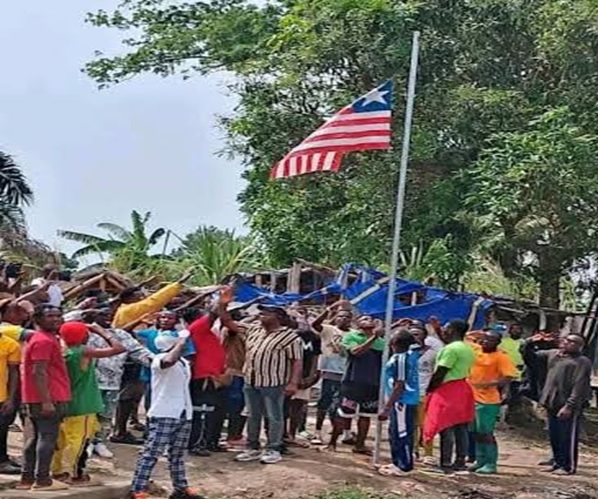
In March, tensions escalated after Guinean soldiers were reported to have crossed into areas claimed by Liberia near Sorlumba, with reports that a Liberian flag was removed and a Guinean flag was displayed at the disputed location. The confrontation triggered diplomatic engagement between Monrovia and Conakry and drew calls for restraint from ECOWAS.
The situation exposed something deeper: Liberia’s border infrastructure and security presence appear insufficient in some of its most vulnerable frontier communities.
Reports from the area described sections of the Liberia-Guinea boundary as poorly marked, lightly protected and difficult for Liberian authorities to monitor.
One investigation reported that immigration personnel were positioned a considerable distance from parts of the actual boundary, leaving gaps that could make effective enforcement difficult.
For communities living along the frontier, this is not an abstract diplomatic argument. The border is where they live, farm, trade and move every day.
The Liberian government has maintained that the situation is under control. Information Minister Jerolinmek Piah said in August that tensions at Sorlumba had been addressed through talks with Guinea and that the area was peaceful and stable.
But diplomatic calm does not automatically answer the larger question of territorial administration.
Has Liberia established a sufficiently visible and permanent state presence along the disputed areas?
That is the issue the government must address.
Liberia cannot depend solely on diplomatic meetings whenever soldiers from a neighboring country are accused of crossing into contested areas.
A functioning border requires clearly identified boundaries, permanent security and immigration infrastructure, regular patrols, reliable communication and a government presence that residents can see.
The Sorlumba experience also carries a broader regional warning. Border tensions involving Liberia, Guinea and Sierra Leone have demonstrated how quickly local disputes can develop into regional security concerns.
ECOWAS has already recognized the need for restraint and assessment of the affected border areas.
The question, therefore, is not whether Liberia has formally abandoned Sorlumba. There is no verified evidence establishing that Liberia has surrendered the territory.
The more troubling question is whether years of inadequate border infrastructure and limited state presence have created conditions in which Liberia’s territorial authority can be challenged on the ground.
For a country emerging from years of civil conflict, that is a national-security issue—not merely a local dispute.
Liberia’s government may have achieved diplomatic calm at Sorlumba. But calm at the border should not be confused with effective control of the border.
The next test is whether Monrovia can demonstrate, physically and permanently, that Liberia’s frontier is being administered, protected and clearly marked as Liberian territory.
This framing is stronger journalistically because it raises the sovereignty concern without making the unverified claim that Liberia has already lost or surrendered the land.