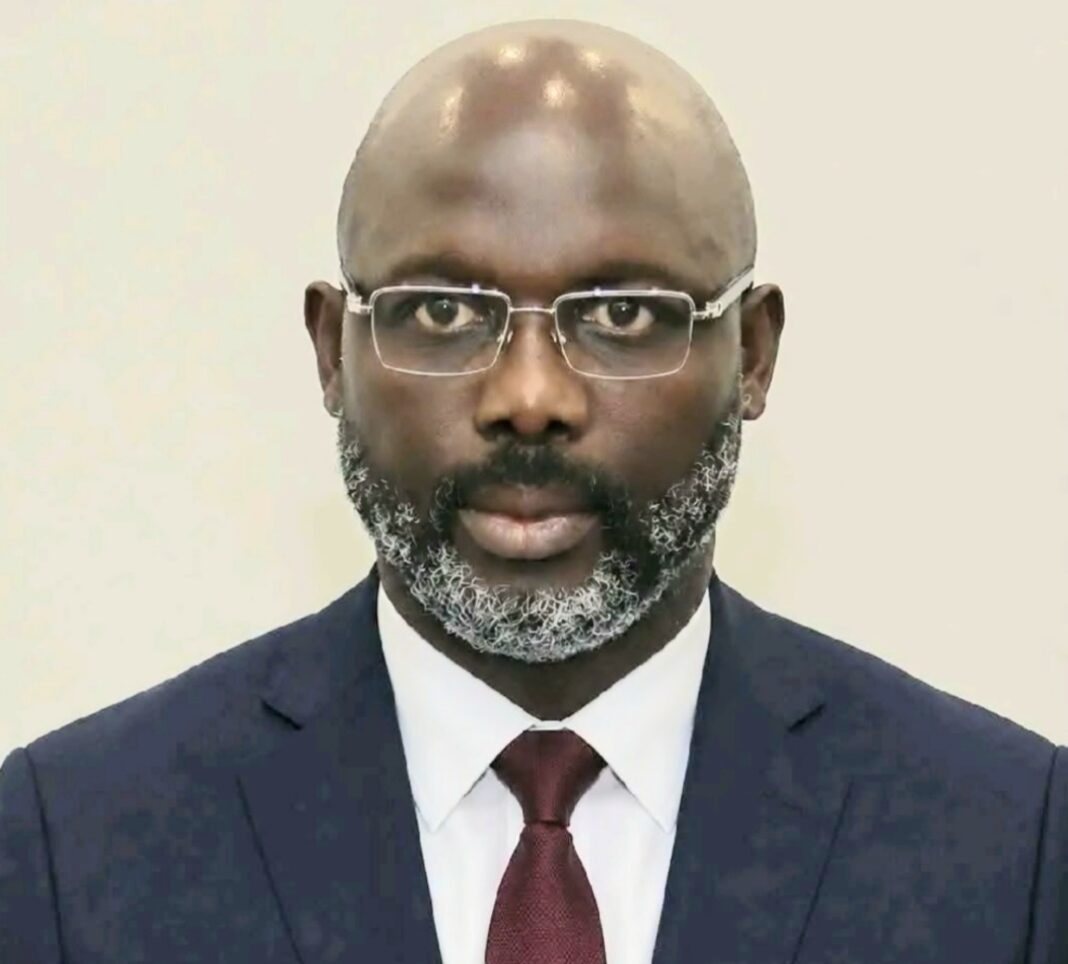
PORT HARCOURT, NIGERIA – Former Liberian President George Manneh Weah’s warning to African leaders about the dangers of weakening democratic institutions has triggered a pointed response from a former president of the West African Bar Association, who questioned whether Weah’s own record in Liberia matched the principles he presented to Nigeria’s legal community.
Weah delivered the keynote address at the 66th Annual General Conference of the Nigerian Bar Association in Port Harcourt on Sunday, August 23, speaking to lawyers, judges, public officials and other participants under the theme “Beyond Limits.”
His central message was that democracy cannot be reduced to elections.
The former Liberian president argued that voting is only the beginning of democratic governance and that the real strength of democracy depends on institutions capable of restraining executive power.
“Elections are the doorway into democracy, not the house itself,” Weah said.
He warned that elected governments could become authoritarian when they weaken courts, parliaments and other constitutional institutions.
“A tyrant with a certificate of return is still a tyrant,” he added.
The former football star and Liberian president urged legal professionals to remain vigilant against attempts by political leaders to undermine judicial independence.
But while Weah’s message was directed broadly at African leaders, a former president of the West African Bar Association turned the spotlight back on the former Liberian leader.
Speaking as a panelist at the same conference, the former bar chief challenged the Nigerian Bar Association’s decision to invite Weah, accusing the former Liberian president of failing to uphold the rule of law during his six-year administration.
The speaker urged the Nigerian Bar Association to reconsider inviting African leaders whom he characterized as dictators to address professional legal gatherings.
“I want to appeal that the bar association must stop inviting dictators in Africa to come and address us,” he said.
He then cited what he described as failures by the Weah administration to implement decisions of the ECOWAS Court of Justice.
According to the speaker, one of the cases involved residents of the Madingo region whose land and property were allegedly taken during Liberia’s civil war.
He said the regional court ruled in favor of the affected residents but alleged that the Liberian government under Weah failed to implement the judgment.
The former bar president also raised the case of a former associate justice of Liberia’s Supreme Court.
He alleged that the justice was removed from office during the Weah administration but that the ECOWAS Court subsequently ruled against the dismissal.
According to his account, the regional court ordered the judge’s reinstatement and awarded US$200,000 in compensation.
He accused the former government of failing to comply with that decision as well.
Those allegations formed the basis of his challenge to Weah’s appearance before the Nigerian legal profession.
“Now, that is the man coming here to talk to us about the rule of law and democracy,” he said.
The disagreement is particularly notable because Weah’s keynote speech focused heavily on the need for African countries to strengthen the very institutions his critic says were weakened during his presidency.
Weah warned against the assumption that a government becomes automatically democratic simply because it won an election.
He argued that democratic institutions must continue functioning independently after elections and that leaders must accept limits on executive power.
The former president also warned that the most dangerous threats to democracy are not necessarily dramatic or immediate.
Instead, he suggested that democratic erosion can happen incrementally, as governments weaken judicial independence, reduce legislative oversight and concentrate authority within the executive branch.
His message resonated with the broader role of the legal profession, which traditionally serves as a defender of constitutional rights, judicial independence and the rule of law.
Yet the former West African bar leader’s intervention demonstrated how difficult it can be for former African leaders to speak about democratic governance without their own political records becoming part of the discussion.
The panelist expanded his criticism beyond judicial issues, bringing Liberia’s ongoing narcotics crisis into the debate.
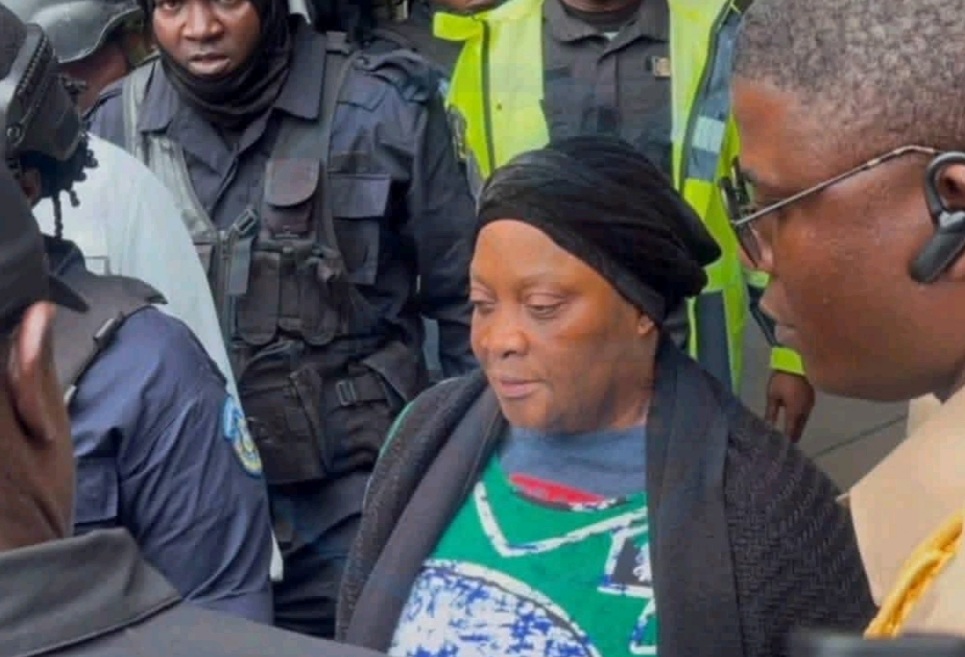
He referred to the recent prosecution of former Vice President Jewel Howard-Taylor, who served alongside Weah from 2018 to 2024.
Howard-Taylor has been charged in Liberia in connection with an alleged transnational drug trafficking investigation involving drug trafficking, money laundering and related offenses.
She has denied the allegations.
The case remains before the Liberian courts, meaning the accusations against the former Vice President have yet to be established through a final judicial determination.
The critic nevertheless cited the case as part of his broader criticism of Weah and his administration.
He also questioned Weah’s decision to travel to Qatar to watch his son, Timothy Weah, represent the United States in international football, arguing that the former president should have been more focused on Liberia’s national affairs.
That criticism is complicated by the fact that Weah was no longer Liberia’s president at the time of the trip.
Weah’s appearance in Port Harcourt therefore produced two sharply contrasting narratives.
To supporters of his message, the former Liberian president was warning the continent about one of the central weaknesses of modern African democracy: the tendency of elected governments to undermine institutions after securing political power.
To his critic, however, the speech represented an opportunity to question whether Weah’s administration practiced the same principles it was now urging other African leaders to defend.
The dispute also highlights the importance of the ECOWAS Court within West Africa’s regional legal architecture.
For critics of national governments, compliance with regional court decisions is an important measure of whether states genuinely accept supranational legal obligations.
For governments, however, enforcement of such decisions can intersect with domestic constitutional, political and institutional questions.
The allegations raised at the conference therefore extend beyond Weah personally and touch on a larger issue confronting West African democracies: Can regional institutions effectively protect citizens’ rights if national governments fail to implement their decisions?
Weah’s keynote address placed institutional independence at the center of his message.
His critic placed government compliance at the center of his response.
Together, the two interventions produced one of the most significant debates surrounding Weah’s appearance at the Nigerian Bar Association conference.
For Liberia, the controversy could also reignite domestic discussion about Weah’s six-year presidency and the former government’s relationship with the judiciary, regional institutions and the broader rule-of-law framework.
For the Nigerian Bar Association, meanwhile, the exchange raises a broader question about the role of professional legal organizations in giving platforms to former political leaders.