MONROVIA, LIBERIA – A major regional workshop has opened in Liberia’s capital, Monrovia with a stark warning: public procurement systems across West Africa are being systematically weaponized by criminals to launder money, defraud governments, and drain resources meant for schools, roads, and hospitals.
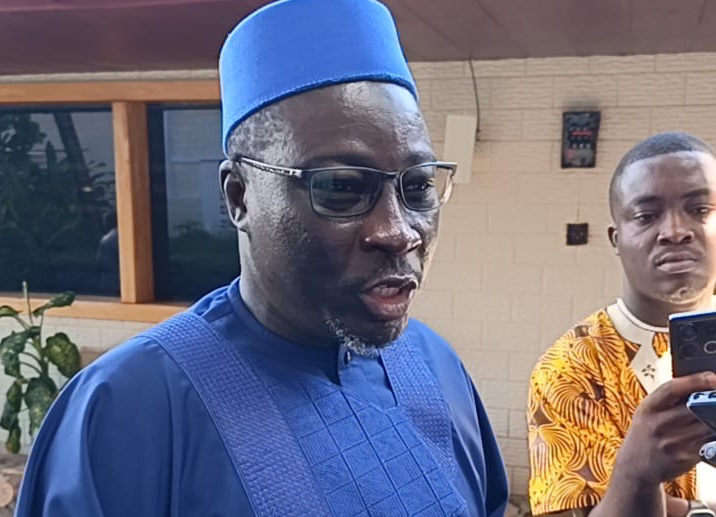
Speaking at the opening ceremony of the Regional Workshop on the Strategic Review and Validation of the GIABA Guidebook on Anti-Money Laundering and Countering the Financing of Terrorism (AML/CFT) in Public Procurement on Monday, June 8, 2026, Edwin W. Harris, Jr., Director General of the Inter-Governmental Action Group against Money Laundering in West Africa (GIABA), told delegates that public procurement remains “one of the most vulnerable corridors for illicit financial flows” in the region.
According to estimates from the African Public Procurement Network, public procurement accounts for approximately 12 percent of GDP across West African member states.
“That is a significant volume of taxpayers’ money that must be protected,” Harris said. “Yet the very scale of these flows makes procurement one of the most attractive targets for criminal exploitation.”
He described a toxic combination of opaque processes, weak oversight, and endemic corruption that creates fertile ground for money laundering.
“Criminals continue to find ways and means to systematically exploit such vulnerabilities,” Harris said. “They create shell companies and front entities. They conceal beneficial ownership. They manipulate tender processes, split contracts, inflate invoices, and launder illicit proceeds through payment streams that appear legitimate. The very systems designed to build our schools, roads, and hospitals are being weaponised to illicitly enrich a few. This is not acceptable.”
The GIABA chief revealed that West Africa loses an estimated $50 billion annually to illicit financial flows – a figure that dwarfs the total development aid the region receives each year. A significant portion of these flows, he said, are routed through or facilitated by public procurement systems.
In response to these threats, GIABA has developed a Procurement Guidebook designed as a “pragmatic, actionable, and regionally owned technical reference” to help member states detect, prevent, and respond to money laundering risks at every stage of the procurement cycle – from planning and tendering through evaluation, contract management, and payment.
The Guidebook emphasizes risk mitigation measures including enhanced due diligence, beneficial ownership transparency, integrity screening, and stronger inter-agency coordination. It also promotes the use of technology and e-procurement systems to improve transparency and accountability.
Over the next four days, participants are expected to validate common threat typologies, develop a shared red-flag glossary, map controls to specific vulnerabilities, design standard referral pathways between procurement authorities and oversight bodies, and develop measurable monitoring frameworks with country-specific action plans.
“By the end of this workshop, we must walk away with more than goodwill,” Harris stressed. “We must walk away with a formally adopted Guidebook, and a strong regional consensus that opacity in procurement is no longer a safe harbour for money laundering.”
Harris reinforced that message, telling participants that audit without follow-up is meaningless and oversight without enforcement lacks impact.
“The FIUs are important analytical nerve centres,” he said. “The procurement red flags identified here must translate into actionable intelligence reports. Intelligence reports must lead to investigations, prosecutions, asset freezing and seizure, and ultimately, asset confiscation.”
Harris thanked the Government and people of Liberia for their hospitality and political leadership in the fight against money laundering and terrorism financing, as well as GIABA’s Directorate of Policy Research for compiling the guidebook.
“Let us leave Monrovia with a binding roadmap for action,” he urged delegates.
Also addressing the gathering, Dr. Anna Brzozowska, First Counselor and Team Leader for Political and Economic Governance at the Delegation of the European Union to Liberia, speaking on behalf of SecFin Africa and Team Europe, underscored that safeguarding procurement integrity is not merely a governance issue but “a prerequisite for sustainable development.”
“Public procurement is one of the most visible ways through which citizens experience government,” Brzozowska said. “Whether through the construction of roads, schools and hospitals, or the delivery of essential public services, procurement decisions have a direct impact on people’s lives and on public confidence in institutions.”
She warned that when procurement processes are manipulated for private gain, the consequences extend far beyond financial loss, undermining public trust, distorting competition, discouraging legitimate investment, and diverting resources from development priorities.
Brzozowska called for a “whole-of-government approach” involving procurement authorities, oversight bodies, auditors, investigators, financial intelligence units, policymakers, and legislators.
The workshop brings together representatives from Public Accounts Committees, Supreme Audit Institutions, Public Procurement Authorities, and Financial Intelligence Units from across West Africa. It is supported by SecFin Africa, which provides technical and financial assistance.
For his part, Liberia’s Minister of Finance and Development Planning, Augustine K. Nguafuan, has praised the new GIABA Guidebook on Anti-Money Laundering and Countering the Financing of Terrorism (AML/CFT) in Public Procurement as a timely and commendable intervention that will help member states integrate financial crime safeguards into one of government’s most vulnerable areas.
Speaking at the Regional Workshop for the Strategic Review and Validation of the Guidebook in Monrovia, Minister Nguafuan said the document offers a practical and comprehensive reference for policymakers, procurement authorities, law enforcement agencies, auditors, Financial Intelligence Units (FIUs), and oversight bodies across West Africa.
“It is timely and commendable that GIABA has developed this guidebook to support member states in integrating AML/CFT safeguards into public procurement systems,” Nguafuan told delegates.
The Minister highlighted that the guidebook strengthens several critical areas, including risk assessment, beneficial ownership transparency, red-flag detection, asset recovery, vendor due diligence, reporting mechanisms, inter-agency cooperation, and alignment with international best practices.
“The guidebook creates a platform for collective reflection, technical scrutiny, and regional ownership to protect public procurement,” he said.
Nguafuan described the guidebook as “clear, technically sound, regionally relevant,” and stressed that its successful implementation must cut across all sectors.
He urged participants to share their national experiences openly during the validation process, highlighting what works in their respective countries and which tools have proven most useful for implementation.
“Quality deliberations will help our procurement processes to fight corruption,” the Minister said. “Strengthening integrity in public procurement requires a collective effort to fight procurement fraud.”
The finance minister also took the opportunity to commend GIABA for its continuous leadership in protecting AML/CFT systems among member states, urging all delegates to approach the review process with the seriousness it demands.
His remarks echoed earlier warnings from GIABA Director General Edwin W. Harris, Jr., who noted that West Africa loses an estimated $50 billion annually to illicit financial flows, with public procurement serving as one of the region’s most vulnerable corridors for criminal exploitation.
“The four-day workshop brings together representatives from Public Accounts Committees, Supreme Audit Institutions, Public Procurement Authorities, and FIUs from across West Africa, with the goal of formally adopting the guidebook and developing country-specific action plans to combat money laundering and terrorism financing through procurement systems.”