
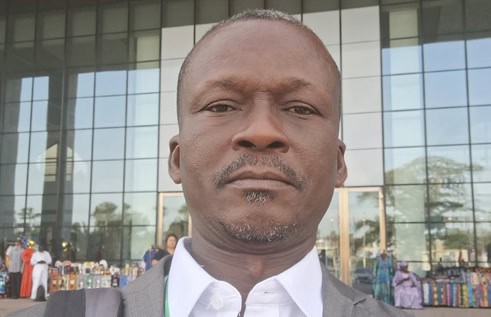
Former PUL President Peter Quaqua Questions Whether Liberia’s New Digital Law Could Criminalize Speech
MONROVIA — Former Press Union of Liberia President Peter Quaqua is questioning whether Liberia’s Cybercrime Act of 2025 could give the State excessive power over speech and private communications.
The concern does not challenge Liberia’s need to combat hacking, fraud, identity theft and online exploitation. It asks whether the law could also criminalize protected expression.
THE CENTRAL QUESTION
Liberia’s 2019 Kamara Abdullah Kamara Act repealed criminal libel against the President, sedition and criminal malevolence.
Quaqua’s concern is whether similar offenses could return through cybercrime provisions when speech occurs online.
WHEN DOES CRITICISM BECOME CYBERCRIME?
Terms such as cyberstalking, harassment and harmful messages require careful interpretation.
A journalist investigating corruption, an activist criticizing officials or a citizen posting harsh comments should not automatically become a cybercriminal because the speech is digital.
Being wrong, offensive or critical is not necessarily a crime.
SURVEILLANCE AND PRIVACY
The Act’s search and interception powers also raise concerns about government surveillance.
Law enforcement may need digital evidence, but such powers should include necessity, proportionality, judicial oversight and protection for confidential communications.
These safeguards are especially important for journalists, whistleblowers and lawyers.
ARTICLE 15
Article 15 of Liberia’s Constitution protects freedom of expression, the press and the public’s right to information.
That protection applies not only to newspapers and radio, but also to Facebook, WhatsApp, YouTube, TikTok, websites and podcasts.
Digital expression remains expression.
LAW OR “DECREE IN DISGUISE”?
The Cybercrime Act is legally an Act, not a presidential decree. However, Quaqua’s phrase “decree in disguise” warns that a law can be validly enacted yet still grant the State overly broad powers.
Liberia can fight cybercrime without criminalizing legitimate criticism, journalism or political debate.
The Act’s real test will be how police, prosecutors and courts apply it when the person behind the keyboard is a journalist, activist, whistleblower, opposition politician or ordinary citizen.
The central question remains:
Is Liberia’s Cybercrime Act a modern tool against modern crimes—or could it become a “decree in disguise” if used against protected expression?