
Trump suffers major midterm defeat as Democrats take control of the House and Senate, opening the door to sweeping congressional investigations and a historic leadership change in Washington.
WASHINGTON, D.C. — In a stunning political reversal, Democrats have seized control of both chambers of the United States Congress in the November 3 midterm elections, delivering a major setback to President Donald Trump and placing the Republican administration on course for two difficult years of political confrontation.
The Democratic victory over Republicans in the House of Representatives and the Senate marks a dramatic shift in Washington’s balance of power and creates an opportunity for the party to challenge Trump’s legislative agenda, investigate his administration and exercise greater oversight over the executive branch.
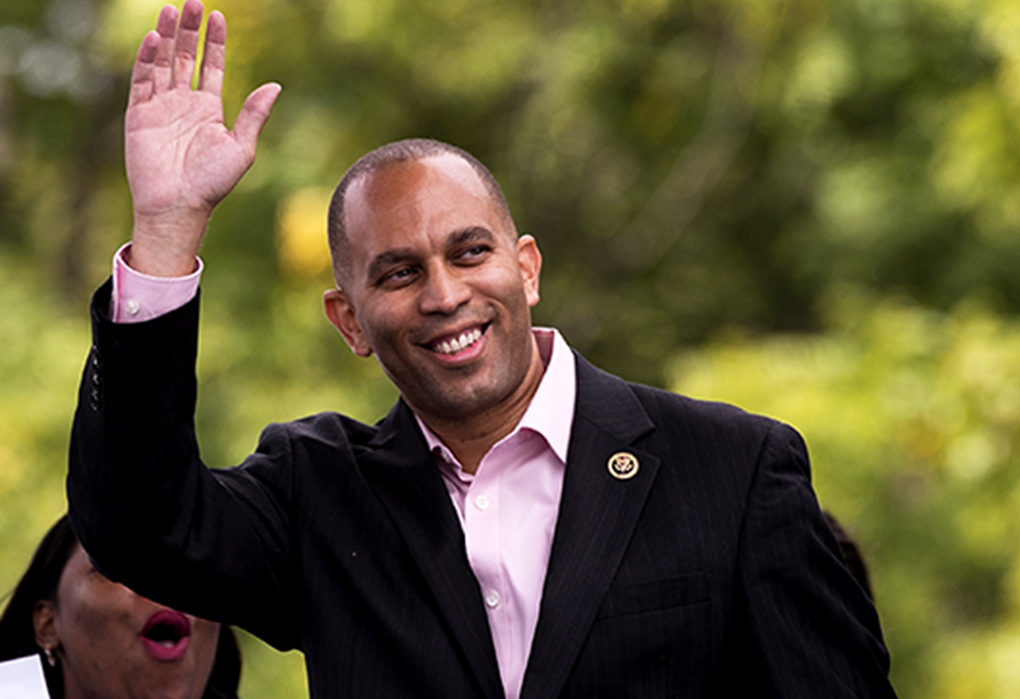
But beyond the political defeat suffered by Republicans, the election has also opened the door to a historic moment in American politics: Democratic House Leader Hakeem Jeffries is now poised to become the first Black Speaker of the United States House of Representatives.
If elected when the new Congress convenes in January 2027, Jeffries would break a major racial barrier in the country’s political leadership, more than 150 years after Black Americans first gained representation in Congress.
The Associated Press reports that Democrats have secured control of both chambers, with victories in several states that had been considered difficult territory for the party.
The Senate victories included major Republican-held seats in Texas, Ohio, Iowa, Kansas, South Carolina, North Carolina and Maine, while Democrats also held important seats elsewhere.
In the House, Democratic candidates defeated Republican incumbents and captured competitive districts, giving the party the majority needed to take control of the chamber.
JEFFRIES ON THE VERGE OF MAKING HISTORY
For Hakeem Jeffries, the election outcome represents an opportunity to move from leading the House Democratic minority to occupying one of the most powerful positions in American government.
The 56-year-old New York congressman has led House Democrats for four years and is expected to be his party’s choice for Speaker when the new Congress assembles on January 3, 2027.
His election would make him the first Black person to hold the speakership, a position that places its occupant second in the presidential line of succession after the vice president.
Jeffries has already signalled that Democrats intend to use their new congressional majority to confront what they consider excesses and failures of the Trump administration.
In a victory message, he declared that Americans had rejected extremism and corruption and expected Congress to deliver results for the country.
His anticipated leadership will, however, come with significant challenges. He must hold together Democrats with different political positions, including moderates and progressive lawmakers, while managing an opposition party that still controls the White House.
TRUMP FACES TWO YEARS OF CONGRESSIONAL RESISTANCE
The Democratic takeover means Trump will no longer enjoy the unified Republican control of Congress that helped advance his legislative priorities.
With Democrats controlling the House and Senate, the administration is likely to face more aggressive congressional oversight, investigations and resistance to some of its major policy proposals.
Democratic lawmakers have indicated that investigations into the administration’s conduct, government operations and possible conflicts of interest will feature prominently in their agenda.
The change in congressional control could also affect the confirmation of Trump’s judicial and other executive branch nominees, particularly in the Senate.
However, Democratic control does not mean the party can automatically overturn presidential decisions or implement its entire legislative programme. Trump retains presidential veto authority, and major legislation could still require bipartisan support to become law.
The result therefore sets the stage for a potentially confrontational period in Washington, with Democrats controlling Congress while Trump remains president.
COST OF LIVING AND PUBLIC DISSATISFACTION DRIVE DEMOCRATIC GAINS
The election results also point to widespread frustration among American voters over economic conditions, high consumer prices and concerns about government corruption.
A Reuters analysis of the election identified the cost of living as a major factor in voters’ decisions. Exit polling indicated that nearly nine in ten voters considered living costs an important issue, while nearly two-thirds blamed Trump for high prices.
The Democratic victories suggest that the party successfully turned public dissatisfaction into electoral gains, including in states where Republicans had expected to remain competitive.
The results also raise questions about Trump’s political influence and the strength of his endorsement of Republican candidates. Several candidates backed by the president suffered defeats, dealing a blow to his standing within the Republican Party.
A NEW POLITICAL CHAPTER FOR AMERICA
The Democratic victory is more than a change in congressional leadership. It represents a major shift in the political environment surrounding Trump’s second presidency.
For Democrats, the challenge will be to translate electoral success into meaningful action on the economy, public accountability and other issues that influenced voters.
For Republicans, the loss of both chambers means defending the administration’s policies in a Congress increasingly controlled by political opponents.
And for Hakeem Jeffries, the coming weeks could determine whether he becomes the first Black Speaker in American history.
The formal selection of the Speaker will take place when the new House meets in January. Until then, Jeffries remains the leading candidate for the position, with the Democratic majority putting him in a strong position to make history.
One thing is already clear: the November 3 midterm elections have fundamentally changed the political balance in Washington, leaving President Trump facing a Democratic-controlled Congress for the final two years of his term.