Forty-one years after Thomas Quiwonkpa’s failed coup, Liberia must reckon with the painful lessons of political ambition, ethnic division, state violence, and the consequences of democracy’s failure.
Some dates in a nation’s history must never be allowed to fade into old newspaper archives. They carry the weight of bloodshed, broken promises, political betrayal, and the painful consequences of decisions made by those entrusted with leading the country.
For Liberia, November 12, 1985, is one such dates. Monrovia awoke that day to gunfire, uncertainty, and rival claims of political victory.
On that day, General Thomas G. Quiwonkpa attempted to overthrow the government of Samuel Kanyon Doe, triggering a chain of events whose effects would haunt Liberia for years.
Forty-one years later, the importance of that day reaches beyond the failed coup itself. It compels Liberia to face an unsettling question: How often must a nation suffer before its political leaders understand that gaining or defending power through violence exacts an unbearable national price?
Quiwonkpa’s November 12 operation was no ordinary military rebellion. It was a bold challenge to a government that had seized power through the bloody overthrow of President William R. Tolbert Jr. on April 12, 1980.
Five years after the 1980 coup, Doe’s government was already contending with mounting opposition, accusations of authoritarian rule, and growing public discontent over its stewardship of the country.
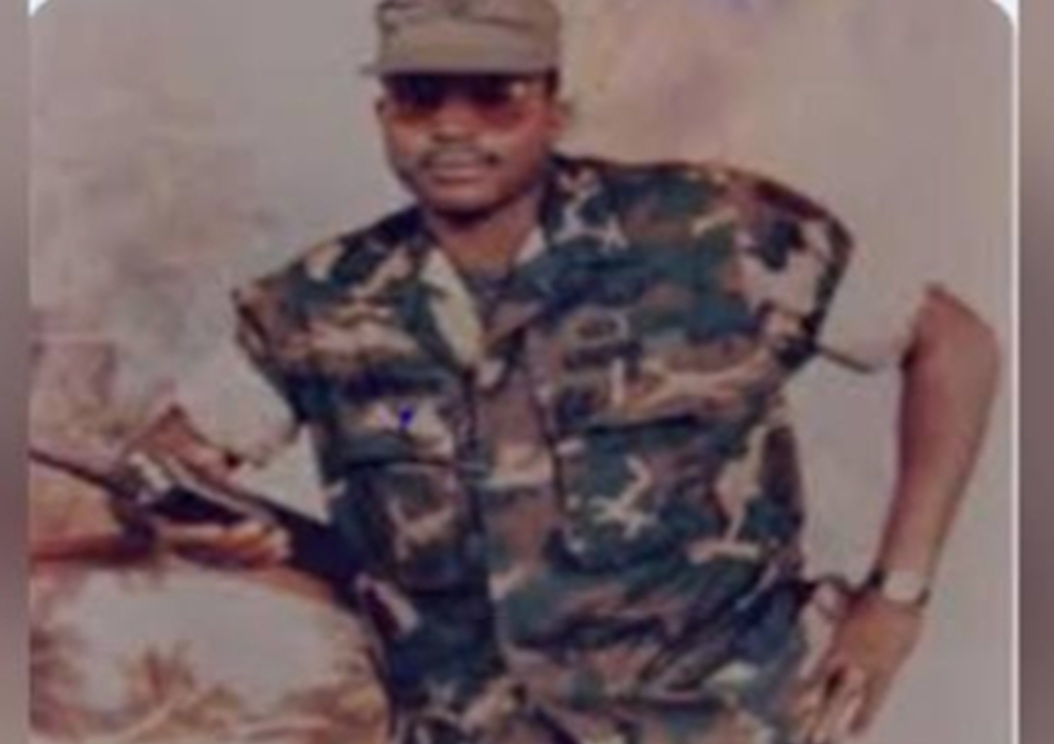
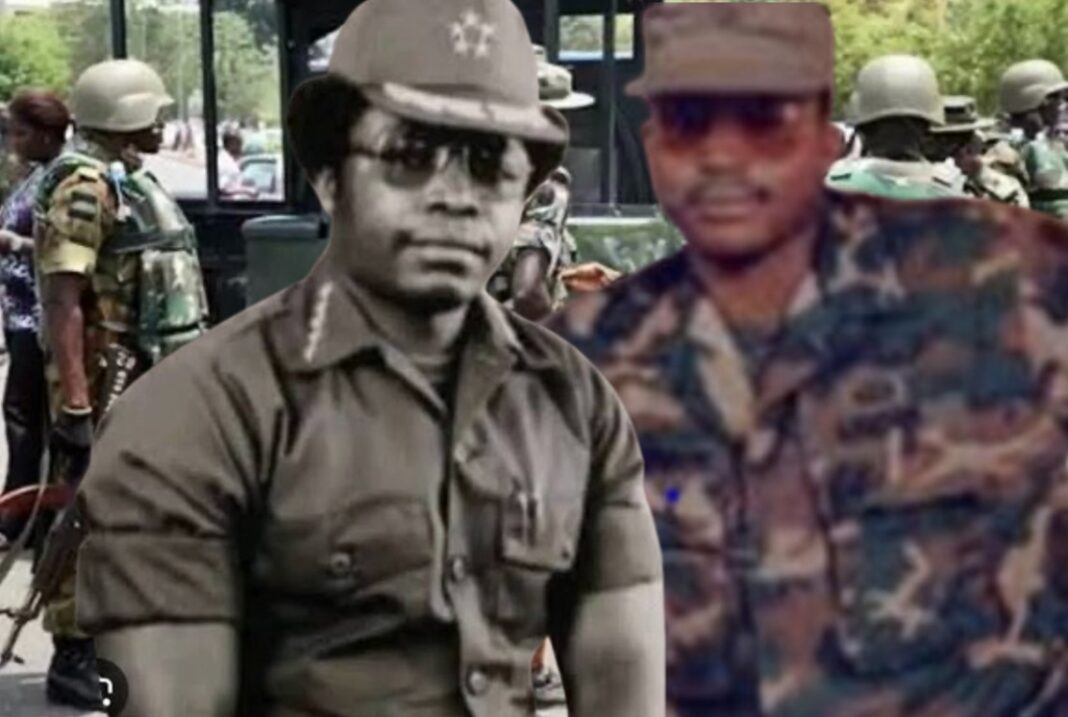
Then came November 12. Quiwonkpa, a former commander of the Armed Forces of Liberia and once a leading figure in the military government, returned from exile with an armed force intent on removing Doe.
His supporters advanced on key government installations, and reports that the takeover had succeeded spread throughout Monrovia.
For a brief period, uncertainty gripped the political climate. Some Liberians believed Doe’s government had collapsed, while others waited anxiously to learn who would take control of the country.
But reports of victory had come too soon. Doe’s loyalist forces regrouped, fought back, and ultimately crushed the rebellion.
The coup failed. Quiwonkpa was captured and killed three days later, on November 15. Yet the most devastating part of the story was not merely the death of the man who had attempted to seize power. It was what came afterward.
The government’s response became a campaign of vengeance. What should have been an effort to restore constitutional order instead turned into a period of collective punishment, fear, and brutality.
Government forces reportedly pursued people suspected of supporting Quiwonkpa, particularly in Nimba County, his home region. The Gio and Mano communities endured reprisals. Civilians who had neither planned nor taken part in the coup became casualties of the political and military conflict.
The United States Department of State’s 1985 human rights report documented widespread arrests, allegations of summary executions, killings, and ethnic reprisals following the failed coup. Amnesty International also reported the political killing of civilians in Nimba County suspected of supporting Quiwonkpa. This is why November 12 remains such a painful date in Liberia’s national memory.
A country that had seen Tolbert’s government officials executed in 1980 was once again facing the brutal consequences of political power struggles.
The same military establishment that had justified seizing power as a way to end an oppressive political order was now accused of grave abuses committed to protect its own authority.
The irony was devastating. A government founded through a coup was now fighting to survive another, while ordinary Liberians bore the cost.
The tragedy beyond Quiwonkpa’s death
Quiwonkpa’s death on November 15, 1985, marked a chilling moment in Liberia’s history. His body was displayed publicly in Monrovia, sending a terrifying warning about the price of opposing the Doe government. But the death of a single general did not resolve the crisis; it intensified it. Political dissent became increasingly perilous, fear became an instrument of governance, and ethnic suspicion deepened, while the wounds left by the November reprisals remained largely untreated.
Among those detained in the aftermath were prominent opposition figures, including Ellen Johnson-Sirleaf, who would later become Liberia’s first elected female president.
Liberia was becoming a country where political disputes were increasingly addressed through intimidation, imprisonment, and gunfire rather than democratic institutions.
The consequences would ultimately be catastrophic. On December 24, 1989, Charles Taylor’s National Patriotic Front of Liberia launched an armed rebellion against Doe’s government.
The country plunged into a civil war that would claim more than 200,000 lives, displace hundreds of thousands of people, and devastate much of Liberia’s infrastructure.
The November 12 coup did not, by itself, cause the civil war. Such a claim would oversimplify a complex national tragedy. Howbeit, the grievances, ethnic tensions, repression, and political instability of the Doe years contributed to the dangerous conditions that made the eventual catastrophe possible.
Liberia must never forget
Forty-one years after that bloody Tuesday, Liberia must do more than recall Thomas Quiwonkpa’s name or recount how Samuel Doe survived an attempted overthrow.
The country must remember the innocent lives lost, the families whose loved ones vanished, the communities subjected to reprisals, and the generations left to inherit the bitterness of political violence.
History must not be reduced to a dispute over who was right or wrong, who deserved power, or who deserved to die.
Quiwonkpa’s choice to pursue political change through armed rebellion was a dangerous rejection of peaceful political processes. Likewise, the government’s duty to defend the state could never justify extrajudicial killings, collective punishment, or the persecution of innocent citizens. These are distinct, yet equally vital, lessons.
No political ambition gives anyone the right to plunge a country into bloodshed. Nor may a government use state institutions to punish an entire population for the actions of a few.
This is the difference between defending a nation and protecting a regime. Liberia must also confront the danger of turning ethnic identity into a weapon in political competition.
No Liberian should be held accountable for another person’s actions simply because they share a tribe, county, or regional background. The country has paid far too high a price for this poisonous mentality.
The question for today’s leaders
November 12 should also stand as a warning to today’s Liberian politicians. Democracy is more than conducting elections. It requires respecting the choices citizens make, accepting criticism, safeguarding dissent, and resolving political disputes according to the law.
When elections lose legitimacy, opposition is treated as an enemy, public institutions become tools for political survival, and citizens begin to believe that those in power respond only to violence, democracy’s foundations are already in danger.
Liberian leaders of every political affiliation must recognize that the state belongs to all Liberians—not to the ruling party, the president, the security establishment, or any ethnic group.
Leaders have a duty to prevent the return of tragedies that have deeply scarred the nation. Liberia’s history provides ample warnings. Repeating them cannot be justified.
The November 12 tragedy also underscores the need to preserve historical truth. Liberia must continue to support credible historical research, public education, documentation of human rights abuses, and meaningful national reconciliation. A nation cannot heal wounds it refuses to acknowledge.
The final verdict of history
Thomas Quiwonkpa did not succeed in overthrowing Samuel Doe on November 12, 1985. Doe survived the attempted coup, but his continued rule did not bring Liberia stability or lasting peace.
Quiwonkpa was killed, his supporters were pursued, and innocent people suffered. Ethnic divisions grew deeper. Four years later, Liberia descended into a war whose consequences remain embedded in the country’s collective memory.
That is the tragedy of November 12. It serves as a reminder that a political victory can become a national defeat when won through bloodshed and maintained through fear.
Forty-one years later, Liberia should neither celebrate the failure of a coup nor mourn only the death of one political figure. It should grieve for the innocent lives lost, condemn abuses committed by every side, and renew its commitment to a political culture in which leadership is earned at the ballot box, safeguarded by the Constitution, and exercised for the benefit of all citizens.
November 12, 1985, must remain a day of national reflection—not because Liberia should glorify its painful past, but because the country must never again be condemned to repeat it.
May the dead never be forgotten. May the truth never be concealed. And may Liberia never again confuse a government’s survival with the survival of the nation.