MONROVIA, LIBERIA – President Joseph Nyuma Boakai has used Liberia’s 179th National Flag Day celebration to issue a strong warning about the growing threat of drug trafficking, urging young Liberians to reject narcotics and warning that traffickers are increasingly seeking to use the country as a transit and operational center.
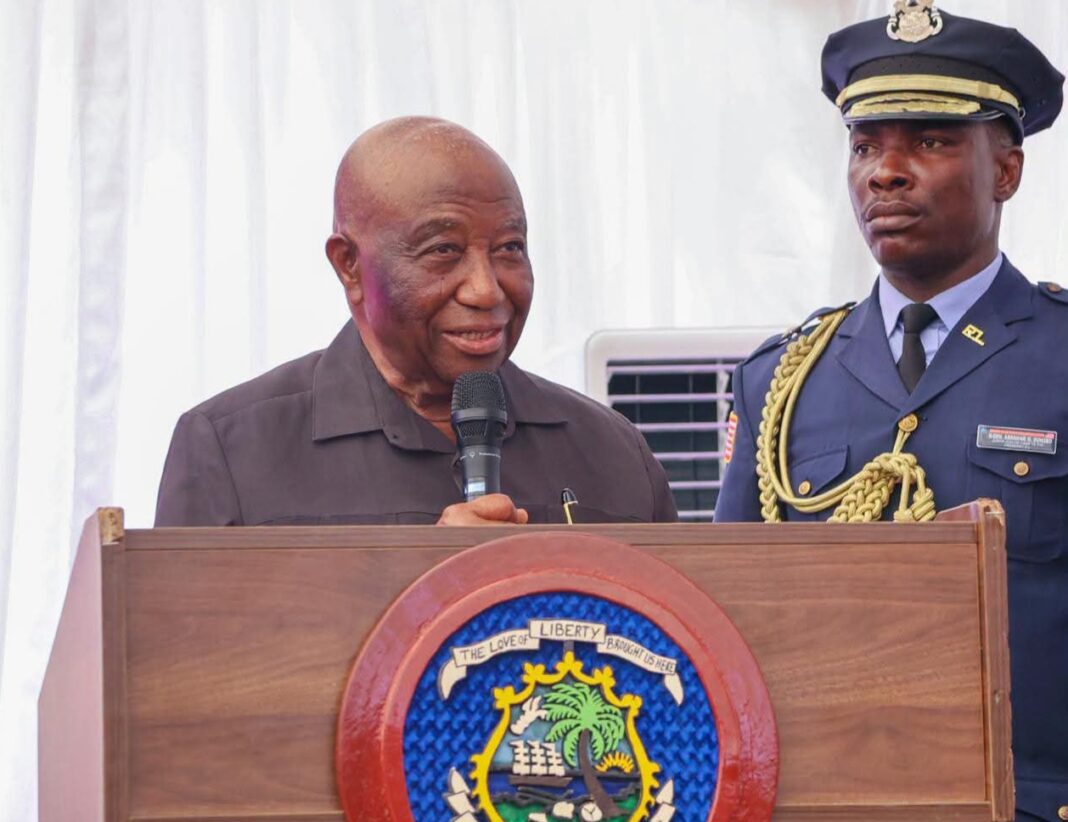
Speaking on Monday, August 24, 2026, at the Executive Pavilion in Monrovia, President Boakai said Liberia’s renewed efforts against drug trafficking must be accompanied by a national campaign to protect young people from becoming victims or participants in the narcotics trade.
The President made the appeal while addressing students, educators, government officials, members of the diplomatic community and other dignitaries gathered for the national observance.
Addressing Liberian students directly, Boakai urged them to understand that patriotism is not merely demonstrated by reciting the national pledge or participating in Flag Day ceremonies.
He said genuine patriotism requires young people to respect fellow citizens, obey the laws of the Republic, reject violence, protect national symbols, work hard and prepare themselves to serve Liberia.
“Resist the temptations that can destroy your future,” the President urged.
He then issued a direct appeal:
“Say NO to drugs.”
Boakai said the renewed efforts by drug traffickers to use Liberia as a transit and operational center constitute a serious threat to the country’s young population.
“Do not let anyone steal your future,” he told the students, urging them to remain focused, disciplined and determined to become productive citizens.
The President’s warning comes amid a major and politically sensitive narcotics investigation in Liberia following several significant cocaine seizures.
Security authorities have seized thousands of kilograms of suspected cocaine in separate operations, including a massive interception in Duazon, Margibi County, and an earlier seizure at Roberts International Airport.
The seizures, which authorities have valued at hundreds of millions of dollars, have triggered an expanded investigation into an alleged transnational drug trafficking network.
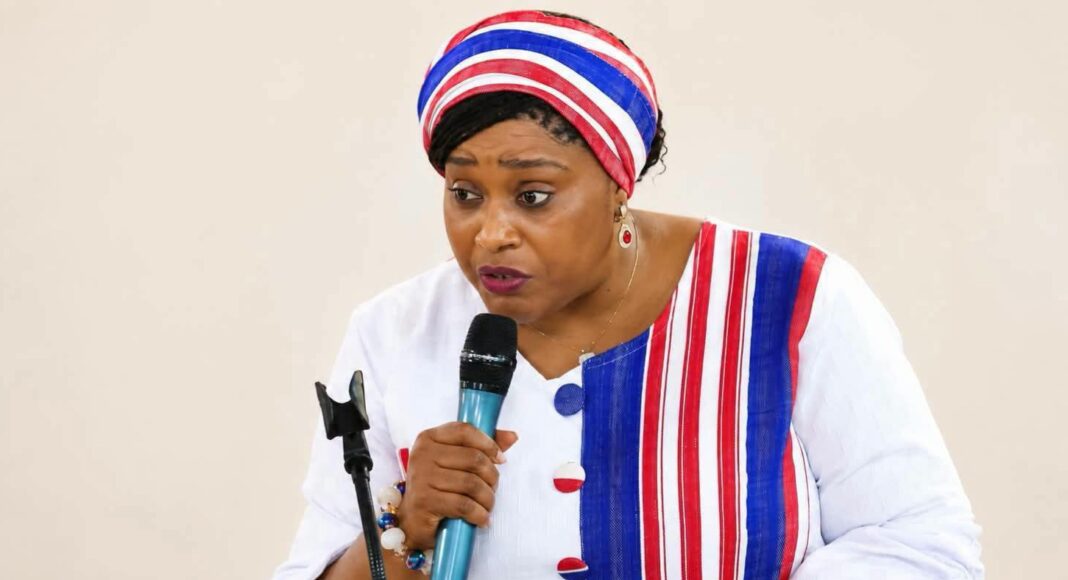
The investigation has also become a subject of intense political debate following the involvement of former Vice President Jewel Howard-Taylor, who was stopped at Roberts International Airport, declared a person of interest and subsequently charged in connection with the investigation.
The former vice president and her political allies have rejected the allegations and criticized the government’s handling of the case.
Against that backdrop, President Boakai’s Flag Day remarks placed the drug crisis within a broader national security and youth-protection framework.
He did not limit the issue to law enforcement.
Instead, he framed the fight against drugs as part of Liberia’s responsibility to protect the country’s future generation.
The President said adults must also accept responsibility for upholding the same national standards they expect from children.
“We cannot ask our children to love Liberia while we undermine its institutions; to respect the law while we disregard it; or to be patriotic while we place personal, ethnic, religious, or partisan interests above the national good,” he said.
Boakai said Liberia’s national pledge should therefore be understood as a covenant between citizens and the Republic.
Its principles, he argued, must be reflected in people’s conduct at home, in schools, workplaces, communities and government institutions.
The President’s remarks came as Liberia marked 179 years since the national flag was first hoisted following the country’s declaration of independence in 1847.
He described the Lone Star as a powerful expression of Liberia’s national identity, history, struggles and aspirations.
Boakai noted that Liberia’s Independence Anniversary was celebrated last month under the theme “Strengthening National Identity Through Liberian-Led Historical Leadership.”
He said the two national observances are closely connected.
“If Independence gave us the sovereignty to define ourselves as a nation, the flag gives that identity a visible, enduring symbol,” Boakai said.
He urged Liberians to see the flag not merely as a national emblem but as a reminder of where the country came from and the responsibility of citizens to build a better future.
The President also highlighted the historical role of Liberian women in creating the national flag.
He said seven courageous women, led by Susana Lewis, stitched the flag in 1847 as Liberia prepared to declare independence.
That history, he said, demonstrates that nation-building has never been the responsibility of a small group of people.
“It is the labor of all, men and women, young and old, from every county, ethnicity, religion, and social background,” he said.
Boakai used the occasion to emphasize the importance of civic education in developing responsible citizens.
He announced the reintroduction of civics education in Liberia’s primary schools and the official launch of standardized civics textbooks throughout the country.
According to the President, the initiative is intended to restore and strengthen young people’s understanding of Liberia’s history, Constitution, national symbols, rights, responsibilities and principles of citizenship.
He described the initiative as an important step toward developing citizens who understand both their rights and obligations to the Republic.
Boakai also praised the students who participated in the Flag Day activities, recalling the salutes he received earlier Monday at the Barclay Training Center.
He said the student contingents displayed discipline, precision, confidence and patriotism.
“I want to say I am very proud of them,” he said.
The President congratulated schools recognized for Best Salute, Most Disciplined and Best Dressed, attributing their achievements to the combined efforts of parents, instructors, school administrators, the Ministry of Education, the Ministry of National Defense and the National Bureau of Veteran Affairs.
But while celebrating the students’ discipline, Boakai cautioned the nation against confusing national commemoration with complacency.
“Let us not confuse commemoration with complacency,” he said.
The President argued that the national flag should serve as a call to action against division, hatred, corruption, violence and other forces threatening Liberia’s social fabric.
He said the country must continue working toward a Liberia where roads connect communities, electricity reaches more people, health services improve, education is transformed and economic opportunities expand.
He specifically included the protection of young people from drugs among the country’s national priorities.
Boakai said Liberia’s development agenda must ultimately produce a society in which every citizen can take pride in the Lone Star.
He emphasized that the flag belongs equally to Liberians across the country and in the diaspora.
He referenced children in classrooms in Grand Kru, farmers in Lofa, fishermen along the Maryland coast and workers in Monrovia as examples of citizens who share equal ownership of the Republic.
“All must be loved and given opportunities,” he said.
The President’s remarks placed the fight against drugs within this broader vision of equal opportunity and national development.
His message was that young people cannot fully participate in Liberia’s future if they are exposed to addiction, trafficking and other consequences of the narcotics trade.
He therefore urged families, schools, communities and government institutions to work together to protect young Liberians.
As Liberia continues to investigate major narcotics seizures and alleged trafficking networks, Boakai’s message also underscored the importance of strengthening national institutions and civic responsibility.
The President called on citizens to reject personal, ethnic, religious and partisan interests when they conflict with the national good.
He said the country’s future depends on citizens who are willing to place Liberia’s interests above narrow loyalties.
Boakai concluded his Flag Day message by calling for renewed commitment to the values represented by the Lone Star.
He urged Liberians to honor the sacrifices of previous generations, act responsibly in the present and build confidently for generations yet unborn.
“May it remind us always that we are one people, one nation, with one destiny,” he said.
He called on Liberians to pursue love, peace and prosperity while working collectively to strengthen the Republic.
“In all that we do, let us Think Liberia, Love Liberia, and together Build Liberia,” Boakai declared.
His final message came as both a patriotic appeal and a warning: Liberia’s national symbols must not simply be celebrated once a year; they must be reflected in the daily conduct of citizens, particularly in the country’s response to drugs, corruption, violence and division.
“May God bless the Lone Star and bless Liberia,” the President concluded.