By Socrates Smythe Saywon | Smart News Liberia
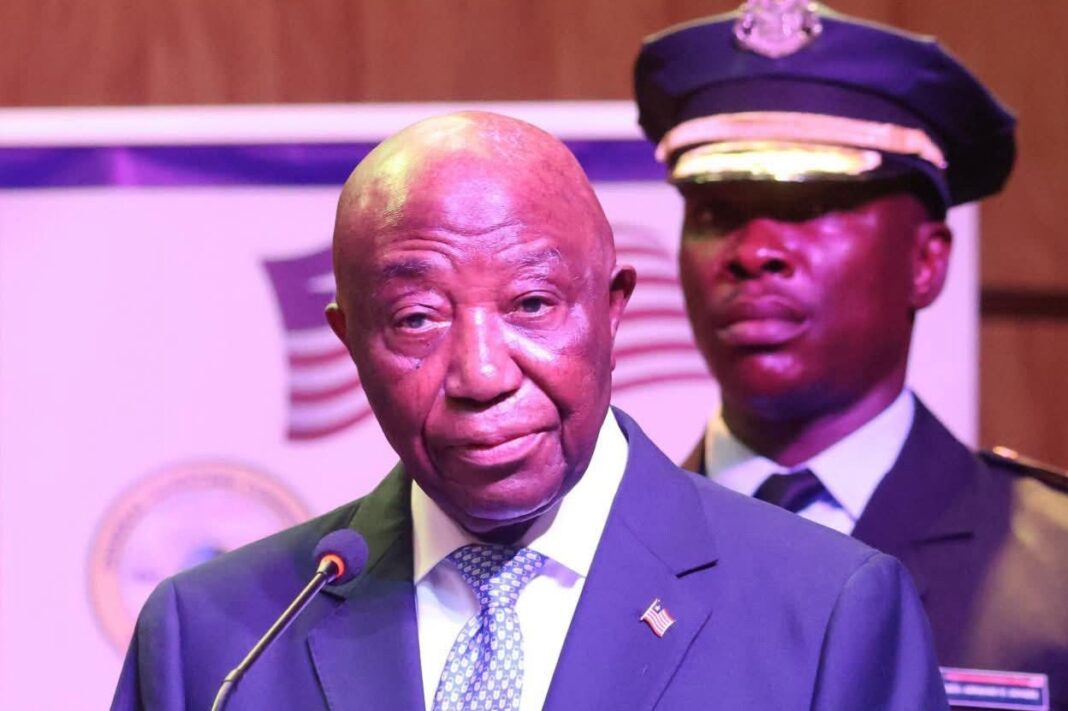
MONROVIA – President Joseph Nyuma Boakai’s submission of two legislative proposals to the National Legislature on Wednesday, May 20, 2026, could become one of the most consequential governance decisions of his presidency. The proposed establishment of a War and Economic Crimes Court alongside a specialized National Anti-Corruption Court has the potential to fundamentally reshape Liberia’s justice system, restore public confidence in state institutions, and confront two of the country’s deepest national wounds: impunity and corruption.
For decades, Liberia has struggled under the heavy burden of unresolved wartime atrocities and entrenched public corruption. Successive governments have repeatedly promised accountability, yet the country remains haunted by unanswered questions from the civil war era and persistent allegations of financial misconduct within public institutions. In many respects, Liberia has become a nation where justice has too often been delayed, compromised, or selectively applied depending on political convenience.
That is why President Boakai’s decision to submit “An Act Establishing a War and Economic Crimes Court” and “An Act Adopting a New Title 17(a) of the Liberian Code of Laws Revised, Establishing a National Anti-Corruption Court” deserves serious national attention. These proposals are not merely legal documents; they represent a direct challenge to Liberia’s longstanding culture of impunity.
The proposed War and Economic Crimes Court addresses one of the country’s most painful historical failures: the inability to hold perpetrators of wartime atrocities accountable despite years of recommendations from the Truth and Reconciliation Commission (TRC). Thousands of Liberians were killed, tortured, displaced, or traumatized during the civil wars, yet many individuals accused of grave abuses continue to enjoy political influence, economic power, and public prominence.
For years, Liberia’s failure to establish a war crimes court damaged its moral standing internationally and deepened frustration among victims and survivors. While neighboring countries pursued various forms of transitional justice, Liberia hesitated, often because powerful political interests feared the consequences of accountability. The result has been a dangerous message to future generations: that violence and abuse of power can occur without consequences.
President Boakai’s proposal now places the Legislature before a historic test. Lawmakers must decide whether they stand with justice and national healing or whether they will once again allow politics to override accountability. The court, if genuinely independent and adequately funded, could finally provide victims with long-overdue recognition and legal redress while reinforcing Liberia’s obligations under international humanitarian law and the Accra Peace Agreement.
Equally significant is the proposed National Anti-Corruption Court, which directly confronts another crisis threatening Liberia’s future: systemic corruption. Corruption has long undermined economic growth, weakened service delivery, discouraged investment, and eroded public trust in governance institutions. Roads remain unfinished, hospitals under-equipped, schools neglected, and development projects stalled partly because public resources too often disappear into private pockets.
The existing judicial system has struggled to effectively prosecute complex corruption cases involving politically connected individuals. Cases frequently collapse, face endless delays, or result in little meaningful accountability. This has fueled widespread public perception that Liberia operates under two systems of justice, one for ordinary citizens and another for powerful elites.
The establishment of a specialized anti-corruption court could significantly strengthen Liberia’s rule of law and accountability mechanisms if implemented with sincerity. Specialized courts typically provide greater expertise, faster case handling, and improved prosecutorial coordination in dealing with sophisticated financial crimes. More importantly, they signal political willingness to treat corruption not merely as a political slogan, but as a national emergency.
President Boakai correctly noted that these legislative proposals seek to “enhance public confidence in governance institutions.” That confidence has been dangerously low for years. Many Liberians have grown cynical about anti-corruption rhetoric because previous administrations often announced investigations and reform initiatives that ultimately produced few convictions or institutional changes.
To restore genuine public trust, however, these courts must not become instruments for political revenge or selective prosecution. Liberia’s history shows that anti-corruption campaigns can easily lose credibility when they target only political opponents while allies remain protected. If these institutions are to succeed, they must operate independently from executive interference, partisan calculations, and elite pressure.
The proposed legislation also carries major international implications for Liberia. Establishing both courts would align the country more closely with global justice and anti-corruption standards at a time when international partners increasingly demand stronger governance reforms, transparency, and judicial accountability. Liberia’s reputation among investors, development partners, and international institutions could improve significantly if these reforms are implemented credibly.
Still, legislation alone will not solve Liberia’s accountability crisis. The country has passed many laws over the years that were either poorly enforced or deliberately undermined by weak political will. The real challenge will come after the ceremonial signing, when the government must demonstrate the courage to prosecute difficult cases regardless of political status, tribal affiliation, or economic influence.
There is also the issue of resources and institutional capacity. War crimes investigations are highly complex and expensive. Corruption prosecutions require skilled investigators, forensic accountants, prosecutors, and independent judges capable of handling politically sensitive cases. Without adequate funding and professional competence, the courts risk becoming symbolic institutions with limited practical impact.
Nonetheless, President Boakai’s latest move represents one of the boldest governance initiatives introduced in Liberia in recent years. It acknowledges an uncomfortable but necessary truth: sustainable peace and development cannot exist where injustice, corruption, and impunity remain deeply entrenched.
“These reforms represent a decisive step toward justice, reconciliation, and sustainable national renewal,” President Boakai declared in his submission to the Legislature. Those words now carry enormous national expectations.
Liberians have heard promises of reform before. What the country needs now is action that transcends political speeches and ceremonial declarations. If properly implemented, the War and Economic Crimes Court and the National Anti-Corruption Court could become defining pillars of a new Liberia grounded in justice, accountability, transparency, and the rule of law.
But if political interests once again obstruct the process, these proposals could simply become another chapter in Liberia’s long history of unrealized reform. The moment demands courage not only from President Boakai, but also from lawmakers, the judiciary, civil society, and the broader Liberian public. Justice delayed has already lasted too long.