By Socrates Smythe Saywon | Smart News Liberia
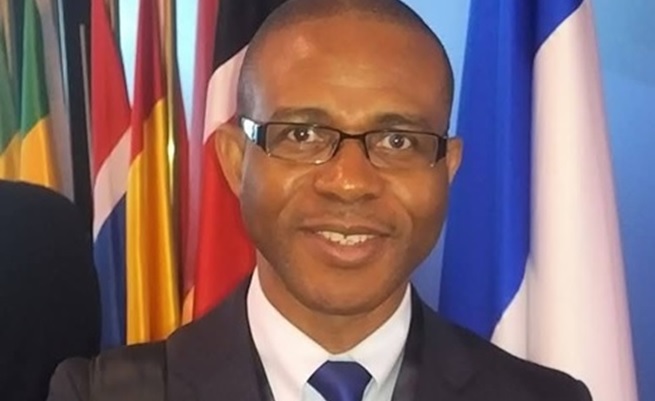
MONROVIA – As fears mount over the growing Ebola outbreaks in the Democratic Republic of the Congo and Uganda, Liberia’s leading biomedical scientist and public health expert, Dr. Dougbeh Christopher Nyan, has called for urgent international coordination, rapid vaccine innovation, and stronger public health intervention to prevent the deadly virus from escalating across Africa.
Speaking Monday, May 18, 2026, during an interview with Al Jazeera, Dr. Nyan reflected on Liberia’s painful experience during the devastating 2014 Ebola epidemic while outlining lessons that health authorities must urgently apply to the current crisis unfolding in Central and East Africa.
Dr. Nyan, who serves as Director-General of the National Public Health Institute of Liberia, warned that the outbreaks in Uganda and DR Congo demand swift multinational action similar to the aggressive international response that helped contain Ebola in West Africa more than a decade ago.
“The quick deployment of expertise and the military from the United States of America that carried our logistical services during the Ebola outbreak was very efficient,” Dr. Nyan recalled. “Also, a coordination of multinational forces of expertise in public health research and response did help to quell the Ebola outbreak in the three countries Liberia, Guinea and Sierra Leone.”
The current outbreaks in Uganda and eastern DR Congo have already raised serious concern among African and international health authorities due to the movement of populations across borders, pressure on fragile healthcare systems, and fears that the virus could spread beyond affected regions if not rapidly contained.
Drawing parallels to Liberia’s traumatic Ebola experience, Dr. Nyan stressed that the international community must urgently consolidate financial resources, scientific expertise, medical supplies, and logistical support to prevent another regional catastrophe.
“Once these efforts are conglomerated in terms of provision of resources, materials as well as financial resources, I believe this experience can be transferred over to what is currently happening in Uganda and the DRC Congo,” he stated.
During the interview, Dr. Nyan also addressed growing questions about Ebola vaccines and whether vaccines developed during the West African outbreak could effectively combat the strain currently circulating in Uganda and DR Congo. According to him, the present outbreak involves a different and far rarer strain than the Zaire strain that devastated West Africa between 2014 and 2016.
“In West Africa, we experienced the Zaire strain, which is the most prevalent one,” he explained. “Now we have the Bundibugyo strain, which is very rare and has caused very rare outbreaks.”
The Liberian scientist emphasized that researchers and vaccine developers must intensify efforts to adapt existing Ebola vaccines into broader multivalent vaccines capable of targeting multiple strains simultaneously. He noted that scientific advancements made during the COVID-19 pandemic could accelerate that process significantly.
“We had the mRNA technology which was used to very rapidly produce the COVID-19 vaccine,” Dr. Nyan said. “If we are to employ such technology, which is already known to be effective and safe, I think we can roll that out as quickly as possible.”
While acknowledging that research on the rare Bundibugyo strain remains limited, Dr. Nyan expressed optimism that an updated vaccine could potentially be developed within months if global scientific institutions mobilize aggressively enough.
“There’s quite a lot to do, but if we can employ that technology, I believe we can be able to address the current situation within the next four or five months,” he noted.
Dr. Nyan further reflected on Liberia’s experience with Ebola testing and diagnosis during the 2014 outbreak, describing accurate testing as one of the most critical weapons in stopping the spread of the deadly virus. He recalled that despite early cultural resistance and fear, many Liberians eventually cooperated with testing efforts because of the deadly nature of the epidemic.
“Because of the deadly nature of the outbreak, people made themselves available to be tested,” he explained. “Although there were cultural resistance and social resistance, once people were brought into the facilities, they were ready to be tested.”
Highlighting his own scientific contribution during the Ebola crisis, Dr. Nyan disclosed that he developed a multiple diagnostic test capable of detecting Ebola alongside other infectious diseases such as malaria and typhoid, which often present similar early symptoms and complicate diagnosis.
“Yes, I did develop a diagnostic test, a multiple diagnostic test that can test for Ebola and other infectious diseases that present similar onset symptoms like malaria or typhoid,” he revealed.
Dr. Nyan’s remarks come as African health authorities continue monitoring the outbreaks in Uganda and DR Congo with increasing concern, fearing that delayed intervention, weak surveillance systems, and insufficient funding could worsen the situation. His comments also reignite memories of Liberia’s darkest public health crisis, when Ebola overwhelmed hospitals, claimed thousands of lives, shattered the economy, and exposed deep weaknesses in regional healthcare systems.
For many Liberians, the renewed Ebola crisis in parts of Africa serves as a painful reminder of the fear and devastation that once gripped the country. But for Dr. Nyan, it is also a warning that preparedness, science, international cooperation, and rapid response remain the world’s strongest defenses against another deadly epidemic.