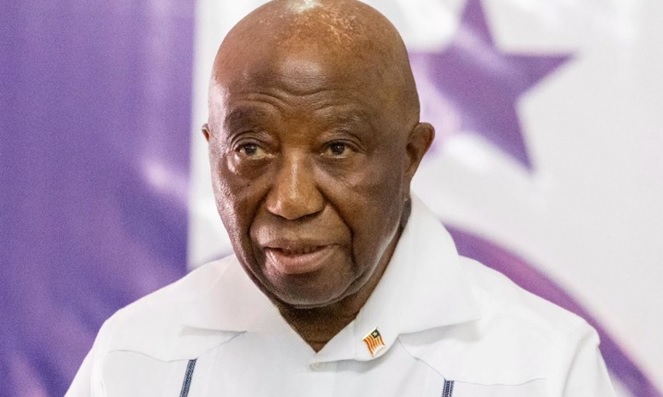
President Joseph Nyuma Boakai’s special address marking Liberia’s achievement of reaching the US$1 billion domestic revenue milestone is certainly a moment to acknowledge.
For a nation that has faced years of challenges with domestic resource mobilization and a reliance on external aid, hitting the billion-dollar mark is a significant milestone.
However, Liberia must avoid the pitfall of celebrating this figure while overlooking the needs of its citizens. A billion dollars in government revenue does not equate to development. It does not guarantee improved hospitals, functioning schools, paved roads, affordable electricity, clean drinking water, decent jobs, or food security. It is merely a sum that has entered the government’s accounts.
Achieving the US$1 billion revenue milestone is indeed commendable for a country that has long struggled to fund its own development. Yet, it’s crucial to remember that Liberians cannot benefit from a revenue milestone alone. They cannot educate their children with a press release, seek medical care with a presidential speech, pave roads with revenue figures, or meet their basic needs with government statistics.
Thus, the President’s most vital message in celebrating this achievement is not merely about reaching US$1 billion. It is his emphasis that every dollar raised must translate into tangible results for the people of Liberia. This statement should not be seen as just ceremonial; it should serve as the benchmark for evaluating this government’s performance.
Liberia has reached a significant financial milestone, but the pressing question remains: What does this billion dollars truly mean for the average Liberian who continues to face daily struggles?
The answer cannot be found in another speech; it must be evident in the communities, schools, hospitals, farms, and lives of the people.
The real question is harder: What will the ordinary Liberian see, feel, and experience diferrently because government now has more money?
President Boakai seems to grasp this crucial point. His statement that “every dollar generated delivers results Liberians can see and feel” may be even more significant than the billion-dollar figure itself.
He has also stressed that this milestone should not just be a cause for celebration but should be evaluated based on its impact on the daily lives of Liberians.
This is precisely where the celebration should kick off—and where the government’s accountability may become most challenging.
Liberia has never really struggled due to a lack of promises. Instead, we have faced a deficit of tangible results. For generations, Liberians have heard governments unveil ambitious budgets, development plans, reform initiatives, poverty-reduction strategies, and grand national visions. Yet, the average citizen still grapples with many of the same core issues: inadequate healthcare, poor infrastructure, unreliable electricity, unemployment, limited economic opportunities, weak public services, and a cost of living that puts immense strain on families.
Thus, while the US$1 billion milestone is worthy of acknowledgment, the government must recognize that with increased revenue comes heightened public expectations.
This billion-dollar achievement imposes a new political and moral responsibility on the Boakai administration. It must prove that the rise in revenue is not just leading to greater government spending, larger bureaucracies, more official vehicles, additional workshops, increased allowances, and more administrative overhead.
It must show that this money is creating real public value. If the government collects more funds but a child in a rural area still has to walk miles to reach an unsafe school, what has truly changed?
If revenue rises but a pregnant woman still faces long journeys to access basic emergency care, what progress has been made? If government’s revenue reaches unprecedented levels while young Liberians continue to search desperately for jobs, then the achievements cannot be judged solely from the perspective of the Ministry of Finance or the Liberia Revenue Authority.
When considering the financial landscape, it’s essential to view it through the eyes of the taxpayer—those who pay taxes, purchase goods that are taxed, and shoulder various fees and duties, are ultimately bearing the state’s financial load.
The government has recognized that Liberia’s domestic revenue collection has seen remarkable improvement. Reports indicate that domestic revenue rose from approximately US$699 million in 2024 to US$847.7 million in 2025, with the Liberia Revenue Authority noting US$904.7 million by August 18, 2026.
This is indeed a noteworthy advancement. However, revenue collection is just one part of the equation; the other part is expenditure. This is where Liberia’s political leaders need to face greater scrutiny.
The nation should not simply take pride in collecting a billion dollars without also demanding transparency regarding how every dollar is spent.
The President has emphasized that Liberians should be able to see and feel the outcomes of this revenue. This means the government must clearly communicate to citizens where the funds are allocated. How much is directed towards healthcare? What portion goes to education? How much is spent on infrastructure like roads? What about utilities such as electricity and water? How much is invested in agriculture and job creation? How much is consumed by the government itself? And perhaps most crucially, how much is lost to waste, inflated procurement costs, unnecessary spending, weak oversight, corruption, or ineffective implementation? These inquiries are not antagonistic; they are simply the legitimate concerns of taxpayers.
It’s true that for the government to encourage citizens to meet their tax obligations, it must recognize that taxation fundamentally relies on trust. People are much more willing to shoulder the tax burden when they can see that their contributions are being used wisely by the state.
The LRA has highlighted the need for transparency, accountability, and a stronger bond of trust between taxpayers and the government. Therefore, the government should shift its focus from merely celebrating revenue collection to establishing a system of revenue accountability. Achieving a billion-dollar revenue milestone should be accompanied by a corresponding standard of accountability.
This is where the President’s mention of prayer is particularly significant. Liberia is a nation rooted in faith, and there is nothing wrong with seeking divine guidance and protection. President Boakai has consistently highlighted the role of faith and prayer in his speeches, while also stressing the importance of taking responsibility and taking action.
During the Presidential Prayer Breakfast in May 2026, he made it clear that a nation that prays must also act responsibly, cautioning against the dangers of corruption, dishonesty, and apathy.
The principle is clear. Liberia doesn’t just need more prayers; it needs meaningful actions. We can’t pray for better roads while ignoring abandoned projects. We can’t ask for honest governance and then overlook officials who misuse public funds. We can’t hope for prosperity while allowing procurement practices that deplete our resources. We can’t pray for quality healthcare if we fail to equip hospitals with necessary medicines, equipment, and skilled personnel. We can’t seek job creation while government policies hinder business growth. We can’t wish for development when decisions are made without thorough planning, monitoring, and accountability. And we certainly can’t pray over a billion dollars and expect that prayer alone will improve lives.
Prayer should guide our actions, not replace them. Faith can provide moral direction for a nation, but budgets need to be carefully crafted. Contracts must be awarded transparently. Projects require supervision. Roads need to be built. Medicines must reach hospitals. Teachers should be compensated. Officials must be held accountable. While God may respond to prayers, the government still has a responsibility to fulfill its duties.
That’s why President Boakai’s biggest challenge isn’t just reaching a billion-dollar revenue target; it’s ensuring that Liberia doesn’t become a nation with billion-dollar revenues but only million-dollar outcomes.
The President has recognized that the administration needs to shift from mere plans and speeches to real, tangible improvements. In August, he emphasized to officials that Liberia’s future hinges on better roads, access to quality water, healthcare, education, and job creation. He cautioned that delays, institutional hurdles, and inconsistent execution cannot persist. This acknowledgment is crucial as it highlights a key vulnerability that could jeopardize revenue gains: implementation.
Liberia has plenty of plans, but what it truly requires is action. The government should think about introducing a public “Billion-Dollar Accountability Scorecard.” Each major sector should have clear, measurable goals. All significant expenditures should be traceable. Every major project should outline its costs, timelines, and the institutions responsible. This way, citizens can verify whether the promised outcomes have been achieved.
The focus should shift from merely asking, “How much did the government collect?” to “What has the government achieved with those funds?” This question will ultimately decide if the US$1 billion milestone marks a significant change in Liberia’s political landscape or if it becomes just another noteworthy figure in history.
The President should be commended for acknowledging that this milestone needs to translate into tangible improvements in the everyday lives of Liberians.
However, acknowledgment alone is insufficient. The administration must now back up its statements with action. The billion dollars should lead to visible infrastructure improvements, operational hospitals, enhanced educational facilities, dependable electricity, access to clean water, increased agricultural output, growth in the private sector, and meaningful job opportunities.
Taxpayers deserve transparency regarding the allocation of their money. Citizens should be informed about who is accountable when projects do not succeed. Officials must recognize that increased revenue collection comes with heightened scrutiny.
Moreover, let prayer be paired with discipline, competence, integrity, and decisive action. Ultimately, history will not remember the Boakai administration just for gathering US$1 billion; Liberians will recall it for the impact that US$1 billion had on their lives.
If money has the power to change lives, then this milestone should truly be considered historic. However, if it only serves to boost government coffers while everyday citizens continue to face hardships, then this billion-dollar achievement will remain just that, a number. And Liberia has had enough numbers; what the country truly needs now is tangible results.