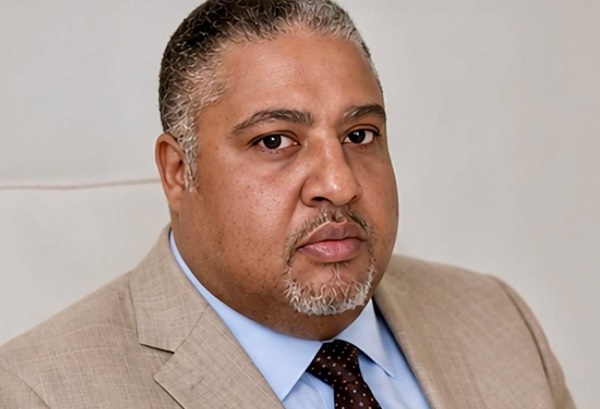
MONROVIA – Former Commerce Minister Amin Modad has welcomed Liberia’s reported US$1 billion domestic revenue collection milestone while warning the Boakai administration that the achievement will have little meaning for ordinary Liberians unless the additional fiscal space produces measurable improvements in their daily lives.
Modad’s comments came after the Liberia Revenue Authority announced on Monday, September 15, 2026, that the government had reached the US$1 billion mark in domestic revenue collection, a development that has been presented as an important milestone in Liberia’s effort to strengthen domestic resource mobilization.
But rather than treating the figure itself as the final measure of success, Modad challenged the government and the public to focus on what the revenue achievement will actually deliver.
“The government generated $1B – So What?” Modad asked, reflecting the skepticism he said many ordinary Liberians understandably have toward major government revenue announcements.
According to Modad, that skepticism is not simply the product of political opposition or narratives being promoted against the government. He said it is also rooted in years of promises by successive administrations that collected public revenues without producing the level of transformation Liberians expected.
He therefore urged Liberians to avoid both extremes, saying the government should be given an opportunity to prove that the increased revenue can translate into tangible national development while remaining subject to strong public accountability.
Modad described the US$1 billion collection as a significant step, but said its importance goes beyond the size of the amount.
For him, the achievement demonstrates that the government established a revenue target, developed a strategy and succeeded in reaching it. He argued that Liberia could potentially generate substantially more domestic revenue if the country continues implementing appropriate policies, reforms and strategies.
However, Modad stressed that increased revenue must create meaningful fiscal space rather than simply becoming another government financial statistic.
He said strategically reinvesting the additional resources could help improve healthcare, education, infrastructure, youth development, public services and economic opportunities.
But he cautioned against attempting to solve every national problem simultaneously.
Liberia, he argued, has too many competing needs and limited resources, making prioritization essential. His proposed approach is to first establish the policies, reforms and institutions needed to make economic growth and domestic revenue generation sustainable.
Modad pointed to Liberia’s postwar experience under former President Ellen Johnson-Sirleaf, saying one of the challenges of her first term was the enormous scale of the problems inherited after the war and the pressure to address many of them at the same time.
He said limited resources and institutional capacity were consequently stretched across competing priorities.
His argument places the current US$1 billion revenue achievement within a much larger question about how Liberia manages public finances and determines national priorities.
Modad said government should protect basic social services while investing deliberately in the country’s young population and creating the conditions necessary for private-sector expansion.
He also connected the revenue discussion to Liberia’s financial sector, particularly the continuing debate over non-performing loans and access to credit for micro, small and medium-sized enterprises.
According to him, Liberian businesses need more than short-term financing. He said entrepreneurs require patient and affordable capital that gives businesses enough time to establish themselves, invest, produce and eventually become profitable.
High interest rates, short repayment periods and collateral requirements, he argued, can prevent potentially viable Liberian businesses from expanding.
Modad said mechanisms should also be considered for responsible refinancing and restructuring where productive businesses have fallen into distress because of expensive financing or difficult economic conditions.
His broader economic prescription is built around protecting essential services, developing young Liberians, producing more goods currently imported, adding value to Liberia’s natural resources, increasing exports and building a stronger Liberian-owned private sector.
The former Commerce Minister also warned that Liberia cannot continue planning its economic future around the assumption that foreign assistance will always be available.
He pointed to declining foreign aid, shifting geopolitical priorities and growing fragmentation in the international system as reasons Liberia must strengthen its ability to finance its own development.
Yet Modad stopped short of dismissing the government’s revenue achievement.
He specifically urged Liberians not to reject positive developments simply because of political differences.
“Celebrate progress where progress is made and give the government room to work,” he said, while simultaneously insisting that such support should not amount to a free pass for the administration.
Modad said President Joseph Nyuma Boakai has repeatedly stressed accountability and argued that civil society and the public must therefore continue asking difficult questions, demanding transparency, tracking government spending and measuring whether public resources are producing results.
The central question raised by his intervention is therefore not whether Liberia reaching US$1 billion in domestic revenue collection is worth celebrating.
It is whether the additional resources will eventually be visible in classrooms, hospitals, roads, businesses, jobs, skills development and household incomes.
For Modad, the revenue milestone represents an opportunity. Its ultimate value, however, will be determined by what the government does with the money.