October 1, 2003, was meant to be a turning point for Liberia, a day when the country could finally start to heal. After enduring years of conflict, displacement, and violence, the United Nations was officially taking over the peacekeeping mission from the West African force ECOMIL.
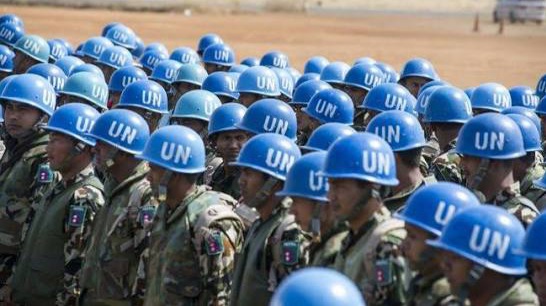
The blue helmets were set to replace the regional peacekeepers’ uniforms, signaling to the world that Liberia’s long ordeal was nearing its end.
Years later, the U.S. State Department would characterize the deployment of the United Nations Mission in Liberia (UNMIL) on that day as marking “the effective end to the war and the beginning of a new era in Liberia.”
However, history often has a way of defying expectations. Liberia did not transition into that new era without turmoil. On the very day the United Nations arrived, gunfire still echoed through Monrovia.
The contrast was stark. At the Roberts International Airport (RIA), around 3,500 ECOMIL troops were officially integrated into UNMIL, donning the blue helmets that would signify the first group of what was intended to be a 15,000-strong United Nations force. The ceremony was heavy with historical significance.
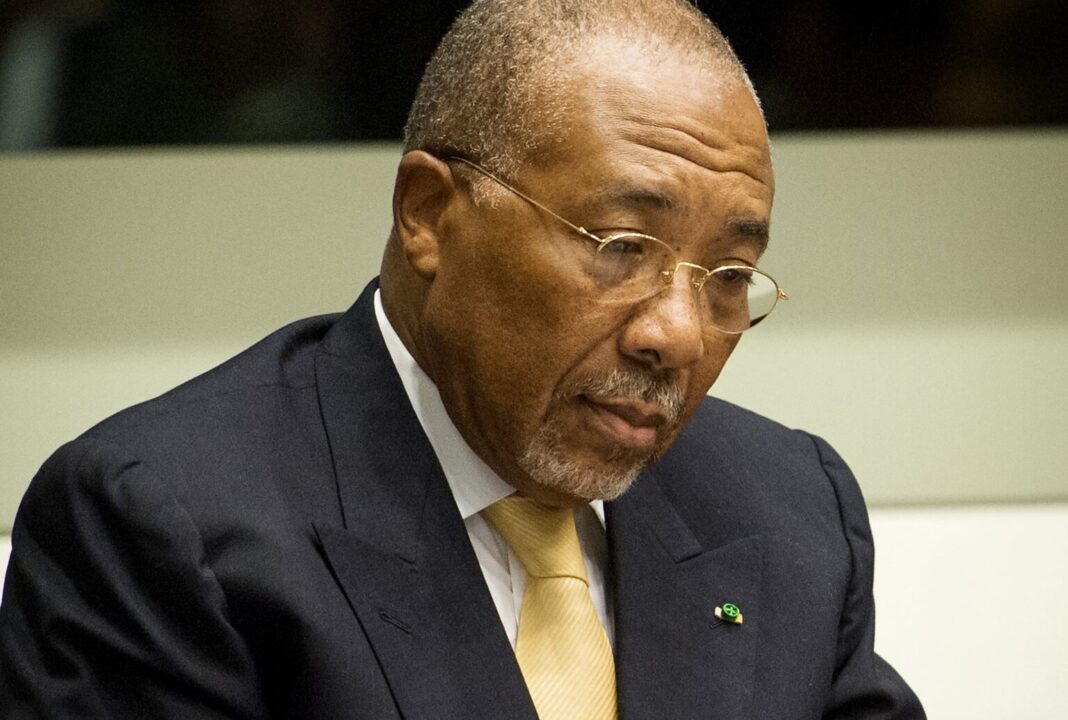
Liberia had gone through years of intense conflict. Charles Taylor finally stepped down from his position on August 11. Just a week later, on August 18, the Comprehensive Peace Agreement was signed in Accra. The expectation was that the country would transition from a state of war to a peaceful negotiation process.
Howbeit, on October 1, as the United Nations began its peacekeeping efforts, LURD Secretary-General Sekou Conneh was on his way to Monrovia to meet with Acting President Moses Blah, following an arrangement brokered by ECOWAS. What was meant to be a meeting turned into a confrontation. Human Rights Watch reported that Conneh arrived with a large entourage, including numerous vehicles and armed guards. His convoy made its way from Tubmanburg to Monrovia, escorted by ECOMIL personnel. Unfortunately, the anticipated meeting with Blah never took place.
As the convoy passed through the Paynesville area, tensions escalated, leading to a confrontation between government forces and LURD fighters, which resulted in gunfire.
The city that was meant to celebrate the start of international peacekeeping was once again filled with the unmistakable sounds of war.
The U.S. State Department’s subsequent human-rights report indicated that five individuals lost their lives during the October 1 clash between state security and LURD forces in the Paynesville and Red Light areas, following the failed Blah-Conneh meeting.
The report also highlighted that the meeting never took place, and both the government and LURD exchanged blame over who instigated the violence.
Contemporary accounts reported three fatalities, reflecting the confusion that often clouded casualty figures during those tumultuous times.
This uncertainty itself reveals much about Liberia’s situation at that moment. The war was coming to an end, yet the mechanisms of conflict had not fully ceased.
A peace mission emerged from a mindset shaped by war. This is why October 1, 2003, is a date worth remembering. Peace did not simply descend upon Liberia as if a switch had been flipped. There was no enchanting midnight when the gunfire ceased and the scars healed.
The United Nations could arrive with its blue helmets, but couldn’t instantly erase the fear, suspicion, and the armed political culture that years of conflict had fostered.
The very circumstances of Conneh’s journey highlighted this issue. He was on his way to meet the leader of a transitional government, yet he didn’t come as a typical political figure navigating a peaceful capital. Instead, he arrived in an armed convoy, heavily guarded. That image speaks volumes.
Liberia had brokered peace, but it had yet to learn how to function as a peaceful nation. Monrovia bore the consequences. PBS reported that fighting broke out as the UN took charge of the peacekeeping mission, with violence flaring up right after Conneh’s convoy entered the Paynesville area.
The irony was striking. The United Nations had come to shield Liberia from the violence that had engulfed it. Yet, on its very first day, Liberia’s violence was ready to welcome it.
Nevertheless, it would be a mistake to let the violence of October 1 overshadow the importance of the UN intervention and the symbolism of the blue helmet.
The arrival of UNMIL, no doubt, was a crucial moment for Liberia, signaling an international commitment to maintain peace as the nation worked to rebuild after years of conflict.
The UN mission was established to support the implementation of the Comprehensive Peace Agreement signed on August 18 and to help stabilize the country. Its role went beyond merely deploying soldiers on the streets of Liberia. The mission was tasked with supporting the peace process, protecting civilians, facilitating humanitarian aid, and assisting in disarmament and the reconstruction of Liberia’s security institutions.
October 1 was not just about soldiers taking over from other soldiers; it represented an effort to replace the mindset of violence with the principles of the peace agreement.
However, the transition was not easy, and the painful irony of October 1 lies in the fact that the gun did not easily yield. One of the key takeaways from October 1, 2003, is that the conclusion of a war and the onset of peace are not always simultaneous.
A war can be officially declared over while its remnants linger on. A peace agreement can be signed even when distrust still permeates the streets. A rebel leader may step into a political role while still surrounded by armed followers. And international peacekeepers can arrive while ordinary Liberians continue to flee from gunfire.
On October 1, 2003, Liberia was at a crossroads. The world witnessed the blue helmets of peacekeepers, while Liberians were all too aware of the gunfire echoing around them. Both elements were real and significant, marking that day in history.
The U.S. State Department was correct in viewing the deployment of UNMIL as a pivotal moment that signified the end of Liberia’s conflict and the dawn of a new chapter. Howbeit, we must not overlook the tumultuous journey that led to this point.
If we focus solely on the ceremony at RIA on that day, we risk overlooking the tragedy that preceded it. Remembering only the blue helmets means forgetting the lives lost, and acknowledging the arrival of peacekeepers without recognizing the dire need for their presence diminishes the reality of Liberia’s situation.
October 1, 2003, was not the moment Liberia transformed into a peaceful nation. Instead, it marked the arrival of the international community, ready to assist Liberia in its quest for peace, while the gunfire in Monrovia starkly reminded us of the challenges that lay ahead.
Thus, October 1 should be commemorated not just as the day UNMIL assumed its peacekeeping role, but as a touching reminder of Liberia’s painful position between the war it had endured and the peace it was striving to achieve.