MONROVIA, LIBERIA — The Supreme Court of Liberia has given the green light for the long-awaited Capitol Building arson trial to move forward, turning down a petition from former House Speaker J. Fonati Koffa and several co-defendants.
Koffa and his co-defendants had challenged Criminal Court “A” Judge Roosevelt Z. Willie’s decision to disband the jury that was originally set to hear the case.
The ruling from the Supreme Court, announced on Friday, clears a significant procedural hurdle that had stalled this high-profile trial.
The defendants had sought a Writ of Prohibition from the High Court, asking it to prevent Judge Willie from continuing after he dissolved the original jury due to concerns that juror conduct had compromised the panel during evidence presentation.
However, the Supreme Court determined that there weren’t enough legal grounds to issue such an extraordinary writ and affirmed Judge Willie’s right to make the controversial decision regarding the jury.
The whole situation began when prosecutors urged Judge Willie to dismiss the entire jury, claiming that some jurors had acted in ways that called their impartiality into question.
They specifically highlighted a moment when a juror asked LNP Chief Superintendent Rafael A. Wilson about photographs related to the Capitol investigation, even bringing up whether someone in one of the photos looked like one of the defendants.
Prosecutors contended that this line of questioning indicated the juror was already forming opinions about the evidence before the trial had wrapped up.
Howbeit, the defense firmly pushed back, arguing that the prosecutors hadn’t proven any actual juror misconduct and had misrepresented what some jurors had said.
Judge Willie ultimately sided with the prosecution and disbanded the panel, leading Koffa and his co-defendants to turn to the Supreme Court for intervention.
Meanwhile, the decision made on Friday doesn’t determine whether Koffa or any of his co-defendants are guilty of arson or the other charges they face.
Instead, the Supreme Court addressed the immediate procedural issue of whether Judge Willie had the legal authority to dissolve the jury.
With the prohibition petition denied, Criminal Court “A” is now set to move forward with the case, including the necessary steps to form a new jury as required by the trial court.
This ruling is a significant blow to the defense, which had been trying to halt the trial from progressing with a newly formed jury.
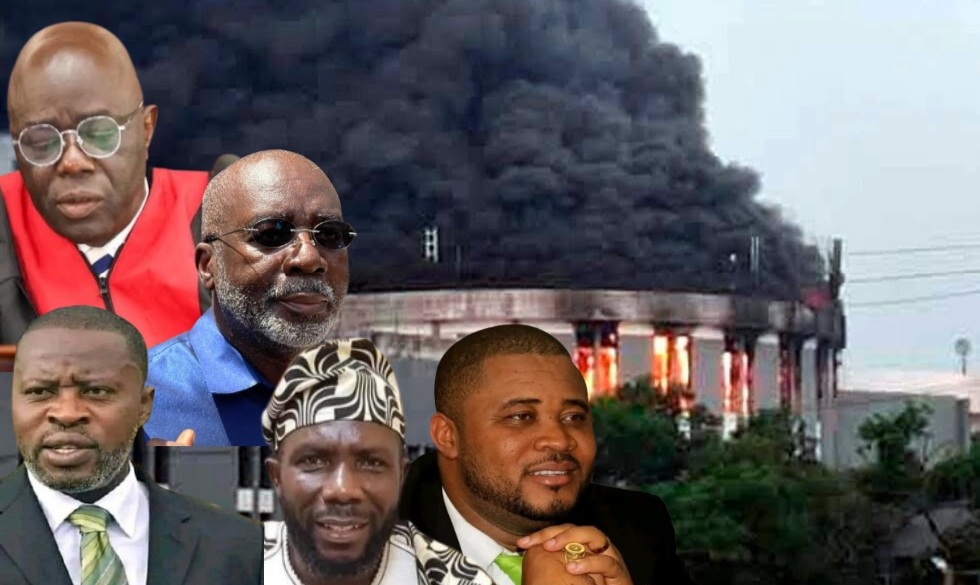
The case stems from the fire that occurred on 18 December 2024, at the Capitol Building on Capitol Hill, Monrovia, which caused extensive damage to the legislative complex and sparked a major criminal investigation.
Koffa, along with Representatives Dixon W. Seboe, Abu B. Kamara, and K. Jacob C. B. Debee, is facing a slew of serious allegations tied to the incident, such as arson, criminal conspiracy, and other related crimes.
The defendants have entered a not guilty plea and have been actively disputing the prosecution’s claims and the evidence presented against them.
This case has already sparked a number of significant legal skirmishes, including arguments over evidence, preliminary hearings, and the makeup of the trial jury.
Back in March, the Supreme Court issued a stay on the proceedings and summoned Judge Willie for a chambers conference to deliberate on the legal challenge at hand.
With the Supreme Court’s latest ruling, all eyes are now back on Criminal Court “A.”
The upcoming trial is set to draw a lot of attention, not just because of who the defendants are, but also due to the fact that the Capitol Building is home to Liberia’s Legislature.
Additionally, the case holds weight beyond just the outcomes for those accused; it’s a crucial test of whether Liberia’s judicial system can handle a politically charged and contentious criminal case in a lawful manner.
The defense isn’t backing down just yet; the accused still have the right to challenge the evidence presented by the prosecution and to defend themselves during the trial.
On the other hand, Friday’s ruling has cleared a significant procedural obstacle for the prosecution.
Now, the court faces the important task of ensuring that the trial is conducted fairly, transparently, and in line with Liberia’s Constitution and criminal procedure laws.