MONROVIA, LIBERIA – A landmark academic collaboration between Liberia and India is set to enter a new phase in September 2026 with the formal launch of a joint research-driven Center of Excellence (CoE) established through a partnership between the University of Liberia (UL) and Sharda University in Greater Noida, India.
The initiative is being described by its architects as a major advancement in academic cooperation between the two institutions and a potentially transformative platform for research, innovation, professional development, policy studies and practical skills development.
The Center comes at a time when the University of Liberia is confronting significant internal challenges, including faculty and staff disengagement and disruptions to academic activities. However, the new initiative represents a separate and constructive development within the university’s broader academic agenda, with its proponents emphasizing the importance of recognizing institutional progress even amid ongoing difficulties.
The Center of Excellence is expected to extend beyond the traditional boundaries of the two universities by creating opportunities for faculty members, researchers, students and academic institutions across Liberia and India to participate in collaborative research, training, knowledge exchange and problem-solving.
At the heart of the initiative is an effort to connect academic research with practical solutions to complex social, institutional and developmental challenges.
The Center will focus particularly on police studies, innovation, interdisciplinary research, public policy and skills development, while encouraging collaboration among universities, colleges, research institutions and other organizations in Liberia and India.
Its proponents believe the initiative could help strengthen the research capacity of the University of Liberia while providing faculty, staff and students with exposure to emerging technologies, international research methodologies and professional opportunities.
The formal launch, scheduled for September, is expected to bring together senior academic and government officials, diplomats, scholars, researchers, faculty members, students and other stakeholders.
Expected participants include the presidents of the University of Liberia and Sharda University, a possible representative from the Office of the President of Liberia, the Ministers of Foreign Affairs and Education, members of the University of Liberia Board of Trustees, the Indian Ambassador to Liberia and representatives of diplomatic missions and higher education institutions across the country.
Other expected participants include University of Liberia vice presidents, deans, department chairpersons, representatives of the University of Liberia Faculty Association and University of Liberia Staff Association, student and faculty leaders, alumni of Sharda University and UL, members of the Amos C. Sawyer College thesis committee and student leadership.
The ceremony is also expected to recognize academic leaders, scholars and faculty members who contributed to developing the framework for the Center and to introduce its management team.
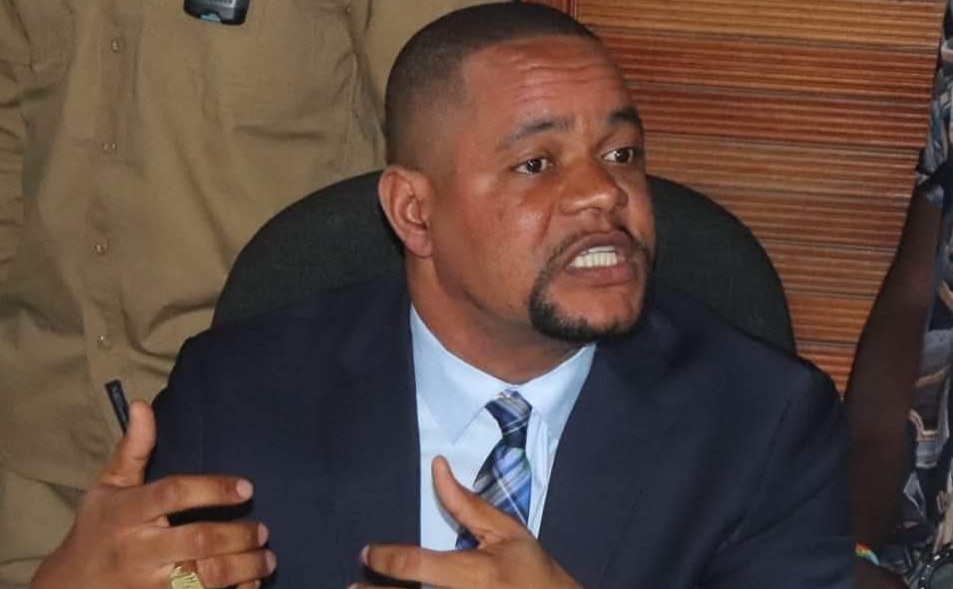
Associate Professor Dr. Josephus M. Gray, Dean of the Amos C. Sawyer College of Social Sciences and Humanities and described as the Doyen of Deans at the University of Liberia, has been appointed to head the Center’s management team.
Dr. Gray also serves as a Sharda University Ambassador to Liberia and as a visiting professor at Sharda University. His involvement in the development of the initiative has placed him among the principal figures behind the Center’s establishment.
Expressing appreciation for his appointment, Dr. Gray said the responsibility represented both an honor and a significant opportunity to contribute to a new era of academic cooperation between Liberia and India.
“I’m truly honored to be selected from among three thousand educational leaders, professors, scholars, and academics from University of Liberia and Sharda University to lead this collaborative Center of Excellence,” Gray stated.
He said the Center is intended to become a hub for research-driven police studies, innovation, interdisciplinary research and skills development, while working with colleges and universities to address complex challenges.
Dr. Gray’s appointment was approved by Prof. Dr. Layli Maparyan, President of the University of Liberia, and Dr. Ashok Daryani, a senior leader at Sharda University and the Sharda Group of Companies.
His selection, according to the initiative’s framework, was based on his academic expertise, qualifications and perceived ability to lead the Center toward achieving its objectives.
The Center is also expected to strengthen the existing Memorandum of Understanding between the University of Liberia and Sharda University by creating practical opportunities for faculty, staff and students to participate in exchanges, research and professional development.
The initiative was initially proposed by Dr. Ashok Daryani, President of International Relations at Sharda Group of Companies and Sharda University in Greater Noida.
The framework document has since been finalized and approved by the leadership of both universities, with the Chair of the University of Liberia Board of Trustees also endorsing the project.
Under the arrangement, the Center will initially operate from the University of Liberia’s Fendall Campus, where space has been allocated on the ground floor of the Academic Complex within the Amos C. Sawyer College.
On Wednesday, President Maparyan visited the Center’s office as well as the recently renovated office of the Dean and staff of the Sawyer College.
The physical location is expected to serve as an initial operational base while the Center develops its programs, partnerships, research activities and resource base.
Among the most significant components of the initiative is the planned deployment of Sharda University professors to Liberia.
According to the framework, Sharda University is expected to send two professors with expertise in areas including Artificial Intelligence, cybersecurity, social and pure sciences research, thesis and dissertation development and medical research.
Their participation is intended to expose University of Liberia faculty members and other academic stakeholders to specialized knowledge in fields increasingly considered critical to higher education, employment and national development.
The collaboration will also provide opportunities for visiting professorships, faculty sabbaticals, student-faculty exchanges, academic credit exchanges, joint publications, faculty and staff development and quality assurance.
The Center is designed not merely as another academic unit, but as a platform intended to bridge the gap between university education and the needs of society.
Its proponents argue that universities must increasingly produce graduates equipped not only with academic qualifications but also with practical competencies that enable them to address real-world problems.
The Center therefore plans to support faculty development in technology, innovation, research, leadership and quality education while promoting interdisciplinary approaches to national and global challenges.
It will also seek to identify research gaps and develop programs that enable students and faculty members to acquire advanced research skills, undertake policy studies and apply academic knowledge to practical problems.
Another major component will be comparative research examining issues such as institutional resilience, electoral integrity, public trust, sustaining peace, strengthening the judiciary and civic education following periods of significant political and institutional transition.
The Center is expected to facilitate research and educational methods that improve the academic experience of students and faculty while using technology to support career development.
Its planned flagship programs include multidisciplinary research projects, joint conferences, seminars, policy dialogues, collaborative publications and research focused on major societal challenges confronting Liberia, India and other communities.
The Center will also conduct regular training in demand-driven research areas and provide consultancy services on academic and social challenges.
Plans further include publishing journals, policy briefs and working papers; hosting visiting scholars and researchers; establishing innovation and entrepreneurship incubation programs; developing digital research databases; and pursuing scholarships and fellowships in research-oriented fields.
The initiative will operate through a joint team involving personnel from both the University of Liberia and Sharda University, with members selected according to their expertise in relevant fields.
Financial and institutional support is expected to come from Sharda University and other external institutions and organizations, while the Center’s management team plans to pursue grant opportunities to support research and other activities.
The development of the Center involved academics and researchers from Liberia, India and the United States.
Those recognized as contributors to the framework include Prof. Dr. Ashok Daryani; Prof. Dr. Syrulwa Somah, former President of Margibi University and a resident of the United States; Prof. Dr. Aveit Gupta, Dean of the Sharda School of Humanities and Social Sciences; and Mr. Bartue C. Gray of Arizona State University.
Other contributors include Rev. Allen Paye, Deputy Director of Social Science Research at the University of Liberia; Mr. Sachin Saini, Manager of the International Division at Sharda University; Mr. Andrew Sieh Nyenswa, an instructor in the Department of Political Science at the Sawyer College; Mr. William H.S. Doe, a 2026 Sharda University alumnus; Mr. Bill Jarkloh, an adjunct faculty member at Sawyer College; and Dr. Josephus M. Gray.
The Center’s architects envision it as a mechanism for transforming conventional academic departments into more dynamic environments where research, innovation, technology and professional development are closely connected.
They believe the model could ultimately strengthen the University of Liberia’s position as a national and regional center for knowledge generation, research and policy engagement.
For Liberia, the initiative could provide an additional avenue for addressing research shortages and strengthening the capacity of academics to generate evidence-based solutions to national challenges.
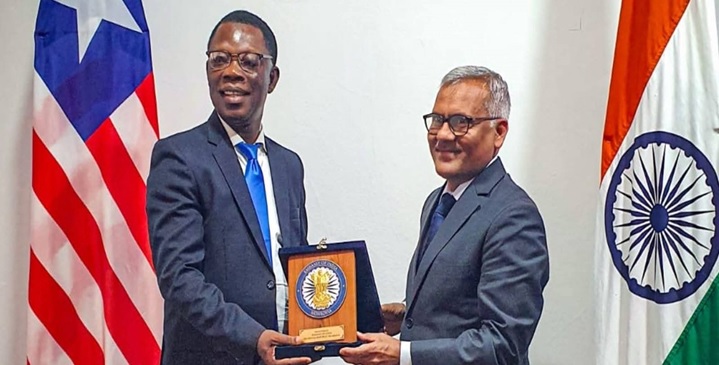
For India, the partnership provides an opportunity to deepen its educational and institutional engagement with Liberia while expanding academic exchanges between the two countries.
The September launch is therefore expected to mark more than the opening of an office at the University of Liberia’s Fendall Campus. Organizers view it as the beginning of a long-term academic partnership designed to connect researchers, students, educators and institutions across two countries.
If effectively implemented, the Center of Excellence could become a platform through which research findings are translated into policy recommendations, academic knowledge into practical skills and international partnerships into tangible opportunities for students and faculty.
At a time when higher education institutions are under increasing pressure to demonstrate their relevance to society, the Liberia-India initiative is positioning research, innovation, technology and skills development at the center of its academic mission.
The success of the Center, however, will ultimately depend on sustained institutional commitment, adequate financing, strong research governance and the ability of its management team to translate its ambitious framework into measurable programs and results.