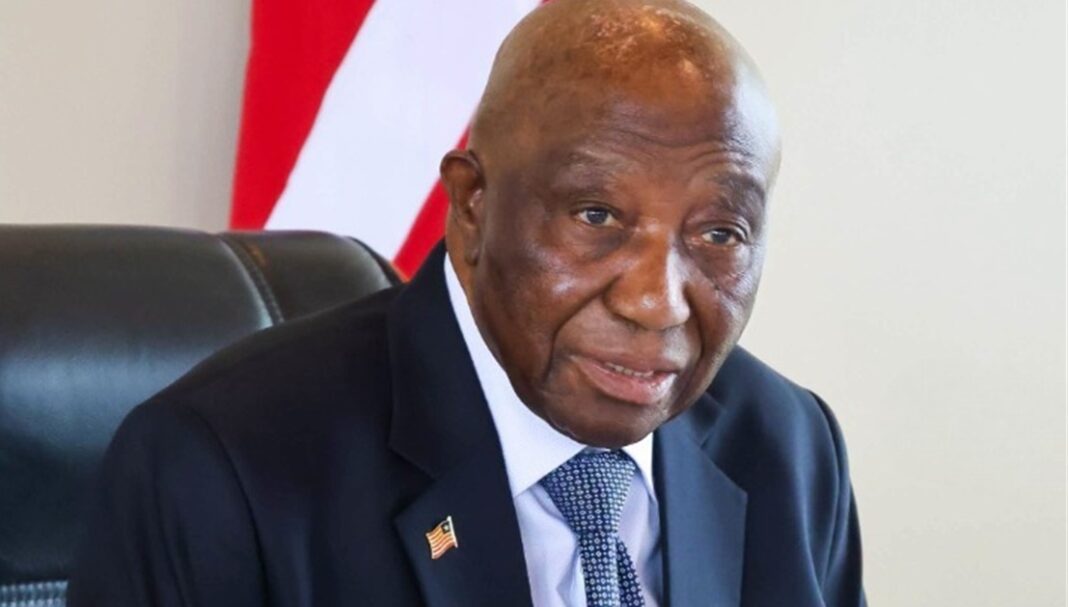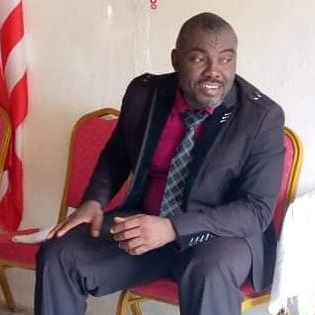
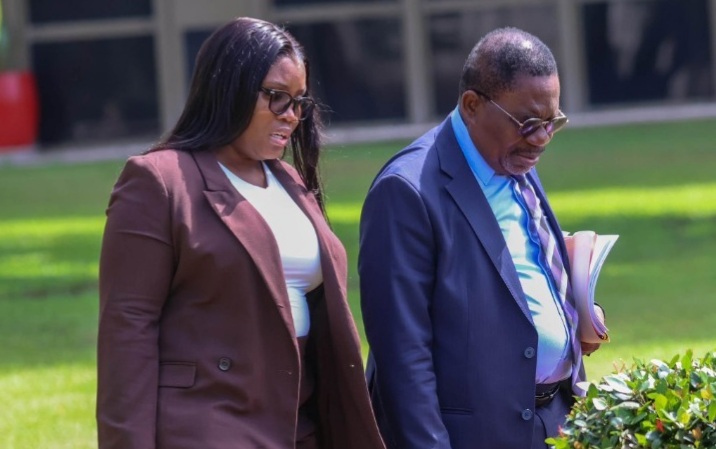
MONROVIA, LIBERIA — The photograph captures a moment of family pride intertwined with political significance. Cllr. Cooper W. Kruah Sr., Liberia’s Minister of Labour, stands proudly next to his daughter, Atty. Cornelia Wonkerleh Kruah, the Minister of Youth and Sports.
Both are part of President Joseph Boakai’s administration, tasked with addressing some of Liberia’s most urgent issues: job creation, workers’ rights, youth unemployment, and national development.
Howbeit, following the government’s 25th Cabinet Meeting over the weekend, the image raises a critical question that transcends their familial connection: When President Boakai says that there are no sacred cows in his administration, will his commitment be evaluated based on the performance of every minister, including a father and daughter duo in his Cabinet?
During the meeting, themed “Performance and Delivery,” Boakai issued one of his strongest admonitions against complacency in public service.
“This is neither a friendship club nor a family club,” the President declared, as reported in an Executive Mansion press release dated October 23, 2026.
“Make people work, and if they don’t work, replace them,” President Boakai stressed.
The message was clear. Ministers and other government officials, the President cautioned, cannot assume they will keep their positions solely due to their political connections, personal relationships, or closeness to power.
With three years remaining in his six-year term, President Boakai is demanding results that can be quantified, reported, and justified.
The current challenge lies in whether that standard will be applied uniformly. For Cooper Kruah, who has led the Ministry of Labour since February 2024, there is enough of a track record to warrant a thorough evaluation. In contrast, Cornelia Kruah, who took over the Youth and Sports ministry in February 2026, is still in the early stages of her assessment. It’s important not to judge either minister based solely on a photograph, their last name, or the President’s warning. Instead, their performance should be evaluated based on the responsibilities of their roles and the needs of the Liberian people.
COOPER KRUAH: ENFORCEMENT GAINS, BUT QUESTIONS REMAIN
Labour Minister Cooper Kruah has made notable strides, especially in the areas of worker protection and labor administration.
A major instance occurred in March 2026 when the Ministry of Labour mandated two subcontracting firms at the Liberia Agriculture Company in Grand Bassa County to pay back wages to over 500 workers after an investigation revealed violations of minimum wage laws.
The Ministry found that these workers had experienced illegal salary deductions and underpayment.
This intervention showcased how effective labor inspections and enforcement can lead to real benefits for workers who might otherwise find it difficult to assert their rights.
Additionally, the Ministry has conducted audits of work permits, revoked permits for 27 foreign workers, engaged more actively with the International Labor Organization, and introduced initiatives aimed at enhancing workplace health and safety.
It has also emphasized efforts to broaden vocational training opportunities and to include visually impaired students in its vacation employment program.
These actions are important, especially in a nation where unemployment and underemployment are pressing issues.
A labor ministry that actively enforces minimum wage laws, regulates foreign employment, and safeguards workers can truly impact people’s lives.
Howbeit, enforcement actions alone do not fully address the issue of performance. Kruah’s administration has come under considerable scrutiny regarding its management of foreign work permits.
In May 2025, the Senate raised concerns about the issuance of over 8,000 permits without sufficient transparency regarding job descriptions.
Kruah later submitted a report indicating that 10,117 permits were processed in 2024, which included 7,633 renewals and 2,484 new permits.
Additionally, in 2025, the labor minister reportedly granted work-permit waivers to 42 Chinese nationals, raising concerns about adherence to labor regulations.
While these allegations should not be assumed as confirmed misconduct, they highlight the necessity for transparent records and clear explanations regarding how the ministry oversees foreign employment.
The questions at hand are vital: How many jobs have been created for qualified Liberians? How well does the ministry implement the Decent Work Act? How many labor disputes have been settled? And what tangible improvements have workers seen under Kruah’s leadership?
The ministry’s reported accomplishments provide some insight, but a thorough, independently verifiable account of employment results, enforcement actions, and worker protections would give a more complete understanding.
The preliminary grade: C+
Kruah receives recognition for implementing documented worker-protection measures, conducting labor inspections, and making administrative reforms.
A notable instance of enforcement is the case involving over 500 workers at the Liberia Agriculture Company.
Nevertheless, ongoing concerns about foreign work permits and the necessity for clearer evidence regarding employment outcomes across the country hinder a more robust evaluation.
CORNELIA KRUAH: AMBITIOUS REFORMS, BUT DELIVERY IS THE REAL TEST
At the Ministry of Youth and Sports, Cornelia Kruah has launched an ambitious initiative aimed at addressing the institutional weaknesses that have historically limited opportunities for young people in Liberia.
Since her appointment in February 2026, she has taken on the challenge of overseeing a ministry that encompasses much more than just sports competitions.
The ministry’s responsibilities include youth employment, vocational training, entrepreneurship, recreational infrastructure, and the nurturing of young talent.
In June, she shared her first 100-day performance report, detailing initiatives designed to enhance institutional coordination and broaden opportunities for young Liberians.
Among the initiatives she introduced were five fellowship programs that span all 15 counties, with government funding estimated at around US$4 million.
These programs focus on 11 key areas, such as business development, scholarships, and back-to-school support.
Additionally, her administration has created dedicated leadership roles for gender and social inclusion, paying special attention to persons with disabilities and minority groups.
The minister has also laid out a comprehensive reform agenda following a nationwide assessment of the needs in youth and sports.
Key priorities include modernizing the ministry’s institutional framework, establishing a National Youth Intelligence System, producing a State of the Youth Report, expanding Youth Resource Centers throughout the 15 counties, and enhancing sports governance and talent development.
By September, the ministry had rolled out a small grants program aimed at young market vendors, while also engaging in peacebuilding, literacy, youth development, and international cooperation initiatives.
These actions indicate that the ministry is striving to empower youth beyond just sports activities.
Howbeit, it’s important to differentiate between a program that has been announced and one that is truly effective.
A fellowship program serves as an intervention, but its success hinges on how many young people complete it, gain valuable skills, find employment, or start sustainable businesses.
Similarly, a grant scheme presents an opportunity, but its effectiveness relies on whether recipients receive the promised funds, utilize them wisely, and sustain their enterprises.
The same level of scrutiny should be applied to sports development. Liberia requires operational facilities, enhanced grassroots competitions, transparent support for sports federations, and reliable pathways for talented athletes.
While meetings with potential international partners may create opportunities, these partnerships must ultimately yield tangible resources, facilities, training, or opportunities that the people of Liberia can access and benefit from.
Cornelia has also acknowledged several institutional challenges, such as crumbling infrastructure, poor transportation, and deficiencies in the systems that support youth development.
In her initial evaluation, she pointed out youth centers that were failing to meet community needs and vocational institutions that had been shut down for years.
While this diagnosis is crucial, merely pinpointing these persistent issues is just the first step in public service.
The more challenging aspect lies in proving that solutions are being implemented to address these problems.
The preliminary grade: B-
Cornelia receives a cautiously optimistic evaluation for her efforts in setting up a reform agenda, conducting a nationwide assessment, introducing fellowship programs, and initiating youth-focused initiatives.
Howbeit, her main drawback at this point is the limited time she has to show lasting results.
While the publicly available records provide considerable evidence of plans and program launches, there is less independently verified proof of sustained employment increases, completed institutional reforms, or long-term enhancements in sports infrastructure.
The assessment reflects early achievements and the potential of the agenda, rather than evidence that the ministry has already transformed the youth sector in Liberia.
THE FAMILY QUESTION: CONNECTIONS MUST NOT REPLACE ACCOUNTABILITY
The fact that a father and daughter both hold ministerial roles within the same government is bound to draw public scrutiny.
However, while it raises valid concerns regarding transparency and public trust, the mere existence of their familial relationship does not inherently imply any misconduct, favoritism, or inadequate performance.
The key question is whether both officials are held to the same standards as their peers.
Boakai has now made his position clear: government positions are not lifelong entitlements, and public servants shouldn’t assume they are shielded from accountability due to their connections.
This principle should be consistently applied, ensuring that both seasoned ministers and those who are new to their roles are evaluated fairly.
Evaluations should be based on clear objectives, reliable evidence, and provide each official with a chance to respond.
For Cooper Kruah, the challenge lies in proving that the ministry can enhance compliance with labor laws, effectively regulate foreign employment, and achieve tangible benefits for Liberian workers.
For Cornelia Kruah, the focus is on whether her ambitious agenda for youth can lead to genuine opportunities, improved vocational training, enhanced sports development, and outreach programs that extend beyond Monrovia.
Both ministers have responsibilities to fulfill and areas needing improvement, and their evaluations should not be influenced solely by their family connections or political statements.
BOAKAI’S WARNING MUST REACH THE TOP
The President’s declaration of “no sacred cows” has become a standard by which his administration can be evaluated.
His insistence on regular reporting, measurable outcomes, and the replacement of underperforming officials is an essential principle.
However, a warning alone does not equate to an enforcement record. If ministers are to be assessed, the government needs to set clear benchmarks, release credible performance reports, and illustrate the consequences for officials who consistently fail to meet established targets.
Without these safeguards, performance monitoring could turn into just another bureaucratic task that results in meetings and reports without making a real difference in the lives of everyday Liberians.
The proposed interim jobs strategy, which the Cabinet claims aims to create over 1,000 jobs in sectors like agriculture and public works within 15 months, serves as an immediate test.
The administration must ultimately show how many jobs were created, who benefited from them, and whether these positions were maintained.
For the Kruahs, the situation is quite clear. Their ministries are tasked with addressing urgent economic and social issues faced by their communities. Workers need protection and fair opportunities. Young people need access to education, skill development, jobs, and a genuine chance to shape their futures.
These needs cannot be met through mere titles, photographs, or empty promises.
President Boakai has stated that officials who fail to perform should be replaced. His next test will be to demonstrate that this principle applies generally, irrespective of rank, political clout, or personal connections.
The image may depict a father and daughter in government roles, but their performance must be evaluated independently.
If there are truly no sacred cows, then the criteria should be consistent for everyone.