By Socrates Smythe Saywon | Smart News Liberia
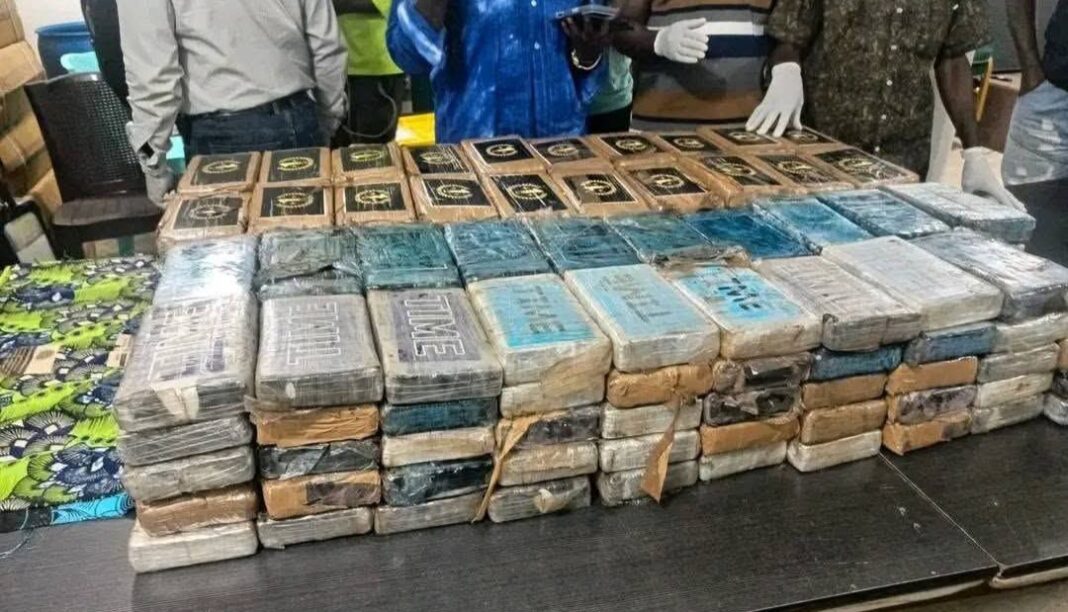
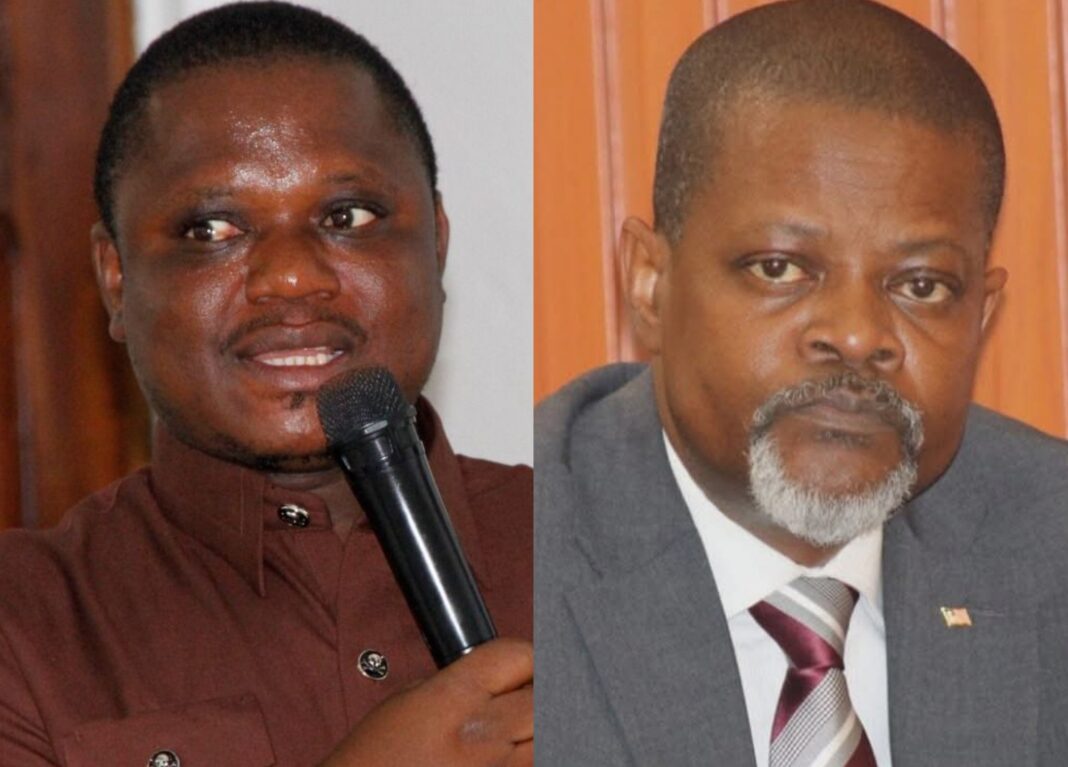
MONROVIA – Growing public pressure is mounting on the Liberia Drug Enforcement Agency (LDEA) as prominent anti-corruption advocate Anderson Miamen and Montserrado County Senator Abraham Darius Dillon demand greater transparency in the investigation of a massive cocaine seizure valued at approximately US$19.2 million at Roberts International Airport (RIA).
Nearly a week after LDEA announced the interception of 198 compressed plates of cocaine allegedly destined for export aboard a Brussels Airlines flight, questions continue to intensify over the identities of six individuals arrested in connection with the case and the apparent reluctance of investigators to disclose their names.
The controversy has generated widespread debate across social media platforms, particularly Facebook, where many Liberians are questioning whether the investigation is being handled transparently and whether influential individuals may be linked to the trafficking operation.
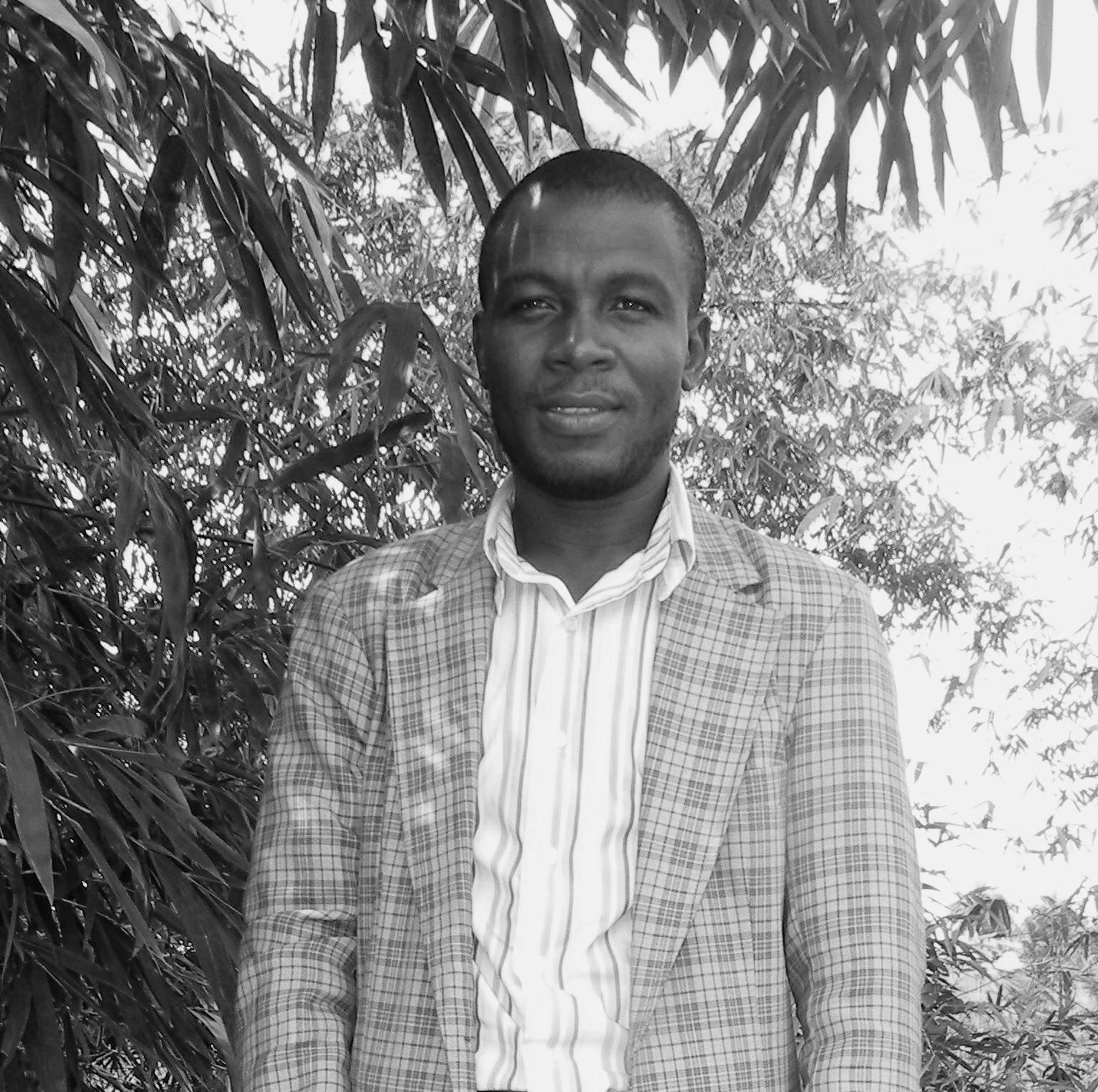
Among those publicly raising concerns is Anderson Miamen, Executive Director of the Center for Transparency and Accountability in Liberia (CENTAL), who argued that the latest drug bust presents a critical test of Liberia’s commitment to accountability and the rule of law.
“Illicit drugs and other prohibited substances do not walk into Liberia by themselves,” Miamen wrote. “It is increasingly clear that people collude with others to smuggle them into the country, distribute them, and even receive them. It is alleged that sometimes very powerful people in and out of government are involved.”
Miamen said the magnitude of the seizure raises serious concerns about the effectiveness of Liberia’s anti-drug and anti-corruption systems and called on the government to ensure that oversight institutions operate independently and transparently.
He further urged investigators to provide answers to several key questions, including who financed the shipment, who the collaborators are both inside and outside Liberia, where the drugs were destined, and whether financial and communication records could reveal a wider criminal network.
“The following and other key questions should be satisfactorily answered by the state in timely, credible, and transparent manners,” Miamen stated, emphasizing that uncovering the full network behind the seizure is more important than simply arresting low-level operatives.
The CENTAL Executive Director also called for the active involvement of international partners in the investigation, arguing that external participation could strengthen public confidence and enhance the credibility of the process.
While acknowledging reports that the government may have eventually released some information regarding those arrested, Miamen maintained that any prolonged delay in identifying suspects is troubling.
“Government, through the Liberia Drug Enforcement Agency and other state actors, must be more transparent and accountable in handling the investigation and any subsequent prosecution efforts,” he wrote. “I add my voice to the many persons out there genuinely asking for transparency and accountability from government on the matter.”
Miamen warned that only bold, impartial, and inclusive actions would convince Liberians that authorities are serious about confronting the country’s growing drug menace.
Senator Abraham Darius Dillon echoed similar concerns, using a strongly worded public statement to challenge the LDEA over what he described as a troubling lack of communication.
“The ’19M USD’ drug issue at hand has become embarrassingly concerning,” Dillon wrote. “It is nearly a week since the busting and discovery of said huge consignment at our airport. Further, your reported withholding of the names of persons of interest is troubling.”
The Montserrado County lawmaker questioned why the identities of those in custody had not been disclosed despite the case already being publicly announced by the LDEA itself.
“Who are the persons of interest under your radar? Why are their names being withheld? Why the delay in publicly naming them?” Dillon asked. “Where in the world have we seen the names of persons of interest being withheld?”
Dillon warned that the absence of regular public updates was fueling speculation, suspicion, and finger-pointing across the country.
“LDEA, do you now see that without daily public updates, your action and or inaction is generating all the speculations, twisting, spinning, and finger-pointings?” he asked.
The senator further urged the agency to immediately provide the public with clear information regarding the progress of the investigation and the steps being taken to ensure that all perpetrators face justice.
He also hinted at possible legislative intervention should the agency fail to satisfy public concerns.
“Alternatively, we will be left with the duty, without fear or favor, to bring this matter before the Senate next week to compel the appropriate and necessary actions to ensure clarity and justice,” Dillon warned.
The LDEA, however, has defended its handling of the investigation.
Addressing journalists during the Ministry of Information’s regular press briefing on June 11, LDEA Officer-In-Charge Fitzgerald T.M. Biago confirmed that six suspects remain in the agency’s custody but insisted that investigators are deliberately withholding their identities to protect the integrity of the case.
“This is an ongoing active investigation. Disclosure of any information will compromise the investigation,” Biago said. “We are asking the public to remain calm. We are putting pieces of information and evidence together and will soon revert to you all accordingly.”
The agency first announced the seizure on June 8, describing it as one of the most significant narcotics interceptions in recent Liberian history. According to the LDEA, the cocaine was concealed in six cargo boxes and intercepted following what authorities described as credible intelligence.
While LDEA has celebrated the operation as a major breakthrough in Liberia’s fight against transnational drug trafficking, the continuing secrecy surrounding the identities of those arrested has shifted public attention from the seizure itself to questions about transparency, accountability, and equal treatment under the law.
As pressure from civil society, lawmakers, and ordinary citizens continues to grow, the handling of the investigation is increasingly being viewed as a test of whether Liberia’s anti-drug institutions are prepared to pursue accountability wherever the evidence leads, regardless of status, influence, or political connections.