Some dates are celebrated in a nation’s history, while others create division. Then there are those dates that serve as stark reminders of how close a people came to losing everything.
By September 7, 2014, Liberia was not just battling Ebola; it was grappling with fear itself. The enemy was invisible, lacking a uniform, a weapon, or a defined battlefield.
It spread through a handshake, a funeral hug, a hospital corridor, a family home, or a pair of contaminated gloves.
By the time Liberia grasped the magnitude of the crisis, it was already ensnared in one of the most harrowing public health emergencies in its recent history.
September 7, 2014, was a day when statistics took on a human form. That form was a mother, anxiously questioning whether the fever ravaging her child was just malaria or something far more sinister. It was the nurse entering an isolation ward, acutely aware that her protective gear could never fully shield her from the lurking threat. It was the doctor who realized that every patient he treated could be the last one he ever saw. It was the farmer in Lofa County, or elsewhere in the countryside, contemplating whether returning to the farms was worth the risk to his or her life. It was the family waiting outside an isolation center, yearning to see a loved one they might never embrace again. And it was the everyday Liberian learning that even grief had turned perilous.
Lofa: The birthplace of the nightmare—By September 7, international reports from Lofa County depicted a harrowing scene. Lofa, which shares a border with Guinea, had become one of the areas where the brutality of Ebola was being felt most acutely.
The virus had crossed a porous border, invading communities that were utterly unprepared for the devastation that ensued.
The consequences were catastrophic. Families were falling ill. Health facilities were overwhelmed. Everyday economic activities were thrown into disarray. Farmers found it difficult to tend to their fields. Communities that had once thrived on the closeness of family and neighbors were suddenly faced with a harrowing question: Could the person next to you be the one who infects you—or the one you infect? This was the psychological torment of Ebola. It didn’t just attack the body; it eroded trust.
Liberians are a people deeply rooted in community. We greet one another. We embrace. We visit the sick. We care for our elders. We gather to mourn the dead. We wash the bodies of our loved ones before burial. We hold hands during funerals. We share our tears. But Ebola turned these acts of love into potential carriers of death.
The very things that made the Liberian society vibrant suddenly became perilous. A hug could be lethal. A handshake could be fatal. A funeral could spark an infection chain. A mother could fear touching her child. A husband could hesitate to embrace his wife. And the deceased—those who deserved dignity and compassion—became threats even after their last breath. This was the tragedy Liberia faced in September 2014.
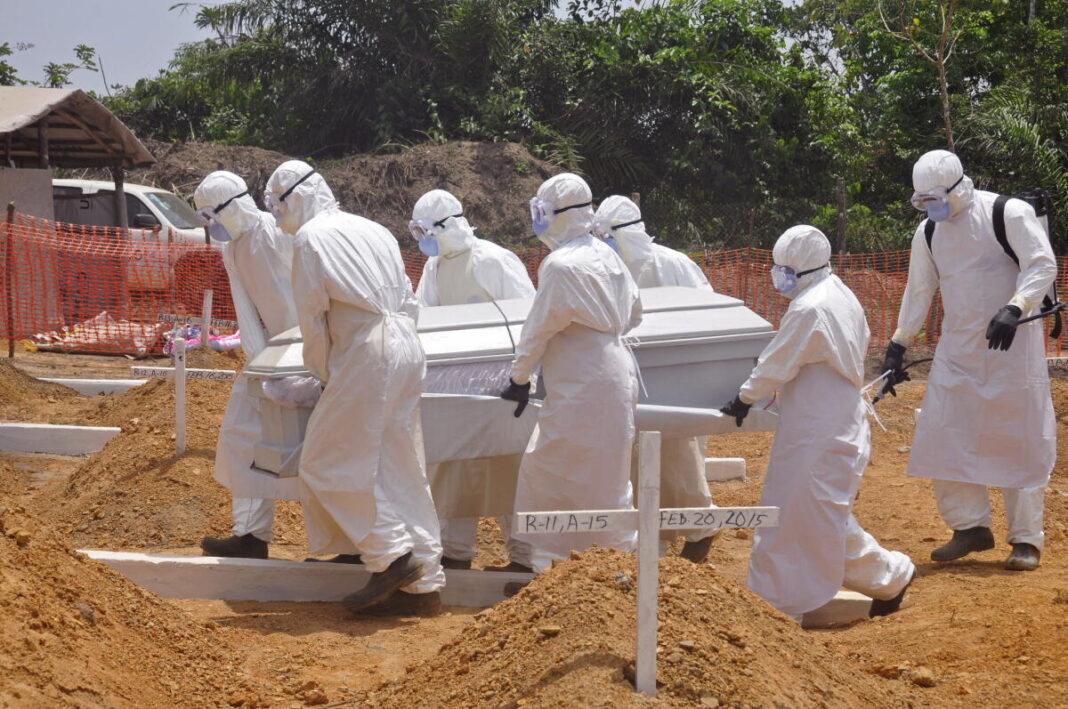
Yet, amidst the fear, there were remarkable individuals stepping up; those who bravely walked toward the danger. They included doctors, nurses, laboratory technicians, ambulance drivers, burial teams, cleaners, volunteers, community health workers, and international medical personnel.
They ventured into places where others were frantically trying to flee. Clad in layers of protective gear, they found themselves sweating inside impermeable suits.
For hours, they toiled under conditions that were both physically and mentally draining. Each time they stepped into an isolation ward, they were acutely aware that the virus did not discriminate between a doctor, a nurse, or a volunteer. Ebola was an indiscriminate killer, and some health workers would never make it back home. This is perhaps one of the most crucial points to remember about September 7, 2014.
While much of the world focused on the rising infection rate and death toll in Liberia, both Liberian and international health workers were looking into the eyes of individual patients. They saw human beings, not mere statistics. They heard names, prayers, and cries for help. And at times, they were met with silence.
But Ebola was not the only adversary Liberia faced. Another contagion was spreading through the nation: fear. No doubt, fear could be just as damaging as the disease itself.
Communities grew suspicious of health workers, rumors circulated, and misinformation spread. Some believed that Ebola was a hoax. Families hid their sick relatives, and frightened communities resisted the efforts of burial teams. There were even reports of threats to set fire to isolation facilities with doctors and patients still inside. Just imagine the desperation that fueled such threats. A medical center—meant to be a sanctuary for healing—had, in the eyes of terrified individuals, transformed into a site of death.
The walls that separated patients from the outside world became symbols of fear. Liberia was grappling not just with a virus but also with a deep crisis of trust.
One of the most heartbreaking aspects of September 2014 was how swiftly everyday life began to vanish. Markets were impacted, schools shut down, travel was limited, and businesses faced hardships. Public gatherings turned perilous. Funerals transformed. Churches and mosques adapted. Family dynamics shifted.
Handshake was no longer common. Embraces were viewed with suspicion. Funerals became sources of anxiety. And hospitals—once seen as places of hope—turned into locations where many Liberians feared they might not return.
The nation was learning the harsh reality of what occurs when a public health emergency overwhelms not just hospitals but the very fabric of society.
Reflecting on it now, exactly a decade and two years ago, September 7, 2014, should not simply be seen as another date in the Ebola timeline. It ought to serve as a cautionary tale.
A caution about the consequences of a fragile healthcare system facing a deadly epidemic. A caution about the dangers of misinformation outpacing scientific understanding.
Notably, it’s important to highlight the risks associated with delayed international responses. National resilience can only go so far; it cannot replace the need for hospitals, laboratories, trained personnel, protective gear, and effective public health systems.
Liberia, having just come out of a prolonged civil war, faced a healthcare system that was already in a precarious state. The arrival of Ebola laid bare nearly every weakness. However, it also revealed something remarkable: the incredible bravery of the Liberian people.
When we reflect on the Ebola crisis, there’s a tendency to focus solely on the lives lost. But while we must honor those who died, we should also celebrate the survivors. Let’s remember the nurses who continued their work, the doctors who remained on the front lines, the burial teams who respectfully handled the deceased, the community volunteers who educated others about the virus, the drivers who transported patients, the laboratory staff who managed hazardous samples, the families who endured, and the communities that ultimately overcame their fears.
And the ordinary people of Liberia who changed their behaviors—not because it was easy, but because survival required it. They stopped shaking hands, altered their funeral customs, listened to health workers, washed their hands, reported suspected cases, learned, adapted, and endured. Gradually, and with great difficulty, Liberia began to turn the tide.
Undoubtedly, September 7, 2014, holds a significant place in Liberia’s history because it conveys something that numbers cannot. It shows what fear looks like when it permeates a nation. It reveals the reality of how a disease can strip away the illusion of a secure and permanent modern life. It also highlights the extraordinary courage needed to keep living when death seems omnipresent.
Years down the line, the photographs may fade, the emergency wards may vanish, the protective suits may be stored away, and the burial teams may return to their everyday lives. The headlines may become a part of history. However, Liberia must never let the memory become comfortable. Because somewhere in Lofa, in Monrovia, or in an exhausted clinic, there was a Liberian on September 7, 2014, simply trying to survive another day.
And somewhere else, there was another Liberian—perhaps a nurse, doctor, ambulance driver, or community volunteer—who understood the risks and went to work regardless.
That is the story that deserves to be told. Not just that Ebola arrived, or that Liberia suffered, but that when an invisible threat knocked on the door of a wounded nation, Liberians stood firm and fought back. They fought with medicine, courage, sacrifice, and knowledge. Ultimately, they fought with the oldest weapon a people possess: the refusal to give up.
Ultimately, September 7, 2014, should never be seen merely as a date on a calendar. It should be remembered as a day when Liberia faced death head-on—and, against all odds, chose to live.